
Planning a memorable tour of Canada’s small-batch wineries is less about logistics and more about adopting a sommelier’s mindset to decode a winery’s philosophy before you arrive.
- Focus on professional tasting techniques (spitting is essential) to properly evaluate multiple wineries.
- Look for specific clues, like reservation policies and seated tastings, to identify wineries that cater to enthusiasts, not party buses.
- Understand that the true value of small-batch wine, especially Icewine, lies in the agricultural risk and artisanal process.
Recommendation: Use a winery’s terroir—like the difference between Niagara’s Bench and Lakeshore—as your primary guide for discovering unique, high-quality wines.
There’s a particular magic in discovering a wine that tells a story—a bottle opened years later that instantly transports you back to a sun-drenched vineyard, tasting with the person whose hands picked the grapes. This is the experience many of us seek, yet the typical advice for a winery tour often leads to crowded tasting bars, generic chardonnays, and a day that feels more like a checklist than a discovery. You’re told to “plan a route” and “book ahead,” but this advice falls short when your goal is to unearth the hidden gems of Canadian wine country.
The path to authentic, small-batch producers isn’t found on the main tourist maps. It’s a different approach entirely, one that requires shifting from a tourist’s perspective to that of a sommelier. The true secret isn’t in better logistics; it’s in learning to read the subtle clues that reveal a winery’s soul. It’s about understanding the winemaker’s philosophy, decoding the language of the land, and appreciating the immense risk and passion that go into every single bottle of low-intervention wine.
This guide is designed to give you that insider’s edge. We won’t just tell you to spit your wine; we’ll explain the professional technique to do it correctly so you can taste more and learn more. We’ll show you how to distinguish a winery dedicated to serious enthusiasts from one catering to party buses. We’ll explore the tangible impact of terroir, dive into the economics of a wine club, and demystify the high price of Canada’s liquid gold, Icewine. Get ready to plan a tour that yields not just souvenirs, but genuine connection and sophisticated insight.
This article will guide you through the essential strategies for crafting an unforgettable self-guided tour. By focusing on the details that matter, you’ll be equipped to discover the authentic heart of Canadian wine country.
Summary: A Sommelier’s Guide to Canada’s Boutique Wineries
- Spitting vs Swallowing: how to taste 5 wines at 4 wineries and stay standing?
- Is a winery membership worth the shipping cost for exclusive bottles?
- Bench vs Lakeshore: how soil location changes the taste of Niagara Riesling?
- How to identify which wineries ban bachelor/bachelorette party buses?
- Why visiting during harvest (crush) is exciting but limits tour access?
- Which winery restaurants actually grow their own produce on site?
- Blue cheese or Foie Gras: what actually pairs with sweet Vidal Icewine?
- Why true Canadian Icewine commands such a high price per bottle?
Spitting vs Swallowing: how to taste 5 wines at 4 wineries and stay standing?
The single greatest mistake enthusiasts make on a self-guided tour is swallowing every sample. While it feels counterintuitive to waste good wine, spitting is the most critical skill for a multi-winery day. It’s not just about staying sober; it’s about preserving your palate. Alcohol numbs your taste buds, and by the third or fourth winery, your ability to discern subtle notes of minerality or acidity will be significantly diminished. Think of it as a professional tool, not a rude gesture. Wineries not only expect it, they provide spittoons for this exact purpose.
Beyond sobriety, responsible tasting is a legal necessity. Canadian impaired driving laws are strict and vary by province. For instance, in Ontario, having a BAC between 0.05-0.079 can trigger an immediate 3-day license suspension, with British Columbia enforcing similar roadside penalties. A single ounce of wine can affect your BAC, and samples add up quickly. Spitting ensures you can safely drive from one hidden gem to the next. The goal of the day is to collect memories and bottles, not a driving penalty.
Adopting the professional technique transforms your tasting from a simple drink into an analytical exercise. It allows you to fully engage with the wine’s aromas, texture, and structure without the interference of alcohol. This is how you build a “sensory library,” allowing you to compare that Beamsville Bench Riesling from the morning with the Lincoln Lakeshore one in the afternoon. Mastering this skill is the first step toward tasting with genuine insight.
Your Action Plan: Professional Wine Tasting Technique
- Take a small 1-ounce sample and observe its color and clarity against a white background (like a napkin).
- Swirl the glass gently to release the aromatic compounds, then take a few short, quick sniffs to identify the primary aromas.
- Take a small sip, just enough to coat your palate. Purse your lips and draw a little air in over the wine to aerate it further.
- Hold the wine in your mouth for 3-5 seconds, focusing on its texture, weight, and the feel of the tannins on your gums.
- Lean toward the provided receptacle and spit decisively at a 45-degree angle to avoid splashing.
Is a winery membership worth the shipping cost for exclusive bottles?
For enthusiasts of small-batch wine, the tasting room is often just the beginning of the relationship. The follow-up question inevitably becomes: “Should I join the wine club?” The allure is potent—access to members-only vintages, library releases, and bottles that never see the inside of a provincial liquor store. However, with shipping costs in Canada being a significant factor, the decision requires a “value-calculus” that goes beyond simple math. The key is to assess whether the membership provides exclusivity and connection, not just convenience.
Small producers are increasingly reliant on these direct-to-consumer models. This is especially true as traditional export markets fluctuate. For example, while international demand has shifted, the domestic appetite for unique Canadian wines remains strong, pushing winemakers to foster a loyal local following. A club membership is a direct investment in a winemaker’s vision, allowing them to take agricultural and stylistic risks they couldn’t afford if they were solely dependent on large-scale retail.
Case Study: Drea’s Wine Co. and the Direct-to-Consumer Model
Andrea Kaiser, daughter of Canadian wine pioneer and Inniskillin co-founder Karl Kaiser, provides a perfect example. She launched Drea’s Wine Co. in 2019 with a tight focus on small-batch Sauvignon Blanc. Each vintage is produced in extremely limited quantities and sold almost exclusively through a direct membership model, bypassing traditional liquor board channels. This strategy was validated when her 2017 vintage won international acclaim at London’s International Wine Challenge, proving that a direct-to-consumer approach is viable for high-end, small-scale Canadian producers seeking a dedicated audience.
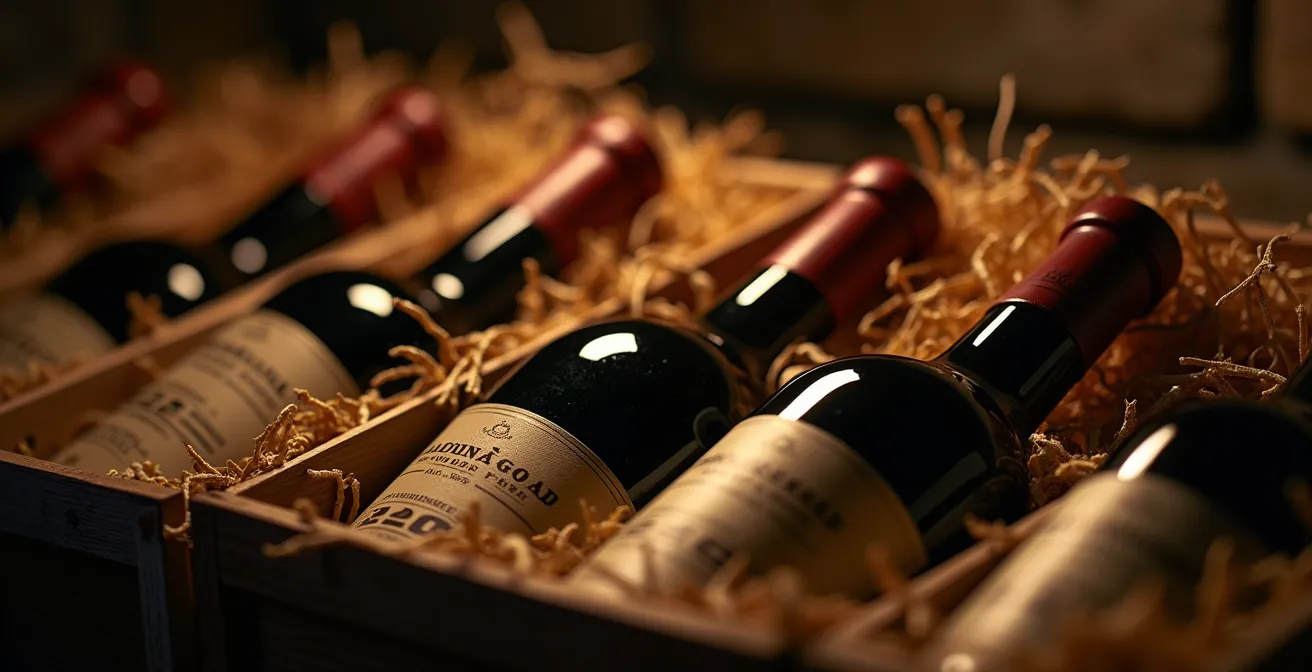
Ultimately, a membership is “worth it” if it grants you access to wines you genuinely can’t get elsewhere and deepens your connection to the producer’s story. If a winery’s “exclusive” bottles are merely their standard offerings bundled together, the value is questionable. But if it’s your only way to acquire a single-vineyard Pinot Noir from a 100-case production, or a library vintage of a celebrated Riesling, then the shipping cost becomes the price of admission to a very exclusive club.
Bench vs Lakeshore: how soil location changes the taste of Niagara Riesling?
Nowhere is the concept of “terroir” more tangible in Canada than in the sub-appellations of the Niagara Peninsula. To the casual tourist, the region is a monolith. But to a sommelier, it’s a complex mosaic of microclimates, and understanding the difference is key to a sophisticated tasting tour. The most dramatic contrast can be found by comparing Rieslings from the “Bench” (like the Beamsville Bench) with those from the “Lakeshore” (like Lincoln Lakeshore). Though separated by only a few kilometres, the resulting wines are worlds apart.
The Beamsville Bench is an elevated plateau, part of the Niagara Escarpment. Its limestone-clay soils and slightly cooler temperatures, thanks to constant air circulation, stress the vines just enough. This environment forces the grapes to ripen slowly, preserving their natural acidity. The resulting Rieslings are typically lean, intensely mineralic, and driven by vibrant notes of lime, green apple, and wet stone. They possess a tension and structure that allows them to age beautifully for a decade or more.
In contrast, the Lincoln Lakeshore appellation sits on flat, fertile land near the moderating influence of Lake Ontario. The soils are predominantly sandy loam, and the climate is warmer, with a longer growing season. This leads to riper grapes with lower acidity and a more generous fruit profile. A Lakeshore Riesling will often express lush notes of peach, apricot, and honeydew. These wines are generally rounder, softer, and more approachable in their youth. Visiting a winery on the Bench in the morning and one on the Lakeshore in the afternoon is a masterclass in tasting geography.
This paragraph introduces the following table, which breaks down the key differentiators between these two Niagara terroirs, as detailed in an analysis from Wine Country Ontario.
| Characteristic | Beamsville Bench | Lincoln Lakeshore |
|---|---|---|
| Elevation | 90-150m above lake | Near lake level |
| Soil Type | Clay-limestone mix | Sandy loam |
| Temperature | 2-3°C cooler nights | Lake-moderated, warmer |
| Riesling Profile | High acidity, mineral, citrus | Riper stone fruit, peach notes |
| Harvest Timing | 7-10 days later | Earlier ripening |
How to identify which wineries ban bachelor/bachelorette party buses?
For an enthusiast seeking a thoughtful tasting experience, the arrival of a 20-person party bus can instantly shatter the ambiance. These groups, often focused more on volume than viticulture, change the dynamic of a tasting room. Recognizing this, many of Canada’s best small-batch wineries have implemented policies to protect their atmosphere and ensure they can offer genuine engagement to interested visitors. The challenge is identifying these havens before you plan your route. The clues are rarely overt; you have to learn to read between the lines on their websites and social media.
The most significant indicator is a strict, non-negotiable reservation policy. Wineries that are serious about the tasting experience will almost always require bookings, especially for groups of more than four. Look for language like “Seated Tastings Only,” “Guided Experiences,” or “Educational Seminars.” These phrases signal a structured, controlled environment focused on appreciation rather than consumption. Conversely, websites that promote “Drop-ins welcome” or feature photos of large, boisterous crowds are likely not the intimate setting you’re looking for.
Another telling detail is the transportation policy. Some wineries explicitly state “No Bus Tours” or “Private Vehicles Only” in their FAQ or visitor information sections. This is the most direct sign. If it’s not explicitly stated, a quick call to the winery is the best way to confirm. Asking “What is your maximum group size for a tasting?” is a polite way to get a clear answer. This proactive screening is the most important step in curating a tour that aligns with your goal of sophisticated discovery.
Case Study: The Boutique Winery Approach
Wineries like 180 Estate in Jordan Station exemplify this boutique philosophy. Operating on a small 10-acre vineyard with an intimate bistro, their entire business model is built on quality over quantity. They actively limit group sizes to maintain a high-quality, educational experience for people who are genuinely interested in their handcrafted wines. This stands in stark contrast to larger operations designed to accommodate high-volume bus tours, demonstrating a clear choice to prioritize deep engagement with a smaller number of guests.
- Look for phrases like “Reservations required for groups over 4” on their booking page.
- Check the website for language emphasizing “Seated tastings” or “Guided experiences.”
- Search the visitor policy or FAQ for explicit rules like “No bus tours” or “Private vehicles only.”
- Scan their social media feeds for photos of small, intimate tastings rather than large, crowded events.
- Call ahead and politely inquire about their maximum group size to confirm their policy.
Why visiting during harvest (crush) is exciting but limits tour access?
Visiting a winery during harvest, or “the crush,” is a double-edged sword. The air is electric, filled with the sweet, fermenting scent of freshly picked grapes. The entire property buzzes with an “all-hands-on-deck” energy that is intoxicating to witness. You might see tractors hauling in bins of fruit, workers meticulously hand-sorting clusters, and the winemaker, stained and exhausted, orchestrating the complex dance. It is, without a doubt, the most exciting time to be in wine country, offering a raw, unfiltered look at the winemaking process.
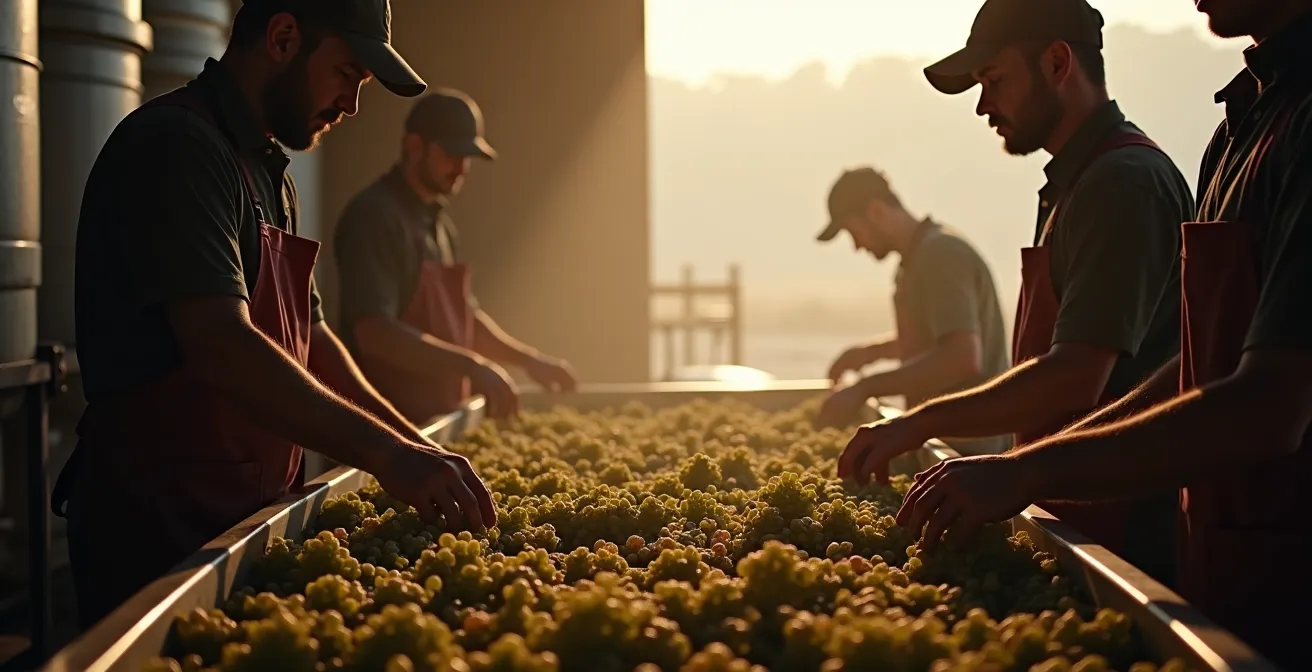
However, this excitement comes at a cost: access. For small-batch producers, harvest is a period of controlled chaos where every moment is critical. The winemaker and their small team are working around the clock, making crucial decisions that will define the vintage. Their focus is entirely on the fruit, not on visitors. Consequently, you will likely find that winery tours are suspended, tasting room hours are limited, and access to the production area is strictly forbidden for safety and sanitation reasons. The winemaker you hoped to chat with is probably too busy (or too tired) for a lengthy conversation.
This is especially true during the high-stakes Icewine harvest. VQA regulations in Canada are among the strictest in the world, mandating that grapes must be harvested at sustained temperatures of -8°C or colder. This often means teams must work through the night in freezing conditions, sometimes for 16 hours straight, to bring in the frozen fruit at its peak. During this period, the winery is effectively on lockdown. While the idea of visiting during this magical event is romantic, the reality is that you’ll see more from a distance than you will up close.
Which winery restaurants actually grow their own produce on site?
The philosophy of terroir—that a wine should taste of the specific place it was grown—doesn’t have to stop at the bottle. A growing number of Canada’s most thoughtful wineries are extending this concept to the plate by establishing on-site restaurants with their own integrated gardens. This isn’t just about offering a convenient meal; it’s a profound culinary statement. When the vegetables on your plate are grown in the same soil and under the same sun as the grapes in your glass, it creates a harmony of flavour that simply cannot be replicated by sourcing from afar. It’s the purest expression of a region’s agricultural identity.
Finding these true farm-to-table establishments requires looking beyond a simple “winery with a restaurant” label. The key is to seek out producers who talk about their gardens and farming principles with the same passion they reserve for their vineyards. Their menus are often hyper-seasonal, changing weekly or even daily based on what’s perfectly ripe for picking. This approach reflects a deep commitment to quality and a holistic view of agriculture.
As the experts at S Magazine note when highlighting the country’s top producers, this movement is about more than just fresh food. It’s part of a broader shift in Canadian wine:
A renewed focus on quality and a small-batch, low-intervention approach is yielding some of the region’s most compelling wines
– S Magazine, 5 Great Canadian Wineries to Visit Now
This philosophy naturally extends from the cellar to the kitchen, creating an immersive experience for the visitor.
Case Study: Pearl Morissette’s Terroir-Driven Cuisine
Pearl Morissette in Jordan Station, Ontario, is arguably the benchmark for this integrated approach in Canada. Founded by Burgundy-trained winemaker François Morissette, the estate operates on strict organic and biodynamic principles, with extensive gardens and animal pastures alongside the vines. The celebrated on-site restaurant doesn’t just source locally; it sources ingredients from its own backyard. This allows the culinary team to create authentic flavour pairings born from the very same terroir, embodying a philosophy where the entire estate contributes to the final experience in the glass and on the plate.
Blue cheese or Foie Gras: what actually pairs with sweet Vidal Icewine?
Canadian Icewine is a national treasure, a luscious, concentrated nectar born from the harshness of our winters. But its intense sweetness can be intimidating to pair. The common mistake is to match it with a dessert that is equally or more sweet, which often results in a cloying, overwhelming experience. The sommelier’s approach to pairing Icewine, particularly the honeyed-apricot notes of a classic Vidal, is to seek either complementary richness or stark contrast. This is where savoury, fatty, and salty foods become Icewine’s greatest allies.
The classic, textbook pairing is foie gras. The rich, fatty, and savoury character of the liver is perfectly cut by the Icewine’s searing acidity, while its sweetness complements the decadent texture. It’s a pairing of pure opulence. Equally compelling is the contrast provided by salty, pungent blue cheese. The saltiness in the cheese heightens the perception of fruit and sweetness in the wine, while the wine’s viscosity and rich texture balance the cheese’s sharp, creamy bite. A Canadian-made blue, like Quebec’s Bleu Bénédictin, makes for a perfect patriotic pairing.
To truly appreciate these pairings, understanding the wine’s structure is key. To be labeled as such, VQA Icewine must reach a minimum of 35 Brix (a measure of sugar) in the grapes at harvest. It takes an incredible amount of fruit—sometimes up to 5kg of grapes for a single 375ml bottle—to achieve this concentration. This isn’t just a sweet drink; it’s a wine of extreme structure and acidity, which is precisely why it can stand up to such powerful food partners. Serving it properly chilled (around 10-12°C) in small glasses helps to focus its intense aromatics and preserve that crucial acidic backbone.
- Pair with rich, salty Canadian cheeses like Quebec’s Bleu Bénédictin or Ontario’s Lankaaster aged cheddar.
- Follow the golden rule of dessert pairing: ensure the Icewine is noticeably sweeter than any dessert it’s served with.
- Serve it well-chilled, at about 10-12°C, in small 2-ounce pours to best appreciate its concentration.
- Don’t be afraid of savoury pairings: seared Quebec foie gras or even butter-poached Atlantic lobster can be sublime.
- Embrace the purist approach: often, the best pairing for Icewine is nothing at all, served as the dessert course itself.
Key Takeaways
- To truly taste and compare wines across a full day, spitting isn’t optional—it’s a professional necessity to preserve your palate and ensure safety.
- The best small producers signal their enthusiast-friendly atmosphere through policies like “reservations required” and “seated tastings only.”
- The distinct taste profiles of wines from areas like Niagara’s Bench versus its Lakeshore are a direct result of tangible differences in soil and elevation, a concept known as terroir.
Why true Canadian Icewine commands such a high price per bottle?
When faced with a half-bottle of Canadian Icewine carrying a price tag north of $50, it’s natural to ask: why is it so expensive? The cost isn’t a marketing ploy; it’s a direct reflection of immense agricultural risk, painstaking labour, and the incredibly low yields inherent in its production. Unlike wines where the entire harvest is guaranteed, an icewine producer is gambling an entire section of their vineyard against the whims of a Canadian winter. They are, in essence, making a liquid asset under the most challenging conditions imaginable.
The primary driver of cost is risk. Grapes must be left on the vine for months after the regular table wine harvest, exposed to birds, animals, rot, and weather. An entire crop can be lost before the temperature even drops. If the winter is too mild and doesn’t reach a sustained -8°C, the entire harvest is forfeit. This gamble alone justifies a significant portion of the price. When the temperature finally does drop, the harvest is a frantic, often nocturnal, effort in freezing conditions, adding significant labour costs.
Furthermore, the yield is minuscule. The water inside the grape freezes, but the sugars, acids, and flavour compounds do not, creating a highly concentrated drop of nectar. When these frozen marbles are pressed, they yield only a fraction of the juice of a normal grape. This, combined with Canada’s strict VQA (Vintners Quality Alliance) standards, ensures the authenticity and quality that commands a premium.
Case Study: Inniskillin and the Birth of a Global Reputation
The high price is also the cost of a hard-won reputation. When Inniskillin’s 1989 Vidal Icewine won the prestigious Grand Prix d’Honneur at Vinexpo in France, it put Canadian wine on the world map. This victory helped establish the VQA system, which, crucially, prohibits the artificial freezing of grapes (cryoextraction)—a shortcut allowed in some other countries. This guarantee of natural, on-the-vine freezing means that when you buy a bottle of VQA Canadian Icewine, you are buying an authentic, high-risk, artisanal product. That price tag represents the cost of that authenticity.
Now that you’re equipped with a sommelier’s mindset, the final step is to start sketching out your own curated journey. Use these principles to look at winery websites with new eyes, plan a route that tells a story of terroir, and engage with winemakers on a deeper level. Start planning your personalized tour of Canada’s hidden gems today.