Design & Decoration
Creating a home that truly works for you involves far more than choosing paint colors or arranging furniture. Design and decoration encompass critical decisions about materials, spatial planning, technology integration, and the relationship between your indoor and outdoor environments. Whether you’re renovating a century-old Toronto rowhouse, building a new property in Vancouver, or updating a Montreal condo, understanding these foundational elements will help you make choices that enhance both beauty and livability for years to come.
The Canadian context presents unique challenges and opportunities. Our climate extremes—from humid summers to harsh winters—demand materials and design strategies that perform reliably across seasons. This comprehensive resource explores the core pillars of home design and decoration: contemporary design principles that balance form with function, flooring fundamentals that withstand daily life, outdoor living strategies that maximize your property year-round, vertical gardening for urban spaces, and the technical realities that protect your investment.
Contemporary Design: Balancing Beauty With Real Life
The most successful contemporary designs achieve something deceptively simple: they look stunning while supporting how you actually live. This balance requires thoughtful consideration of several factors working in harmony.
Aesthetics That Support Daily Living
Modern minimalist aesthetics with clean lines and open spaces appeal to many Canadian homeowners, but these designs only succeed when they accommodate real-life needs. A beautiful open-concept kitchen fails if it lacks adequate storage for the pantry staples a family of four requires. Similarly, a dramatic double-height living room creates visual impact but demands practical solutions for heating efficiency and maintenance access. The key is identifying which aesthetic elements genuinely enhance your lifestyle and which might create ongoing friction.
Consider a young couple in Calgary who fell in love with floor-to-ceiling glass walls for their home addition. The concept promised abundant natural light and mountain views, but without addressing privacy management and thermal performance, the space would feel exposed and costly to heat. Smart solutions—strategically placed frosted glass panels, automated privacy screens, and high-performance glazing—allowed them to retain the aesthetic while making the space genuinely livable.
Integrating Technology Invisibly
Smart home technology offers remarkable convenience, but visible wires, bulky devices, and mismatched screens can undermine a carefully crafted aesthetic. The most effective approach involves planning technology integration during the design phase rather than retrofitting later. This means considering:
- Concealed conduit pathways for future technology upgrades
- Recessed mounting locations for screens and control panels
- Wireless systems that minimize visible infrastructure
- Voice-activated controls that eliminate the need for wall-mounted switches
A Halifax homeowner recently integrated a sophisticated climate control system, automated lighting, and security cameras throughout their heritage property without compromising its historic character. The secret was embedding technology within existing architectural features—sensors hidden in crown molding, controls behind period-appropriate switch plates, and cameras integrated into exterior light fixtures.
Flooring Fundamentals: Choosing Materials That Endure
Flooring represents one of your most significant design investments, affecting everything from visual continuity to acoustic comfort. Canadian homes demand flooring that withstands temperature fluctuations, moisture challenges, and heavy use from muddy boots to pet claws.
Understanding Durability and Hardness
The Janka hardness scale measures a wood’s resistance to denting and wear, providing objective data for comparing species. Canadian homeowners often encounter these common options: red oak (1,290 Janka rating), hard maple (1,450), and increasingly popular Brazilian walnut (3,680). Higher ratings indicate greater dent resistance—crucial for high-traffic areas or homes with large dogs.
However, hardness isn’t everything. A wood’s dimensional stability matters equally in Canadian climates. White oak, with a moderate Janka rating of 1,360, performs exceptionally well because it resists moisture-related expansion and contraction better than harder but less stable species.
Solid Wood Versus Engineered: Making the Right Choice
Solid wood flooring offers authenticity and can be refinished multiple times over decades. It’s ideal for above-grade installations in climate-controlled environments. Engineered wood, with its cross-laminated construction, provides superior dimensional stability—essential for basement installations, radiant heat systems, or regions with significant humidity swings.
A Winnipeg homeowner installing flooring over radiant heat discovered that engineered products with thin wear layers conducted heat more efficiently while resisting the expansion and contraction that would eventually gap solid planks. For their basement, engineered flooring was non-negotiable; moisture from concrete slabs would have destroyed solid wood within years.
The Critical Role of Acclimation and Humidity Control
Perhaps the most common flooring failure stems from neglecting proper acclimation. Wood products must adjust to your home’s ambient moisture conditions before installation—typically 7-14 days with boxes opened and stacked with spacers for air circulation. Installing flooring straight from the delivery truck almost guarantees future problems: gaps in winter when heating dries the air, or cupping in summer when humidity rises.
Maintaining consistent indoor humidity (ideally 35-55% year-round) protects your flooring investment. Many Canadian homeowners now install whole-home humidification systems that automatically adjust seasonal humidity levels, preventing the wood movement that creates squeaks, gaps, and premature wear.
Extending Your Living Space Outdoors
Canadian properties offer tremendous potential for outdoor living, but our compressed warm season demands strategic design to maximize both usability and return on investment. Well-planned outdoor spaces effectively expand your functional square footage for a fraction of indoor construction costs.
Creating Year-Round Outdoor Value
The difference between an outdoor space used three months annually versus eight months lies in thoughtful climate adaptation. Louvered roof systems exemplify this principle—adjustable slats provide shade and rain protection when needed, or open completely for stargazing on clear evenings. Combined with radiant heaters, weatherproof furniture, and proper wind mitigation, these systems extend shoulder season use significantly.
A Vancouver family invested in a covered outdoor kitchen and dining area with infrared radiant heaters and strategic glass windbreaks. Their space now hosts comfortable gatherings from April through October, compared to the June-August window their uncovered deck previously offered. The extended season transformed a nice-to-have amenity into a genuinely functional living zone they use almost daily.
Technical Considerations for Lasting Performance
Outdoor structures face challenges that indoor spaces never encounter. Proper anchoring on pavers prevents uplift during windstorms. Bioclimatic placement—considering sun angles, prevailing winds, and privacy from neighbors—determines whether your space feels welcoming or uncomfortable. Permit compliance, often overlooked, protects you from costly removal orders and affects future property sales.
Winterization protocols preserve your investment during off-season months. This includes:
- Draining all water lines and outdoor kitchen plumbing before freezing temperatures
- Storing or covering cushions and textiles to prevent mildew
- Protecting cooking appliances from moisture and freeze-thaw cycles
- Ensuring proper drainage to prevent ice damming and structural stress
Slip-resistant flooring deserves special attention in Canadian climates. Smooth stone or glazed tile becomes treacherous when wet or icy. Textured porcelain, composite decking with anti-slip grooves, or specialized outdoor tiles with high traction ratings prevent accidents while maintaining aesthetic appeal.
Vertical Gardens: Greening Urban Canadian Spaces
Limited ground space needn’t limit your connection to greenery. Vertical gardens transform blank walls, balconies, and small courtyards into living ecosystems that improve air quality, provide psychological benefits, and create privacy screens in dense neighborhoods.
Plant Selection for Height and Climate
Not all plants thrive in vertical installations, particularly in Canadian zones where winter hardiness and wind exposure become critical factors. Successful vertical gardens typically combine several plant types: structural evergreens for year-round interest, perennials that return reliably, and annuals for seasonal color.
A Toronto condo dweller created a thriving eighth-floor balcony vertical garden using hardy sedums, ornamental grasses, and compact evergreens—all selected for their drought tolerance and wind resistance. Research shows that even modest green spaces provide measurable psychological benefits, reducing stress and improving focus for urban residents who lack easy access to parks and natural areas.
Irrigation Automation and Maintenance Access
Manual watering becomes impractical for vertical installations beyond a few small planters. Drip irrigation systems with programmable timers deliver consistent moisture while conserving water. Advanced systems include moisture sensors that adjust watering based on actual plant needs rather than fixed schedules—particularly valuable during variable Canadian summers.
Designing for maintenance access from the outset prevents future headaches. Can you easily reach every planter for pruning, fertilizing, and plant replacement? Do you have a plan for addressing pest issues or disease without dismantling the entire installation? A Montreal homeowner learned this lesson after installing a beautiful but inaccessible vertical garden; replacing a single damaged section required removing half the structure.
Preventing Root Damage and Structural Issues
The risk of root infiltration damaging building materials demands proper barriers and drainage systems. Quality vertical garden installations include waterproof membranes protecting the wall surface, adequate drainage preventing standing water, and root barriers preventing penetration into mortar joints or wood elements. Skimping on these invisible elements invites costly repairs down the line.
Technical Realities Every Homeowner Should Know
Beyond aesthetic decisions, certain technical considerations fundamentally affect your home’s performance, maintenance requirements, and long-term value. Understanding these realities helps you make informed choices and avoid expensive mistakes.
Flat Roof Maintenance and Material Selection
Flat roofs offer design flexibility and usable outdoor space on urban properties, but they demand different maintenance than traditional pitched roofs. Regular inspections—at minimum twice annually—identify membrane damage, drainage issues, and seal failures before they cause interior damage. Canadian freeze-thaw cycles particularly stress flat roof systems, making proper drainage and quality membrane materials non-negotiable.
Trendy materials often promise revolutionary performance but lack the proven track record of conventional options. That exotic imported stone might look stunning in showrooms, but how does it perform after five Manitoba winters? Does your local market include contractors experienced in installation and repair? Sometimes the most responsible choice is a well-executed traditional material rather than an untested innovation.
Heating High-Volume Spaces Efficiently
Dramatic double-height ceilings and open floor plans create architectural impact but challenge conventional heating systems. Heat naturally rises, leaving main living areas cool while unused upper volumes become uncomfortably warm. Solutions include destratification fans that gently circulate air downward, radiant floor heating that warms from below rather than relying on rising air, and zone-based systems that allow independent control of different areas.
A Calgary home with a stunning two-story great room initially spent thousands heating wasted ceiling space. Installing a nearly invisible ceiling fan to push warm air downward, combined with a programmable thermostat controlling radiant floor heat in the living zone, reduced heating costs by approximately 30% while improving comfort dramatically.
These technical considerations—from proper humidity control protecting your flooring investment to drainage systems preventing root damage in vertical gardens—might lack the immediate appeal of choosing finish colors, but they fundamentally determine whether your design choices deliver lasting satisfaction or costly disappointment. Informed homeowners view these elements not as obstacles, but as the foundation enabling their aesthetic vision to function beautifully for decades.
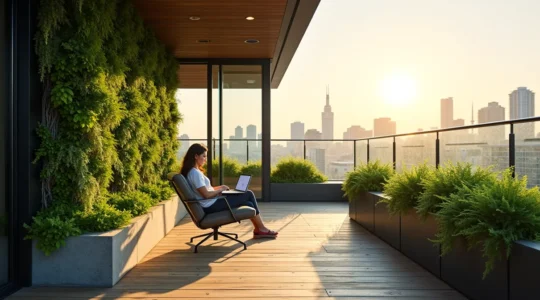
Living Walls as Performance Architecture: Slashing Stress and Energy Bills
Living green walls are not cosmetic additions; they are high-performance building systems that deliver quantifiable returns in energy efficiency, acoustic comfort, and human well-being. They function as a second skin for buildings, reducing air conditioning needs by up to 33%…
Read more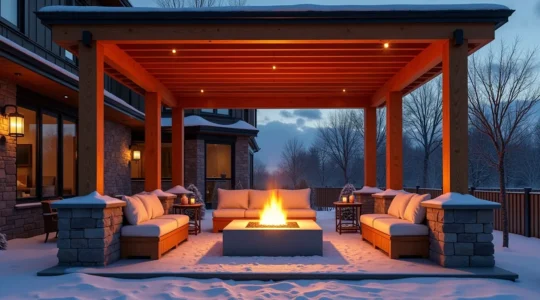
How to Heat Your Covered Patio for a -5°C Canadian Winter Party
In summary: To make a patio usable at -5°C, you must create an engineered “heat envelope,” not just add heat. Electric infrared heaters are superior as they heat people and objects directly (radiant efficiency), unlike gas heaters that waste energy…
Read more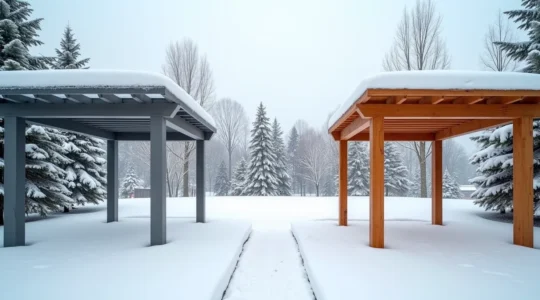
Aluminum vs. Cedar: Which Pergola Material Withstands Canadian Weathering Better?
The best pergola for Canada isn’t about choosing a material, but engineering a complete, resilient outdoor system. True weather resistance comes from deep footings and engineered snow-load capacity, not just the surface material. Creating a true “outdoor room” depends more…
Read more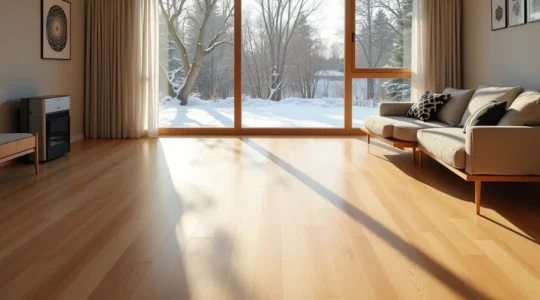
Why Canadian Maple Outlasts Exotics in a Harsh Canadian Winter
The secret to a lifelong hardwood floor in Canada isn’t the price or country of origin; it’s mastering the physics of wood moisture against our extreme humidity swings. Wood must acclimate inside your home for at least 7-10 days to…
Read more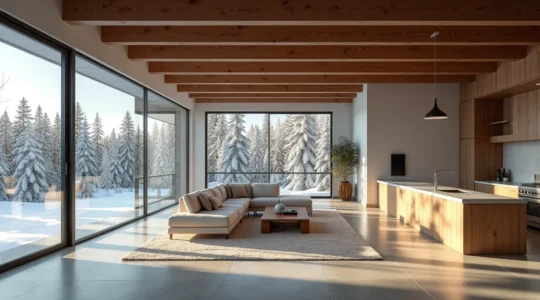
Why open-concept modern homes often suffer from poor acoustics and how to fix it?
The sleek beauty of a modern home often masks a deep sensory discomfort, from echoing noise to a persistent chill. The solution isn’t to compromise the aesthetic, but to adopt a holistic design philosophy. Sound, heat, and visual calm are…
Read more