
Seeing Percé Rock isn’t about beating the crowds—it’s about understanding the secrets they miss, starting with the fact that walking to it is now strictly forbidden for your safety.
- The best boat tour depends entirely on your goal: stability for families or low-angle shots for photographers.
- The most breathtaking views aren’t from the paid platform but from unmarked trails and coastal roads.
- Planning your entire Gaspésie loop “against the current” is the ultimate way to ensure a quieter journey.
Recommendation: Plan your visit around the natural tides and local knowledge, not just the time of day, to transform your trip from a tourist stop into an authentic experience.
Every year, thousands of travellers are drawn to the Gaspé Peninsula with one image in mind: the majestic Percé Rock, an immense limestone monolith standing guard in the Gulf of St. Lawrence. The common advice for avoiding the inevitable crowds is predictable: arrive early, visit in the shoulder season, book your tours in advance. While these tips have some merit, they treat the experience like a problem to be solved rather than a rhythm to be joined. They encourage you to outsmart other tourists, but they don’t help you connect with the place itself.
As a local guide, I can tell you the real magic of Percé isn’t found by setting an earlier alarm. It’s discovered by syncing with the region’s natural pulse—the ebb and flow of the tides, the direction of the tourist traffic, and the quiet moments the tour buses will never find. Many visitors still hold onto the romantic notion of walking out to the rock at low tide, a treasured memory for past generations, but a dangerous and now-prohibited action that misses the point of modern, respectful tourism.
This guide offers a different perspective. Instead of just avoiding the crowds, we’ll focus on finding better experiences. We’ll explore which boat tour truly matches your needs, uncover the hidden viewpoints that offer solitude and superior photos, learn to spot authentic local crafts, and even plan an entire 7-day loop around the peninsula that has you moving against the main flow of traffic. It’s time to trade the checklist for a compass and experience Percé Rock like a local.
text
This article will guide you through the essential strategies for a more authentic and peaceful visit to Percé and the surrounding Gaspésie region. Below is a summary of the topics we will cover.
Summary: A Local’s Guide to Experiencing Percé Rock and Gaspésie
- Why you can only walk to the rock at low tide and the danger of ignoring it
- Glass bottom boat or Zodiac: which tour offers the best view of the gannet colony?
- The best viewpoints from the mountains that most tourists miss
- How to distinguish local agate jewelry from imported fakes?
- Where to park in Percé village to avoid the expensive lots?
- Where to park your van to wake up to the best sunrise over the Gulf?
- Why a setback of 50 feet might not be enough for the next 20 years
- How to plan the Route 132 loop to see the best of Gaspésie in 7 days?
Why you can only walk to the rock at low tide and the danger of ignoring it
The idea of walking across the sandbar to touch the base of Percé Rock is a powerful, almost mythical image. For generations, it was a rite of passage. However, what was once a cherished activity is now a dangerous and strictly prohibited one. The primary reason is the rock’s profound geological impermanence. It is not a static monument but an actively eroding structure. This isn’t a vague, long-term threat; it’s an immediate and constant danger. The risk of being caught by the incoming tide is secondary to the very real threat of rockfalls.
To understand the gravity of the situation, consider the sheer scale of the erosion. Studies show the current erosion causes the rock to lose approximately 300 tonnes per year. These are not small pebbles; these are massive boulders that can detach without warning at any time, in any season, regardless of the tide. This is why Parks Canada and SEPAQ, the provincial parks authority, have made the access rules crystal clear. Ignoring them is not a rebellious act; it is a life-threatening gamble.
The official regulations are not merely suggestions but a legal mandate for visitor safety and environmental protection. As SEPAQ states, respecting these boundaries is essential. In their official communications, they highlight the dual risk of rockfalls and environmental damage:
The Parks Act stipulates that it is mandatory to stay on hiking trails; therefore making one’s way to Percé Rock is prohibited. Moreover, walking along the walls of Percé Rock and Mont Joli is extremely dangerous. Several tons of boulders fall from the rock every year, in all seasons.
– Parc national de l’Île-Bonaventure-et-du-Rocher-Percé (SEPAQ)
Embracing the view from a safe distance is the modern way to honour the rock. It’s about shifting perspective from conquering the landmark to respecting its powerful, and fragile, nature.
Glass bottom boat or Zodiac: which tour offers the best view of the gannet colony?
Choosing your boat tour around Percé Rock and Bonaventure Island isn’t about which one is “best,” but which one is best for *you*. The two main options, the larger glass-bottom boat and the nimble Zodiac, offer fundamentally different experiences, especially when it comes to viewing the world’s most accessible Northern Gannet colony. Your choice should be guided by your primary goal: are you a photographer seeking dramatic shots, a family looking for a stable ride, or a naturalist wanting a comfortable overview?
The glass-bottom boat is the classic choice for a reason. It’s spacious, highly stable, and offers a relaxed pace. It’s ideal for families with young children or anyone concerned about seasickness. While the “glass bottom” feature is a minor novelty, the boat’s main advantage is its higher vantage point, which provides good, sweeping views of the cliffs teeming with birds. It’s a comfortable platform for general sightseeing and taking photos with a telephoto lens.
The Zodiac tour, on the other hand, is an adventure. These smaller, faster boats sit low on the water, putting you at eye-level with the waves and offering a much more intimate and dynamic perspective. For photographers, this is a game-changer. It allows for dramatic, low-angle shots of the rock and the gannets that are impossible from the larger boat. The trade-off is a bumpier ride and more exposure to sea spray, but the proximity to wildlife and the thrilling sense of exploration are unparalleled.
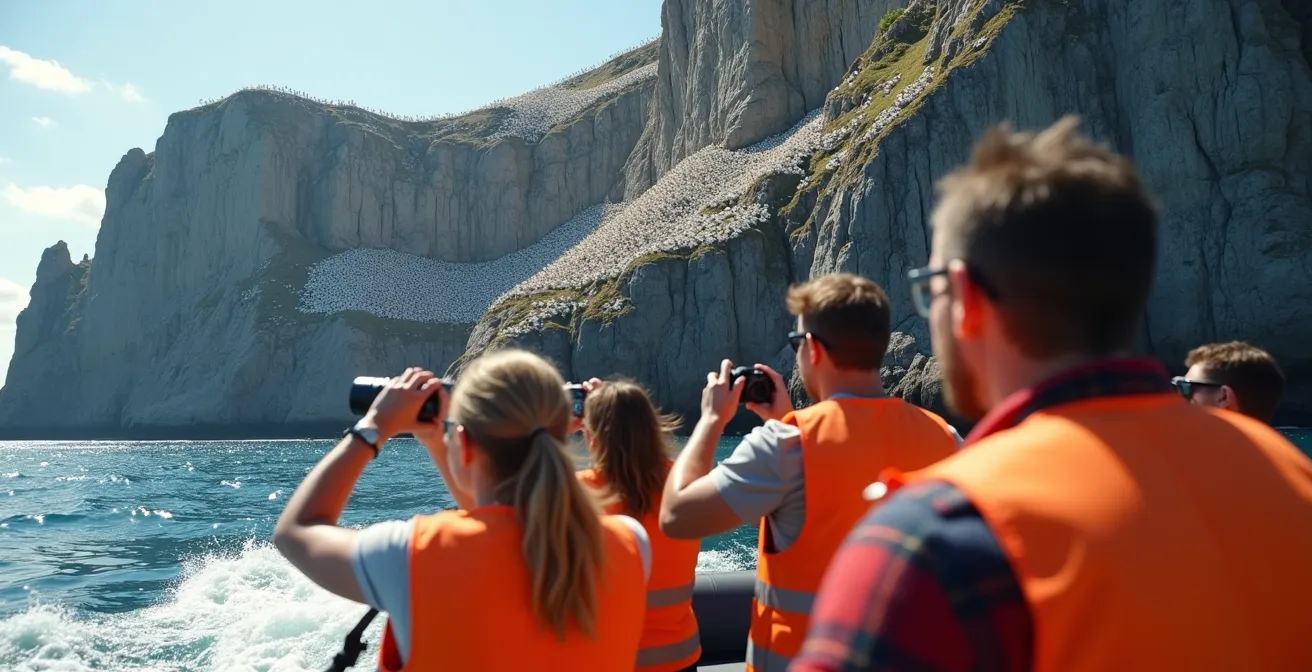
To make the decision clearer, here is a direct comparison of the key features of each tour type, including the often-overlooked sea kayak option for the truly adventurous.
| Feature | Glass Bottom Boat | Zodiac Tour | Sea Kayak (Alternative) |
|---|---|---|---|
| Best For | Naturalists & Families | Photographers | Silent Wildlife Approach |
| Stability | Very Stable | Less Stable | Moderate |
| Photography | Good for telephoto | Low-angle shots | Intimate perspectives |
| Duration | 1.5 hours | 1.5 hours | 2+ hours |
| Price (2025) | $45 adult | $45 adult | Varies |
| Capacity | Higher | Lower (more intimate) | Very small groups |
Ultimately, if your priority is comfort and a calm overview, the glass-bottom boat is your best bet. If you crave dramatic photos and a more visceral connection to the sea, the Zodiac is the clear winner.
The best viewpoints from the mountains that most tourists miss
While the view from the Percé wharf is iconic, it’s also the most crowded. To truly appreciate the scale and beauty of the rock, you need to gain some elevation. The Percé UNESCO Global Geopark offers the most famous option: a suspended glass platform that provides a stunning panorama. While impressive, it’s a paid attraction that draws significant crowds. The real secret, known to locals, is that some of the most spectacular and serene viewpoints are completely free and just a short walk or drive away.
The Geopark’s platform is an engineering marvel, and the suspended platform offers views from 200 metres (656 feet), giving you a top-down perspective of the village and the bay. However, for a more natural and peaceful experience, you can explore several other trails. One of the best-kept secrets is the unofficial trail to the summit of Pic de l’Aurore, located just north of the village. This spot offers a magnificent profile of the rock, especially with the soft morning light hitting its face.
For those willing to venture a bit further, the rewards are even greater. Here are a few spots that most tourists will never find:
- Route des Monts: A short drive inland from the nearby village of Coin-du-Banc, this road climbs into the hills and provides unique, elevated perspectives of the coastline with the rock in the distance.
- Route Verte Cycling Path: The bike path between Percé and Barachois runs along the coast. While cycling, keep an eye out for small, unmarked clearings in the trees. These little pull-offs offer perfectly framed, crowd-free views of the rock.
- Mont Sainte-Anne Trails: Besides the main trail to the Geopark platform, other paths crisscross Mont Sainte-Anne. Exploring these can lead to quiet lookouts where you can enjoy the view in solitude.
The key is to think beyond the designated photo-op. The landscape around Percé is filled with opportunities for discovery. By taking a short hike or a scenic drive, you can find a personal connection to the iconic view, far from the selfie sticks.
How to distinguish local agate jewelry from imported fakes?
A walk along Percé’s main street reveals dozens of shops selling beautiful, colourful stone jewelry. Many are advertised as being made from local “Gaspésie agate.” While some are genuine treasures crafted by local artisans, many are imported, dyed, or simply glass fakes sold to unsuspecting tourists. Knowing how to spot the difference is key to bringing home an authentic piece of the peninsula and supporting the local artists who depend on this craft.
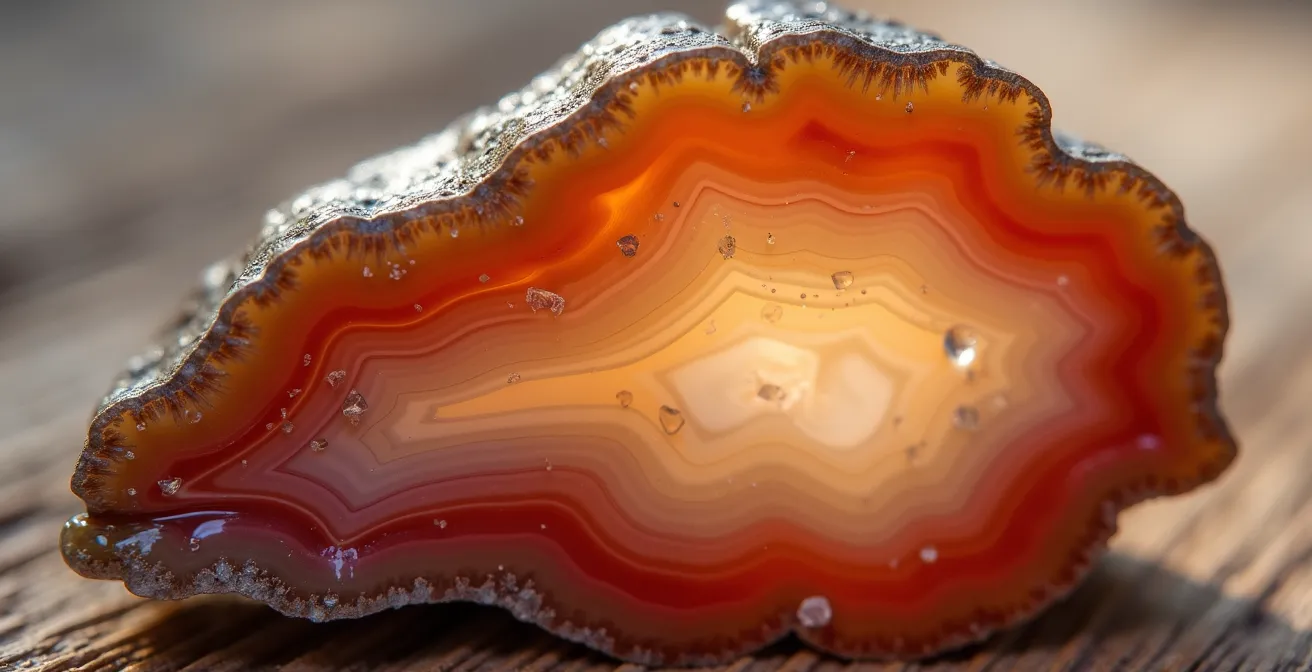
Genuine Gaspésie agate has distinct characteristics that are hard to replicate. The first thing to look for is the waxy luster. Real agate has a soft, almost greasy sheen, unlike the hard, glassy shine of polished fakes. Next, examine the patterns. Authentic stones feature natural, subtle banding in shades of red, orange, grey, and white. These bands are rarely uniform; they swirl and follow the stone’s natural formation. If you see a piece with perfectly straight lines or unnaturally bright, uniform colours (like electric blue or hot pink), it has almost certainly been dyed.
Another key indicator is the “conchoidal fracture,” a term for the shell-like, curved surfaces that form when the stone is broken. While you might not see a broken surface on a finished piece, this underlying structure contributes to the stone’s unique light reflection. Price can also be a clue; if a large, seemingly perfect piece is being sold for a very low price, be suspicious. Crafting genuine agate takes time and skill.
To be absolutely sure you’re buying the real thing, the best strategy is to buy directly from a reputable local artisan’s studio. One such trusted establishment is La Maisonart. Housed in a restored 1845 farmhouse, artist John Wiseman’s studio and gallery La Maisonart showcases a wide selection of original artwork, including authentic agate jewelry crafted by certified local artisans. Visiting places like this not only guarantees authenticity but also connects you to the creative spirit of the region.
Where to park in Percé village to avoid the expensive lots?
Finding parking in the heart of Percé during peak season can be a frustrating and expensive ordeal. The main lots near the wharf charge premium daily rates, quickly adding a significant cost to your visit. However, with a little local knowledge and a willingness to walk for ten minutes, you can easily find free, all-day parking. The secret is to arrive with a strategy and know where to look before you get drawn into the orbit of the paid lots.
The golden rule of free parking in Percé is to arrive before 9:30 AM. The early bird gets the spot, especially during July and August. Your first targets should be the side streets just off the main drag. Look for free street parking on Rue de l’Église (Church Street) and continue up onto Rue de la Montagne (Mountain Street). These streets offer plenty of unregulated spots, and the gentle uphill walk back to your car at the end of the day provides a fantastic final view of the village.
If you arrive later or during a particularly busy weekend, a fantastic alternative is the “park and ride” strategy. Drive a few kilometres south to the charming fishing village of L’Anse-à-Beaufils. You can often find free parking near the La Vieille Usine cultural hub or the famous Pit Caribou microbrewery. From there, you can hop on the local RÉGÎM public transit bus for a quick and scenic ride into Percé, completely bypassing the parking chaos. This approach not only saves you money but also turns a logistical chore into a pleasant part of your Gaspésie discovery.
Your 5-Step Plan to Outsmart Percé’s Paid Parking
- Time Your Arrival: Aim to be in the village before 9:30 AM on weekdays and before 8:30 AM on weekends in July and August for the best chance at free spots.
- Target Side Streets: Immediately head for Rue de l’Église and Rue de la Montagne. Don’t even drive down to the waterfront first.
- Embrace the Walk: Consider the 10-minute walk from a free spot not as an inconvenience, but as a chance to see the village’s charming architecture and save $20 or more.
- Use the L’Anse-à-Beaufils Hub: If street parking is full, make the short drive to L’Anse-à-Beaufils, park for free, and use the affordable public transit.
- Check Shoulder Season Rules: If visiting in May, June, September, or October, be aware that many paid lots are often free or have reduced rates. Always check the signs.
By thinking like a local, you can turn one of the most common tourist frustrations into a non-issue, leaving you with more time and money to enjoy what Percé truly has to offer.
Where to park your van to wake up to the best sunrise over the Gulf?
For van lifers and road trippers, one of the greatest joys of the Gaspésie tour is waking up to a spectacular sunrise over the water. While official campgrounds in Percé are expensive and often booked solid, finding a safe, legal, and scenic spot for an overnight stay requires a bit of research and a respectful approach. Wild camping regulations are strict in Quebec, and areas around major tourist sites are frequently patrolled, so simply pulling over anywhere is not a wise option.
One popular strategy is to look for tolerated pull-offs on Route 132, particularly in the stretches east of Cap d’Espoir. These spots can offer incredible, unobstructed views of the sunrise with Percé Rock in the distance. However, “tolerated” is the key word. The situation can change seasonally or even weekly, so it’s crucial to look for “No Overnight Parking” signs and check recent feedback on apps like iOverlander or local van life Facebook groups. The Sûreté du Québec does patrol these areas.
A more reliable and respectful approach involves community engagement. Many van lifers have found success by simply asking for permission. Rural churches, community centres, or agricultural co-ops outside the main village often have large, empty parking lots. Politely approaching someone in charge and asking if you can park for one night can yield a surprisingly positive response. This not only gives you a safe spot but also fosters goodwill with the local community. Another excellent legal alternative is Haldimand Beach near Gaspé, which is a bit of a drive from Percé but offers beautiful sunrise views and is known to be more tolerant of overnight vehicles.
The key is to be a good ambassador for the van life community: be discreet, leave no trace, and support local businesses as a thank you. This approach will ensure these precious spots remain available for future travellers.
Why a setback of 50 feet might not be enough for the next 20 years
The dramatic beauty of the Gaspé coast, epitomized by Percé Rock itself, is a product of constant, relentless erosion. This geological reality extends far beyond the famous landmark, impacting the entire coastline and posing a significant challenge for real estate and infrastructure. For anyone dreaming of owning a piece of this stunning shoreline, understanding the accelerating rate of coastal erosion is not just an environmental concern—it’s a critical financial one. The traditional building setbacks that once seemed safe are quickly becoming obsolete.
The forces of wind, ice, and waves are eating away at the fragile sandstone and shale cliffs of the peninsula. While Percé Rock’s loss of 300 tonnes per year is the most famous statistic, similar processes are at play all along Route 132. Climate change is exacerbating the problem, with rising sea levels, more intense storms, and reduced winter sea ice cover leaving the shoreline more vulnerable than ever before. This has led to a significant increase in the rate of coastal retreat in many areas.
Research from institutions like the Université du Québec à Rimouski (UQAR), a leader in marine sciences, consistently points to this accelerated erosion. Their studies indicate that historical data is no longer a reliable predictor of future coastline stability. A property with a 50-foot (about 15-meter) setback from the cliff edge, which might have been considered secure a generation ago, could be at serious risk within the next two decades. For prospective buyers, this means due diligence is paramount.
Investing in coastal property in Gaspésie now requires a forward-looking risk assessment. This includes consulting recent geological surveys, understanding local municipal regulations on coastal construction, and considering the long-term viability of the land. The dream of a home with an ocean view must be tempered with the scientific reality that the view—and the land it sits on—is in a constant state of flux.
Key Takeaways
- Ditch the outdated idea of walking to Percé Rock; it’s dangerous and forbidden. True appreciation comes from respecting its power from a safe distance.
- Choose your experience: a stable boat for family viewing or a nimble Zodiac for thrilling, photo-worthy proximity to wildlife.
- The most rewarding views are often free and uncrowded. Explore the mountain trails and coastal roads beyond the main tourist platform.
- Support local artisans by learning to identify authentic Gaspésie agate, characterized by its waxy luster and natural, irregular banding.
How to plan the Route 132 loop to see the best of Gaspésie in 7 days?
The “Tour de la Gaspésie” is one of Canada’s most epic road trips, a spectacular loop that follows Route 132 around the entire peninsula. While most tourists instinctively drive it counter-clockwise, heading from Sainte-Flavie towards the dramatic cliffs of the north shore first, the secret to a quieter, more relaxed trip is to do the opposite. By planning a clockwise, “counter-flow” itinerary, you can avoid the worst of the traffic and experience the region’s highlights with more breathing room.
Starting your journey by heading south through the Matapédia Valley towards the Baie des Chaleurs allows you to move against the main wave of tourism. This means you’ll often arrive at key destinations like Percé and Gaspé on weekdays when the majority of counter-clockwise travellers are elsewhere. To make the most of a 7-day trip without feeling rushed, the best strategy is to establish two main bases. Plan for 3-4 nights in the Percé area to explore the rock, Bonaventure Island, and the surrounding villages, and another 3-4 nights near Parc de la Gaspésie to immerse yourself in the rugged Chic-Choc Mountains.
This two-base approach minimizes packing and unpacking, giving you more time for discovery. Within this framework, you can plan your days strategically. Time your visits to popular villages to coincide with their weekly farmers’ markets, which are often less crowded than the main attractions. For a truly local experience, visit the fishing port of Rivière-au-Renard in the late afternoon to witness the impressive sight of the fishing fleet returning to harbour. The entire loop is a significant distance; the celebrated Gaspésie Tour traces the peninsula for 1,270 kilometres, so trying to see everything in 7 days is impossible. Focusing on two distinct regions allows for deeper exploration.
By travelling clockwise and using a two-base strategy, you transform your road trip from a race against the clock into a genuine immersion in the landscapes and culture of Gaspésie, ensuring your memories are of stunning vistas, not traffic jams.
Now that you’re equipped with this insider knowledge, you can begin planning a trip to Percé that goes beyond the surface. By embracing the natural rhythms of the region and seeking out these less-travelled paths, you’re ready to create an authentic and memorable Gaspésie adventure.