In summary:
- Drive the Route 132 loop counter-clockwise to keep the ocean on your right for safer stops and a more dramatic scenic reveal.
- Plan your electric vehicle charging using the Electric Circuit app, anticipating higher energy use on the northern coast’s steep hills.
- Seek out local fish markets (poissonneries) for the most authentic and affordable lobster rolls (guédilles).
- Master the art of parking in Percé by using free spots on the village outskirts and walking, saving significant money.
- Experience Percé Rock strategically by visiting at low tide, taking smaller boat tours, and using alternative viewpoints to avoid crowds.
The Gaspésie Peninsula road trip is a quintessential Canadian adventure, a promise of salty air, towering cliffs, and charming fishing villages. Many road trippers arrive with a simple checklist: drive the loop, see Percé Rock, and eat some lobster. But this approach often leads to missed opportunities, frustrating traffic, and the feeling of being just another tourist. While some guides offer generic “must-see” lists, they rarely delve into the logistical choreography required to transform a good trip into an unforgettable one. The real magic of Gaspésie isn’t just in what you see, but in *how* you see it.
A truly great 7-day journey requires more than just a map; it requires a strategy. The secret lies not in rushing from one famous landmark to the next, but in mastering the nuances of the drive itself. This includes the direction you travel, the timing of your stops, and the local knowledge that separates a surface-level visit from a deep, authentic experience. This isn’t just a drive; it’s a carefully paced exploration designed to build wonder and connect you with the true spirit of the peninsula.
This guide abandons the simple checklist in favour of an expert itinerary plan. We’ll focus on the strategic decisions that make all the difference, covering everything from the physics of driving the coast to the unwritten rules of buying seafood directly from the wharf. By mastering these details, you’ll unlock a richer, smoother, and more rewarding journey around one of North America’s most spectacular coastal routes.
This detailed plan breaks down the essential strategies for your 7-day Gaspé tour. Below, you will find a summary of the key topics we’ll cover to help you navigate the loop like a seasoned professional, ensuring you get the most out of every moment.
Summary: A Strategic Guide to Quebec’s Gaspésie Peninsula Loop
- Why Driving the Loop Counter-Clockwise Keeps the Ocean on Your Right Side?
- Is the Gaspésie Loop EV-Friendly Enough for a Standard Range Car?
- Guédille or Club Sandwich: Where to Find the Best Lobster Rolls on the Road?
- The Brake-Burning Hills of the North Coast: How to Drive Them Safely?
- Where to Park Your Van to Wake Up to the Best Sunrise Over the Gulf?
- Where to Park in Percé Village to Avoid the Expensive Lots?
- Buying Off the Wharf: The Unwritten Rules of Engaging with Fishermen
- How to Experience Percé Rock from Sea and Land Without Getting Stuck in the Tourist Crush?
Why Driving the Loop Counter-Clockwise Keeps the Ocean on Your Right Side?
The first strategic decision of your Gaspésie road trip is the most crucial: which direction to drive the loop. While you can go either way, seasoned travellers and locals alike will tell you that a counter-clockwise route is superior. Starting from a point like Mont-Joli and heading south through the Matapédia Valley first sets you up for a journey of escalating beauty. This concept of “scenic pacing” means you begin with gentle rural landscapes and save the breathtaking, dramatic cliffs of the northern coast for the grand finale of your trip.
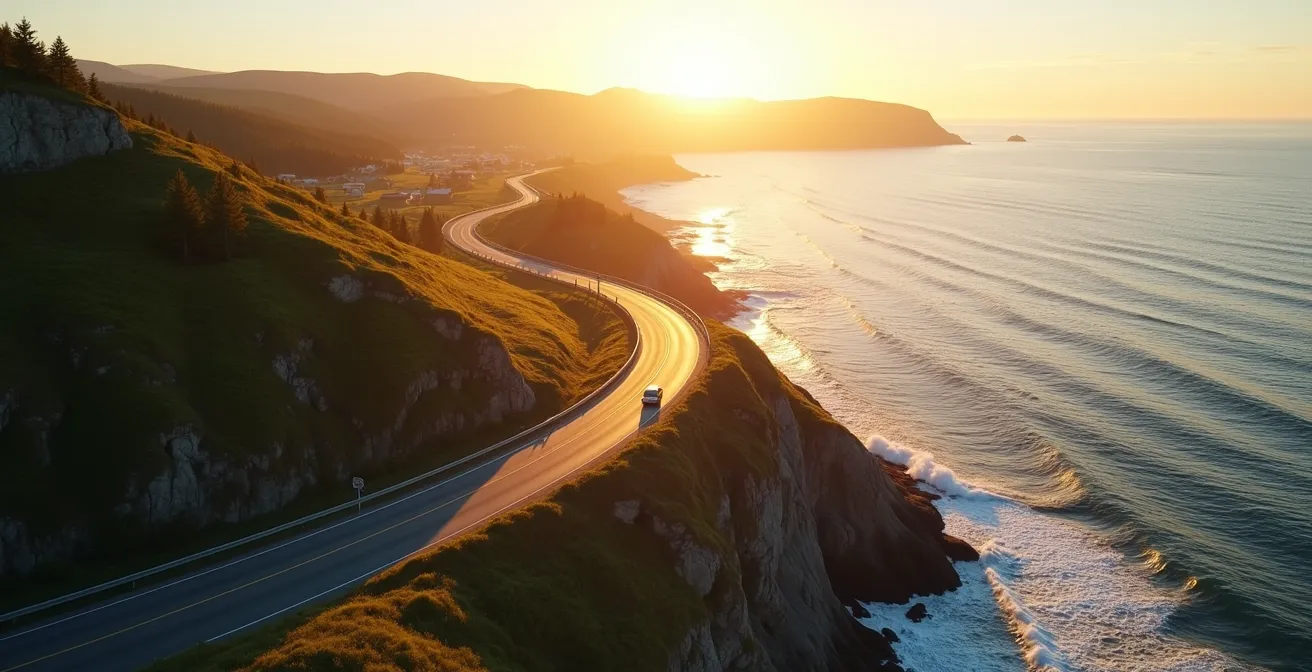
The most significant advantage, however, is purely practical and safety-oriented. In North America, with the driver on the left side of the car, a counter-clockwise route places the Gulf of St. Lawrence and the St. Lawrence River squarely on your right. This means every scenic lookout (belvédère), every hidden cove, and every tempting photo opportunity is a simple, safe pull-off. You won’t have to cross a lane of oncoming traffic to stop. This makes the drive more relaxing and allows for spontaneous discovery. Furthermore, this orientation optimizes photography; the afternoon sun will be behind you, illuminating the coastal landscapes in a warm glow rather than creating harsh, backlit silhouettes.
This route also provides a more profound sense of arrival. As you approach the iconic Percé Rock from the west, you get to watch it slowly grow on the horizon, building a sense of anticipation that is lost when approaching from the north. Driving counter-clockwise isn’t just a matter of direction; it’s a deliberate choice to enhance safety, scenic enjoyment, and the overall narrative of your adventure.
Is the Gaspésie Loop EV-Friendly Enough for a Standard Range Car?
The short answer is yes, with proper planning, the Gaspésie loop is absolutely manageable for an electric vehicle. Range anxiety is a valid concern given the region’s remote stretches and challenging terrain, but significant investment has made the journey surprisingly accessible. The key is to shift your mindset from reactive charging to strategic charging, treating your battery level as another resource to manage alongside time and fuel.
Hydro-Québec’s Electric Circuit has established a reliable network to support EV travellers. In fact, a network of 11 fast-charge stations cover the entire Gaspé Peninsula loop, strategically placed in key towns along Route 132. This means you’re rarely too far from a top-up. The most critical part of your strategy is to anticipate higher energy consumption on the northern coast, where steep climbs can drain a battery faster than flat-land driving.

As the image above suggests, charging can become part of the scenic experience rather than a chore. To ensure a smooth trip, always plan one charging stop ahead. Use the descents to your advantage by maximizing regenerative braking, which can add a surprising amount of range back to your battery. With a little foresight, your EV will be a silent, efficient, and perfectly capable partner for your Gaspésie exploration.
Your EV Charging Action Plan for Route 132
- Map Your Chargers: Before you go, locate the Level 3 fast-charging stations in key towns like Matane, Sainte-Anne-des-Monts, Gaspé, Percé, and New Richmond using the Electric Circuit app.
- Budget Your Energy: Plan for a 15-20% increase in energy consumption on the steep climbs of the northern coast, particularly the hills leaving Mont-Saint-Pierre.
- Charge Before Parks: Always ensure a full or near-full charge in Gaspé town before entering Forillon National Park, as charging infrastructure within the park itself is limited.
- Download the App: Install the Electric Circuit app on your phone to check real-time station availability, status, and pricing, which typically runs $10-15 per hour for fast charging.
- Master Regenerative Braking: Actively use your vehicle’s regenerative braking capabilities on the long, steep descents. This not only saves your physical brakes but also extends your driving range significantly.
Guédille or Club Sandwich: Where to Find the Best Lobster Rolls on the Road?
One of the ultimate culinary goals of a Gaspésie trip is to indulge in fresh lobster. However, many visitors miss the most authentic experience by stopping at the first tourist-facing “cantine” they see. The secret to finding the best lobster roll lies in understanding a key local distinction and knowing where to look. In Gaspésie, you are primarily looking for a *guédille au homard*, not the hot, butter-drenched lobster roll common in the Maritimes. The Quebec-style *guédille* is a cold salad of lobster meat, lightly dressed in mayonnaise and celery, served in a toasted hot dog bun. It’s refreshing, simple, and lets the sweet flavour of the lobster shine.
To find the best, bypass the busy restaurants in major tourist hubs. The local’s edge comes from visiting a *poissonnerie* (fish market). These establishments, often located near the wharfs in smaller towns like Sainte-Thérèse-de-Gaspé or Rivière-au-Renard, have takeout counters that serve *guédilles* made with lobster caught that very day. The product is fresher, the price is often better, and the experience is far more authentic. For the absolute peak experience, time your visit with the lobster season, which typically runs from May through June.
Don’t be afraid to try the alternatives, either. A *guédille* made with the local Nordic shrimp (*crevettes de Matane*) is an equally delicious and often more affordable option that is just as representative of the region’s flavour. Here are a few tips for your hunt:
- Look for unassuming signs for “Poissonnerie” in smaller coastal villages.
- Ask for the “guédille au homard” to ensure you get the local cold preparation.
- Follow the locals; if you see a line of residents at a takeout window, that’s your spot.
- Visit around midday, as some smaller spots may sell out of their fresh daily supply.
The Brake-Burning Hills of the North Coast: How to Drive Them Safely?
The northern arc of Route 132, especially the stretch through the Chic-Choc Mountains, is where Gaspésie’s dramatic beauty becomes a real driving challenge. The road features long, steep descents that can be punishing on a vehicle’s braking system if not handled correctly. The smell of hot brakes from tourists “riding the pedal” all the way down is a common occurrence. Mastering these hills is a matter of safety and mechanical sympathy for your car.
The single most important technique is to use engine braking (*frein moteur*). Instead of relying solely on your brakes, shift your vehicle’s transmission into a lower gear (e.g., from ‘D’ to ‘3’ or ‘L’ in an automatic, or downshifting in a manual). This uses the engine’s compression to control your speed, keeping your brakes cool and ready for when you actually need them. This is especially vital when navigating winding sections where you need precise speed control. The hills can be significant; for context, some coastal climbs are equivalent to the 280 metres of elevation gain found on trails like Mont-Saint-Alban, which the road must also conquer.
Beyond vehicle control, situational awareness is paramount. This region is a major logging corridor, so be prepared to share the road with massive logging trucks (*camions forestiers*). Always give them ample space, never tailgate on a descent, and use designated pull-offs to let them pass if they are behind you. Wildlife is another major hazard, particularly moose, which are most active at dawn and dusk. Finally, be aware that cell service is notoriously patchy in the mountains. It’s crucial to download offline maps before leaving major towns like Sainte-Anne-des-Monts or Gaspé.
Where to Park Your Van to Wake Up to the Best Sunrise Over the Gulf?
For van lifers and road trippers with self-contained vehicles, waking up to a spectacular sunrise over the Gulf of St. Lawrence is the ultimate Gaspésie dream. However, the reality of finding a legal, beautiful, and respectful place to park overnight requires a strategic approach. Recent years have seen crackdowns on unregulated “wild camping,” especially in popular areas like Percé. The key is to distinguish between designated campgrounds, tolerated spots, and strictly forbidden zones.
The most effective strategy is a three-step process: scout, sleep, and reposition. During the day, as you drive, identify a perfect sunrise spot—a scenic *belvédère* or a quiet patch of coastline. Do not park there for the night. Instead, find a legal and discreet place to sleep nearby. This could be a designated rest area, a commercial lot where you’ve asked permission, or a spot identified on an app like iOverlander (always read recent comments for Canadian-specific bylaw enforcement context). Then, set your alarm for pre-dawn, drive the final few minutes in the dark, and arrive at your scouted sunrise spot just as the sky begins to glow. This gives you a private, front-row seat without breaking any rules.
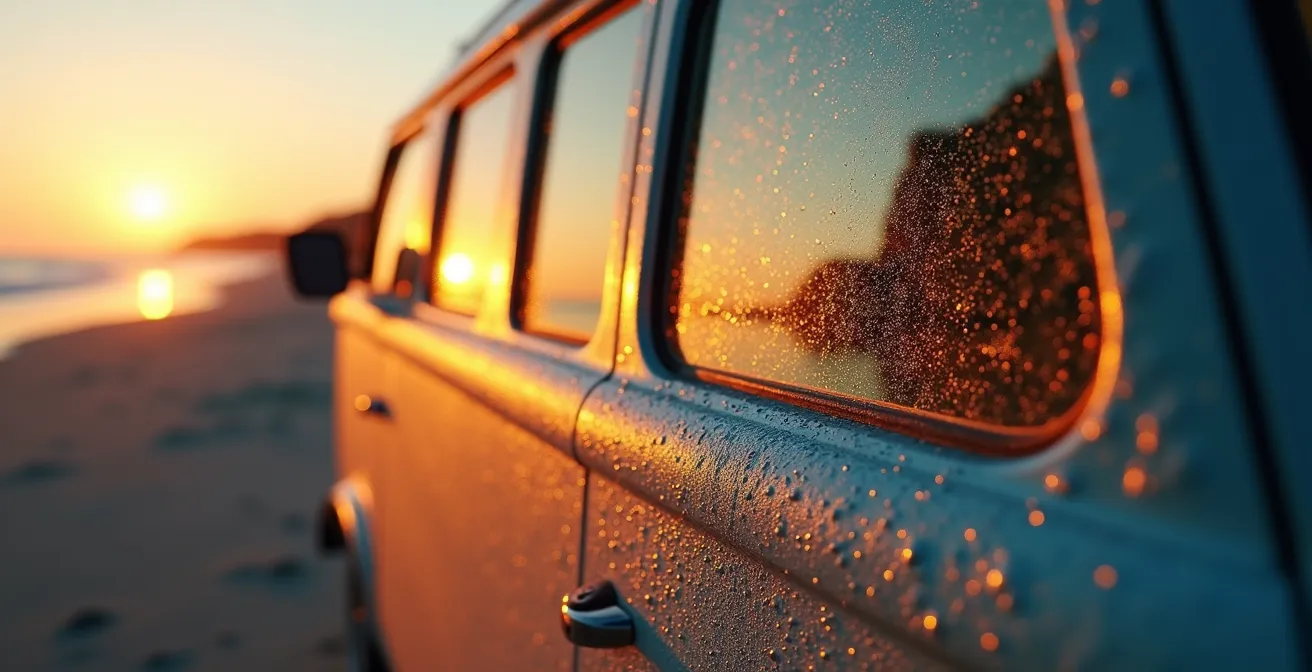
A few locations are known for being more tolerant, such as Haldimand Beach near Gaspé, but these can become crowded. For a guaranteed epic view, consider a paid spot at a national park campground like Cap-Bon-Ami in Forillon National Park, which offers unparalleled views of the cliffs illuminated by the golden hour. Whichever strategy you choose, the absolute golden rule is to practice Leave No Trace principles. Pack out everything you pack in, be quiet, and leave the spot better than you found it. This goodwill is essential to keeping van life a viable option in the region.
Where to Park in Percé Village to Avoid the Expensive Lots?
Percé is the vibrant, bustling heart of the Gaspésie tourist experience, but that popularity comes at a cost—literally. Parking in the village centre during peak season can be a significant expense, with private lots charging what recent visitor experiences in Percé report as $10-20 for just a couple of hours. For a road tripper on a 7-day budget, these costs add up quickly. The strategic move is to treat parking as a logistical challenge to be solved with a little bit of planning and a willingness to walk.
The solution is to park on the periphery of the village for free and enjoy a short, scenic walk into the core. One of the best options is the base of Mont-Sainte-Anne and the Géoparc. The parking there is free, and it offers a beautiful 15-20 minute walk downhill into town, with the added bonus of building anticipation as the Rock comes into view. Other options include the residential streets in the Anse-du-Sud area or, for a calculated risk, the church lot on the western edge of town outside of service hours. These free spots require a bit more time, but the walk itself becomes part of the experience, allowing you to appreciate the village atmosphere away from the traffic.
If you absolutely need to park closer, the main municipal lot on Rue Biard offers a more reasonable daily fee and is a good option for RVs or those planning to spend the entire day. The key is to have a plan before you arrive. Driving into the centre of Percé without a destination will inevitably lead you into an expensive private lot out of convenience. The table below breaks down your options to help you make the best choice for your budget and timeline.
| Location | Cost | Distance to Wharf | Best For |
|---|---|---|---|
| Municipal Parking (rue Biard) | Daily fee | 250m | RVs and all-day visitors |
| Mont-Sainte-Anne/Géoparc base | Free | 15-20 min walk/cable car | Budget travelers willing to walk |
| Church lot (western edge) | Free (outside service hours) | 10 min walk | Short visits, calculated risk |
| Anse-du-Sud residential streets | Free | 15-20 min walk | Scenic beach walk approach |
| Street parking with vignette | Hourly rate | Near wharf | Quick 2-hour visits |
Buying Off the Wharf: The Unwritten Rules of Engaging with Fishermen
One of the most romanticized and authentic Gaspésie experiences is buying fresh lobster, crab, or fish directly from the fishermen as they unload their catch. This is the epitome of the “local’s edge,” connecting you directly to the source of the region’s bounty. However, a working fishing wharf is not a farmer’s market. It’s an industrial workplace with its own culture and etiquette. Approaching this interaction with respect and understanding is key to a successful exchange.
First, not all wharfs are created equal. Some are strictly commercial and not open to the public, while others have a long-standing culture of direct sales. Your best bet is to head for a major but community-oriented fishing port. The community of Rivière-au-Renard, known as the “fishing capital of Québec,” is an excellent place for this, as it balances major industry with accessibility to the public. The early afternoon is often the best time to visit, as many boats are returning to port to unload.
Case Study: Direct Purchase Success at Rivière-au-Renard
As detailed by seasoned travellers, the community wharf at Rivière-au-Renard is known to be particularly friendly to public buyers. It offers an ideal combination for those seeking an authentic experience: it’s a major, active fishing port, yet it maintains a welcoming, community feel that makes direct interaction possible. Arriving in the early afternoon, visitors have successfully purchased fresh-off-the-boat seafood, turning a simple meal into a memorable part of their Gaspésie journey.
When you arrive, follow these unwritten rules:
- Be Respectful of the Workspace: Stay out of the way of moving vehicles, equipment, and crew. You are a guest in their workplace.
- Have Cash Ready: Many fishermen operate on a cash basis. Have small bills ready to make the transaction smooth and easy.
- Don’t Haggle Aggressively: This is not a flea market. The prices are fair for incredibly fresh product. A polite inquiry is fine, but aggressive haggling is disrespectful.
- Be Patient and Friendly: Wait until the crew is not in the middle of a frantic task. A friendly “Bonjour” and a patient approach will go a long way.
– Know What’s in Season: Do a little research beforehand. Asking for lobster in September will only mark you as a tourist.
Key Takeaways
- Strategic Pacing is Everything: Driving counter-clockwise and saving the dramatic northern coast for the end of your trip creates a more powerful and memorable scenic narrative.
- Resource Management is Key: A successful trip involves managing not just your time, but your EV’s charge, your vehicle’s brakes on steep hills, and your budget for parking and food.
- The Local’s Edge Beats the Tourist Trail: The most authentic experiences, from the best lobster rolls to fresh seafood off the boat, are found by venturing just beyond the main tourist hubs and engaging with local life.
How to Experience Percé Rock from Sea and Land Without Getting Stuck in the Tourist Crush?
Percé Rock is the geological exclamation point of the Gaspé Peninsula. Simply seeing it is easy; experiencing it in a meaningful way, free from the tourist crush, requires a strategic approach to timing and perspective. The standard experience involves joining a large ferry and walking to the Rock amidst a crowd. But with a little planning, you can create a much more intimate and memorable encounter with this natural wonder.
For the land-based experience, the ability to walk to the Rock is entirely governed by the tides. You can only access the sandbar during a specific window—roughly 90 minutes on either side of absolute low tide. Check the tide charts from Marées Canada online before you go and plan your visit for this exact window. Going at the very beginning or very end of this period will give you the best chance of having fewer people around. For a completely different and uncrowded view, visit Cap Mont-Joli park on the north side of the bay, which offers a stunning profile view of the Rock and Bonaventure Island.
For the sea-based experience, consider alternatives to the large, crowded ferry boats. Booking a tour on a smaller Zodiac or a guided sea kayak trip often allows you to get much closer to the arch and the surrounding cliffs. To avoid the midday boat traffic jam, make a point to schedule the very first or the very last tour of the day. This often results in a more serene experience on the water. Finally, always remember that the Rock is an active geological formation. Safety information warns that 300 tons of rocks fall from the cliffs annually, a stark reminder to keep a safe distance and respect all posted warnings.
By transforming your approach from a simple checklist to a strategic plan, you elevate your 7-day Gaspésie journey from a standard vacation into a true exploration. Apply this mindset to every decision, and you will be rewarded with an adventure that is as smooth and efficient as it is breathtakingly beautiful.