Lifestyle & Practical Information
Purchasing property in Canada involves far more than comparing square footage and negotiating prices. The true cost of homeownership extends into daily lifestyle realities that profoundly affect your quality of life, ongoing expenses, and long-term satisfaction. From understanding how septic systems function in rural areas to navigating provincial land registry systems, these practical considerations shape the ownership experience in ways that many buyers only discover after closing.
Whether you’re considering a countryside retreat in Ontario, a family home near Halifax, or an urban condo in Vancouver, the intersection of real estate and lifestyle demands careful attention. This comprehensive resource explores the essential practical knowledge that Canadian property buyers and owners need to make informed decisions, avoid costly surprises, and truly thrive in their chosen location.
Rural Property Infrastructure: Beyond the Picturesque
The appeal of rural Canadian living often centers on space, natural beauty, and tranquility. However, properties outside municipal boundaries operate with fundamentally different infrastructure systems that require hands-on understanding and active management.
Water Supply and Quality Considerations
Unlike urban properties connected to municipal water systems, rural homes typically rely on private wells or cisterns. The quality and reliability of these water sources varies dramatically based on geological conditions, well depth, and seasonal factors. In regions like the Canadian Shield, bedrock wells may produce excellent water but with limited flow rates during drought periods. Property buyers should request recent water tests covering bacterial contamination, mineral content, and flow capacity—ideally conducted by accredited laboratories recognized by provincial health authorities.
Septic Systems and Wastewater Management
Rural properties manage wastewater through private septic systems, which function as miniature treatment facilities requiring periodic maintenance. A standard system consists of a septic tank and drain field, with typical lifespans of 15-40 years depending on soil conditions, usage patterns, and maintenance quality. Neglecting routine pumping every 3-5 years can lead to costly system failures, potentially requiring excavation and replacement costing $15,000-$30,000 or more in many Canadian markets.
Access Roads and Maintenance Responsibilities
Many rural properties sit on unassumed roads—private roadways not maintained by municipal governments. Property owners sharing these access routes often form road maintenance associations, sharing costs for grading, snow removal, and repairs. Before purchasing, verify whether the access road is public or private, review any existing maintenance agreements, and budget accordingly. Winter maintenance alone can cost several hundred to several thousand dollars annually per household, depending on road length and conditions.
School Quality and Real Estate Value Dynamics
For families with children, school quality consistently ranks among the top factors influencing property selection. The relationship between education and real estate value operates through multiple interconnected mechanisms that extend beyond simple test scores.
Properties within boundaries of highly-ranked schools typically command price premiums of 10-20% or more compared to similar homes in lower-ranked districts. However, understanding these rankings requires critical evaluation—methodologies vary widely, with some emphasizing standardized test performance while others consider graduation rates, post-secondary admission, or resource availability. Provincial databases maintained by education ministries provide raw data, but interpretation demands nuance.
The public versus private school decision adds another layer of complexity. Families choosing private education may prioritize different location factors—proximity to specific institutions, commute efficiency, or neighborhoods with peer families making similar choices. Meanwhile, the assumption of guaranteed entry into nearby schools can prove mistaken; some high-demand public schools implement lottery systems or strict boundary enforcement, particularly in major metropolitan areas.
Navigating the Canadian Real Estate Closing Process
The legal transfer of property ownership in Canada follows distinct provincial protocols that differ significantly from practices in other countries. Understanding this process reduces stress and prevents costly last-minute complications.
Legal Representation: Notary vs. Lawyer
In Quebec, notaries handle most real estate transactions, creating authentic acts that carry special legal status. In other provinces, real estate lawyers typically manage closings, reviewing contracts, conducting title searches, and facilitating the transfer of funds and ownership. Regardless of jurisdiction, engaging qualified legal representation protects buyers from defects, undisclosed liabilities, and registration errors.
The Statement of Adjustments Explained
This crucial document itemizes all financial adjustments between buyer and seller at closing. Property taxes, utility costs, condo fees, and other expenses are prorated based on the closing date. Buyers should review this statement carefully days before closing—not minutes before signing—to identify discrepancies, unexpected charges, or calculation errors while corrections remain feasible.
Title Insurance as Protection
While not legally mandatory, title insurance has become standard practice in Canadian real estate transactions. A one-time premium (typically $200-$400 for residential properties) protects against title defects, fraud, survey errors, and access issues that pre-closing searches might miss. Given the rising sophistication of real estate fraud, this coverage provides valuable peace of mind and financial protection.
Property Ownership Registration and Title Systems
Canada operates two distinct land registration systems, each with unique characteristics affecting ownership security and transfer processes. Understanding which system applies to your property matters for both buyers and long-term owners.
The Torrens system, used in Western Canada and Ontario, provides government-guaranteed title. Once registered, your ownership is conclusively established, with the provincial government standing behind its accuracy. The older Registry system, still found in parts of Atlantic Canada and some Ontario regions, functions as a document filing system without government verification of ownership. Properties under the Registry system require more extensive title searches tracing ownership chains back decades.
Ownership structure decisions—Joint Tenancy versus Tenants in Common—carry significant implications for estate planning. Joint Tenancy includes right of survivorship, meaning ownership automatically transfers to the surviving owner upon death, bypassing the estate. Tenants in Common allows each owner to bequeath their share through their will, providing greater flexibility but requiring careful estate planning coordination.
Seasonal Properties and the Cottage Lifestyle
The Canadian cottage tradition represents a distinctive aspect of property ownership, blending recreation with significant maintenance responsibilities and unique financial considerations.
Winterization and Seasonal Transitions
Three-season cottages require comprehensive winterization procedures each fall to prevent freeze damage. This process involves draining all plumbing systems, adding antifreeze to traps, shutting down water supplies, and protecting appliances. Failure to properly winterize can result in burst pipes, damaged fixtures, and thousands in repair costs. Four-season cottages with proper insulation and heating systems avoid these procedures but carry higher construction costs and ongoing utility expenses.
Tax Implications and Capital Gains
Unlike principal residences, recreational properties do not qualify for Canada’s principal residence exemption from capital gains tax. When sold, 50% of the appreciation becomes taxable income. However, strategic planning—including designating the cottage as your principal residence for specific years—can minimize tax liability. Consulting tax professionals familiar with recreational property rules proves essential for optimizing long-term financial outcomes.
Climate Resilience and Winter Property Protection
Canadian winters demand proactive property management strategies to protect assets during extreme cold events and prevent catastrophic failures that insurance may not fully cover.
Furnace failure during severe cold represents one of the most dangerous scenarios for property owners. Temperatures inside unheated homes can drop below freezing within hours, causing pipes to burst and extensive water damage. Establishing furnace failure protocols—including monitoring systems, emergency contacts, and backup heating sources—provides crucial protection. Smart thermostats with remote monitoring and alert capabilities allow owners to detect heating failures before damage occurs.
Insurance vacancy clauses add urgency to winter property protection. Most standard policies limit coverage if properties remain unoccupied beyond specified periods (often 4-7 consecutive days during winter months) without specific precautions like daily checks or water system drainage. Property owners maintaining vacant cottages or traveling extensively must understand these clauses and adjust coverage accordingly to avoid claim denials.
Energy Management and Utility Cost Optimization
Rising energy costs throughout Canada have elevated utility management from afterthought to strategic priority. Understanding consumption patterns and optimizing usage can reduce annual costs by hundreds or even thousands of dollars.
Modern home energy monitoring systems provide unprecedented insight into household energy consumption. Circuit-level monitoring identifies phantom loads—devices consuming electricity even when apparently off—and reveals which appliances drive costs. This granular data enables targeted interventions, from replacing inefficient equipment to adjusting usage patterns during peak-rate periods under Time-of-Use pricing structures common in Ontario and other provinces.
The transition to heat pumps represents a significant opportunity for cost reduction in many Canadian climates. While initial installation costs remain substantial, provincial incentives and rebates have improved the economics considerably. In moderate climates like coastal British Columbia, heat pumps can achieve cost parity with traditional systems within 5-7 years while providing both heating and cooling functionality.
Urban Lifestyle Factors and Location Convenience
Beyond property characteristics themselves, location-based lifestyle factors profoundly influence daily satisfaction and long-term property value in urban and suburban contexts.
Walkability metrics assess neighborhood design through the lens of pedestrian accessibility to essential services. Properties in neighborhoods with high walk scores—reflecting proximity to grocery stores, schools, parks, and transit—typically command premiums while offering reduced transportation costs and enhanced quality of life. However, walkability correlates with certain trade-offs, including higher noise levels from traffic and pedestrian activity, reduced yard sizes, and often higher property taxes.
For families with young children, seemingly minor factors like sidewalk quality, intersection safety, and stroller accessibility become daily realities that abstract location scores cannot fully capture. Direct neighborhood visits at various times—morning commutes, evening routines, weekend activities—reveal practical realities that data alone misses.
The evolution of car-share services and improved transit networks in major Canadian cities has reduced the absolute necessity of vehicle ownership for some households. Properties optimized for car-free or car-light lifestyles require different evaluation criteria, emphasizing transit proximity, bike infrastructure, and service delivery options over garage capacity or parking availability.

Why paying a premium for a “Walker’s Paradise” score saves you money on car ownership?
Paying a premium for a highly walkable home in Canada isn’t a luxury expense; it’s a strategic financial decision that liquidates the hidden liability of a second car. Shedding a second vehicle can unlock a “Car-Free Dividend” of over $10,000…
Read more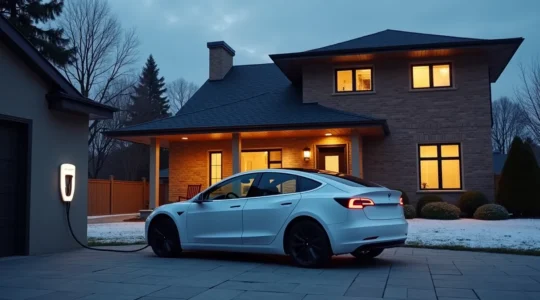
Ultra-Low Overnight vs. Tiered Rates: Which Ontario Hydro Plan Fits Your EV Lifestyle?
Choosing the right Ontario hydro plan with an EV or heat pump isn’t a simple rate comparison; it’s a strategic move to slash your bill by up to 80% and avoid costly financial traps. The Ultra-Low Overnight (ULO) plan is…
Read more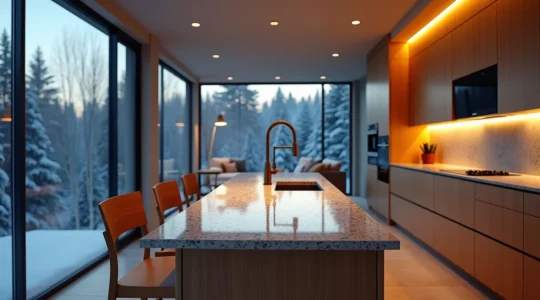
How Real-Time Energy Monitoring Helps You Spot a Failing Appliance Before It Breaks
The greatest value of real-time energy monitoring is not just seeing your consumption, but interpreting your home’s unique ‘energy signature’ to predict failures and optimize costs like a data analyst. Identify ‘phantom power’ leaks that represent the fixed costs in…
Read more
How to safeguard your plumbing when leaving your home for 2 weeks in January?
Protecting a vacant Canadian home in winter requires a multi-layered risk management system, not just turning down the thermostat. Active monitoring with a cellular temperature alarm is the first line of defense against furnace failure. Insurance compliance is non-negotiable; documented…
Read more
Why the low cost of housing in the Maritimes comes with higher lifestyle taxes?
The affordable house price in the Maritimes is a down payment on a series of non-financial ‘lifestyle taxes’ that require a shift from urban convenience to rural resilience. Daily expenses like groceries, gas, and heating oil are significantly higher, offsetting…
Read more
The Canadian Cottage Owner’s Guide: Reclaim Your Weekends and Protect Your Investment
The dream of a Canadian cottage getaway often clashes with the reality of constant, stressful maintenance. The key to reclaiming your peace of mind is not working harder, but building resilient systems that proactively manage the property for you. Shift…
Read more
How to Protect Your Property Title From Theft and Mortgage Fraud
Title fraud stems from exploiting minor procedural gaps in the real estate process, not from a single, sophisticated attack. Your property’s security depends on overlooked details like the land registration system, the timing of your closing, and even minor name…
Read more
Closing Day in Canada: The Step-by-Step Flow of Funds and Documents
In summary: Closing day is a multi-step legal and financial sequence managed by your lawyer, not a single event. Your funds are required 24-48 hours in advance to allow your lawyer to certify them in their trust account before transferring…
Read more
What’s the Real Price of a Top School District Home in Ontario?
The price premium for a top school isn’t just a cost—it’s an investment in equity that private school tuition can’t offer. Boundary volatility is a significant risk, and a desirable address is no guarantee of a spot in an overfilled…
Read more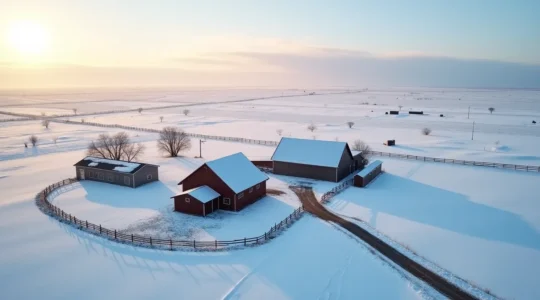
Beyond the Bills: What Are the Real Hidden Costs of a Prairie Acreage in Winter?
The biggest winter costs on a Prairie acreage are not your heating bills; they are the catastrophic failures of the private infrastructure you now own and must manage. Your well and septic systems are your sole responsibility, and their failure…
Read more