Renovation & Building Work
Renovating a home in Canada requires more than aesthetic vision—it demands a deep understanding of building science principles tailored to one of the world’s most climatically diverse countries. From the freeze-thaw cycles that test structural integrity to the extreme temperature swings that challenge energy efficiency, Canadian homeowners face unique considerations that can make or break a renovation project.
Whether you’re restoring a century-old character home in Montreal, upgrading insulation in a Calgary bungalow, or retrofitting a Vancouver heritage property, success hinges on balancing performance, safety, and long-term value. This comprehensive resource connects the critical elements of renovation work—from building envelope optimization to sustainable material choices—providing you with the foundational knowledge to make informed decisions and avoid costly mistakes.
Building Envelope Performance: Your Home’s Critical Barrier
The building envelope represents your home’s first line of defense against Canada’s punishing climate extremes. Think of it as your house’s skin—when it functions properly, everything inside stays comfortable and protected. When it fails, problems cascade through every system.
Understanding Thermal Performance Beyond R-Value
Most homeowners focus exclusively on nominal R-value when selecting insulation, but this represents only laboratory conditions. The effective R-value—what your insulation actually delivers in real-world conditions—can differ dramatically. Thermal bridges, air leakage, and installation quality all erode theoretical performance. A wall rated at R-20 might deliver only R-15 if poorly installed or compromised by framing members that create thermal shortcuts.
Professional thermal imaging audits reveal these hidden weaknesses, showing heat loss patterns invisible to the naked eye. These infrared assessments typically cost between $300-500 but can identify thousands of dollars in energy waste, making them one of the most cost-effective diagnostic tools available.
The Critical Role of Air Sealing
Air leakage accounts for up to 40% of heating costs in typical Canadian homes, yet many renovators over-emphasize insulation while neglecting air barriers. The rim joist area—where floor systems meet foundation walls—represents a notorious vulnerability, often left completely unsealed in older construction.
However, there’s a counterintuitive risk: sealing too tight without proper mechanical ventilation creates moisture problems, indoor air quality issues, and potential health hazards. Modern building codes recognize this, requiring balanced ventilation systems like HRVs (Heat Recovery Ventilators) in tightly sealed homes to exchange stale indoor air while recovering heat energy.
Window Systems and Solar Gain Management
Windows represent the weakest thermal link in any building envelope, yet strategic glass design can transform them from liabilities into assets. The Solar Heat Gain Coefficient (SHGC) measures how much solar radiation passes through glazing—a critical factor in both heating and cooling seasons.
In Canada’s heating-dominated climate, south-facing windows with higher SHGC values capture valuable winter solar energy, while north-facing glass should prioritize thermal resistance. The triple-pane versus double-pane debate often centers on return on investment: triple glazing adds roughly 30% to window costs but can pay back over 15-20 years in severe climate zones. Proper overhang sizing prevents summer overheating while maximizing winter solar gain—typically requiring overhangs projecting 24-36 inches for south-facing windows in most Canadian latitudes.
Heritage Home Restoration: Navigating Modern Standards
Character homes built before modern building codes present unique challenges when upgrading to contemporary performance standards. The goal isn’t simply modernization—it’s respectful integration that preserves architectural integrity while addressing safety and efficiency.
Dangerous Legacy Systems Requiring Immediate Attention
Knob-and-tube wiring, common in homes built before the 1950s, represents a serious fire hazard that most insurance companies refuse to cover. This early electrical system lacks grounding and cannot safely handle modern electrical loads. While not inherently dangerous when undisturbed and unmodified, knob-and-tube becomes problematic when insulation contractors bury it (causing overheating) or homeowners add circuits beyond its design capacity.
Lead pipe replacement presents another critical health concern, particularly in homes built before 1950s. Municipalities across Canada have been systematically addressing lead service lines, but homeowners remain responsible for the portion from property line to house. Recent testing programs in older neighborhoods of Toronto, Montreal, and Vancouver have revealed concerning lead levels, prompting accelerated replacement initiatives.
Material Matching and Asbestos Management
Restoring plaster walls versus replacing with drywall involves more than cost analysis—it’s about preserving the unique aesthetic qualities that define character homes. Historic plaster provides superior sound dampening and a dimensional quality impossible to replicate with drywall, but requires specialized plasterers whose skills are increasingly rare.
The risk of asbestos in retrofits cannot be overstated. Homes built between 1920-1980 commonly contain asbestos in insulation, floor tiles, pipe wrapping, and textured ceilings. Professional testing (typically $400-600 for comprehensive sampling) should precede any invasive renovation work. Disturbance without proper abatement creates serious health hazards and potential legal liability.
High-Performance Heating and Cooling Systems
Canada’s temperature extremes—ranging from -40°C winters to +35°C summers—demand heating and cooling systems that deliver both efficiency and resilience. Recent advances in ground-source heat pumps have made them increasingly attractive for major renovations.
Ground-Source Heating: Understanding the Investment
Ground-source (geothermal) heat pumps leverage the earth’s constant subsurface temperature, delivering heating efficiencies 300-400% higher than conventional systems. The choice between vertical loops (boreholes drilled 150-500 feet deep) versus horizontal loops (trenches 4-6 feet deep) depends primarily on available land area and soil conditions.
Vertical systems require less surface disruption but cost more to install—typically $30,000-45,000 for an average home. Horizontal loops need significant yard space but reduce drilling costs. Both systems face potential risks from loop leaks, though modern high-density polyethylene piping has dramatically improved reliability over older copper systems.
Retrofit Integration Challenges
Integrating ground-source systems into existing homes requires careful ductwork assessment. Many older homes have undersized ducts designed for higher-temperature forced-air systems. Ground-source heat pumps deliver lower-temperature air over longer periods, potentially requiring duct upgrades to maintain comfort. Federal and provincial rebate programs currently offset 25-40% of installation costs, significantly improving return on investment timelines.
Roofing Systems Built for Canadian Climates
Canadian roofs endure punishment unlike anywhere else—freeze-thaw cycling, ice damming, extreme snow loads, and temperature swings exceeding 70°C annually. Material selection and installation details determine whether a roof lasts 15 years or 50.
Metal Roofing Performance and Installation
Metal roofing’s popularity in Canada stems from exceptional longevity (40-60 years), snow-shedding capability, and fire resistance. Hidden fastener systems eliminate exposed screw penetrations that can leak and create thermal bridges. However, proper installation requires attention to oil canning prevention—the visible waviness that occurs in flat metal panels. Using heavier gauge materials (26-gauge minimum) and installing over solid decking minimizes this aesthetic concern.
Snow guard necessity depends on roof pitch and what sits below. Sudden snow avalanches from metal roofs can damage property, injure people, and destroy landscaping. Strategic placement one-third up from the eave distributes load while preventing dangerous releases.
Winter Structural Integrity
Understanding wet snow versus dry snow weight is critical for Canadian homeowners. Wet snow can weigh 12-20 pounds per cubic foot, while dry powder weighs only 3-7 pounds. A seemingly modest 12 inches of wet snow on a 1,500 square foot roof creates over 15,000 pounds of load—equivalent to parking three cars on your roof.
Signs of inadequate truss reinforcement include sagging ridge lines, cracked drywall at ceiling corners, and doors that suddenly stick in upper floors. Professional structural assessment becomes essential when converting attics to living space or when unusual snow accumulation patterns create asymmetric loading that can overstress one side of the structure.
Strategic Water Management and Site Drainage
Water causes more renovation failures than any other factor. Proper site drainage isn’t glamorous, but it protects foundation integrity, prevents basement flooding, and preserves landscaping investments.
Surface Water Solutions
The choice between permeable pavers and gravel for pathways and patios impacts more than aesthetics—it determines how rainfall integrates with your property’s drainage strategy. Permeable pavers allow water infiltration while providing stable surfaces, but require proper base preparation using crushed stone layers that prevent settling. Joint gap maintenance ensures permeability doesn’t degrade over time as sediment fills spaces.
Lot coverage ratios—the percentage of your property covered by impermeable surfaces—affect both drainage performance and municipal stormwater fees in many Canadian cities. Reducing impermeable coverage through permeable materials can lower infrastructure charges while improving site hydrology.
Subsurface Drainage and Flood Mitigation
Rain barrel systems provide simple water capture for irrigation, but dry well installation offers more comprehensive site drainage solutions. A properly designed dry well—a gravel-filled pit that disperses water into surrounding soil—can handle downspout discharge and prevent foundation problems. Installation requires understanding soil percolation rates and maintaining minimum distances from foundations (typically 10 feet minimum).
Grading errors represent the most common cause of wet basements. Ground should slope 6 inches over 10 feet away from foundations. This seemingly simple requirement is frequently violated during landscaping projects, creating chronic moisture problems. Sump pump discharge must be directed away from the house—ideally to dry wells or drainage swales rather than simply onto the lawn where it can recirculate back to the foundation.
Sustainable Building Practices and Material Choices
Building with environmental consciousness has shifted from niche concern to mainstream expectation, but distinguishing genuine sustainability from greenwashing requires critical evaluation of claims.
Material Selection and Embodied Energy
The concrete versus wood structure debate centers on embodied energy—the total energy consumed in manufacturing, transporting, and installing materials. While concrete provides unmatched durability and thermal mass, its production generates substantial carbon emissions. Wood-frame construction sequesters carbon and requires less energy to produce, but demands proper moisture protection in Canadian climates.
Local material sourcing reduces transportation impacts while supporting regional economies. Canadian-manufactured products often meet stricter environmental standards than imported alternatives, though claims require verification beyond marketing materials.
Material Salvage and Longevity Planning
Material salvage during renovation diverts waste from landfills while preserving embodied energy already invested in existing materials. Architectural salvage yards across Canada offer reclaimed lumber, fixtures, and unique elements impossible to source new. Beyond environmental benefits, salvaged materials provide authentic character difficult to replicate.
Perhaps the most overlooked sustainability strategy is optimizing longevity. A roof lasting 50 years rather than 20 saves manufacturing, transportation, and installation impacts of multiple replacements. Durable materials with higher upfront costs frequently prove more sustainable over building lifecycles than cheaper alternatives requiring frequent replacement.
Financial Incentives and Energy Efficiency Programs
Federal and provincial rebate programs can offset 25-50% of major renovation costs when projects meet efficiency requirements. The Canada Greener Homes Grant provides up to $5,000 for eligible improvements, while provincial programs like Ontario’s Home Efficiency Rebate Plus and BC Hydro’s rebates add thousands more.
Navigating government rebates requires understanding pre-approval requirements, eligible contractors, and documentation standards. Most programs mandate energy assessments before and after work, with certified energy advisors conducting standardized evaluations. Planning renovations to align with rebate criteria—rather than applying retroactively—maximizes financial benefit and ensures compliance.
Strategic bundling of improvements often unlocks higher incentive tiers. Combining insulation upgrades with high-efficiency heating systems and window replacement can triple rebate amounts compared to piecemeal approaches, while also delivering superior performance through integrated design.
Successful home renovation in Canada ultimately requires viewing your property as an interconnected system rather than isolated components. The principles explored here—thermal performance, structural integrity, water management, and sustainable practices—work together to create homes that perform efficiently, age gracefully, and provide lasting value in one of the world’s most challenging climates.
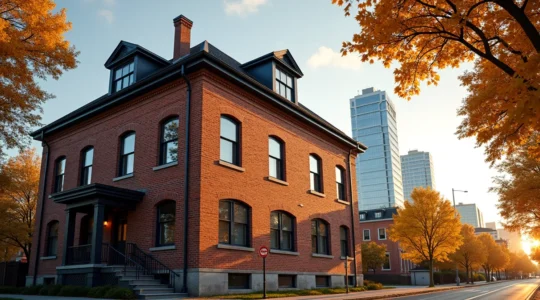
Why renovating an existing building is greener than building a Net Zero new home?
The greenest building is the one that already exists; its upfront carbon cost has already been paid. New “Net Zero” homes focus on future operational savings but often start with a massive, hidden “carbon debt” from new materials and construction….
Read more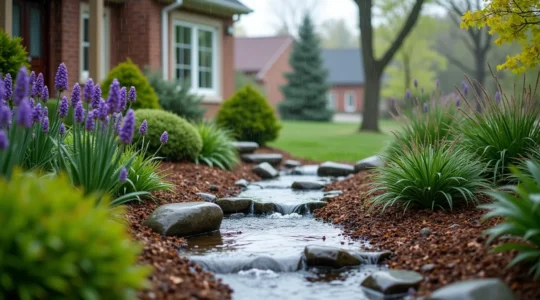
Beyond the Rain Garden: A Homeowner’s Guide to Managing Stormwater in Canada
Seeing water pool near your foundation is a sign that your property’s defenses are overwhelmed, a problem that a single rain garden won’t solve. Effective stormwater management requires an integrated system of solutions, not just one isolated feature. Each component—from…
Read more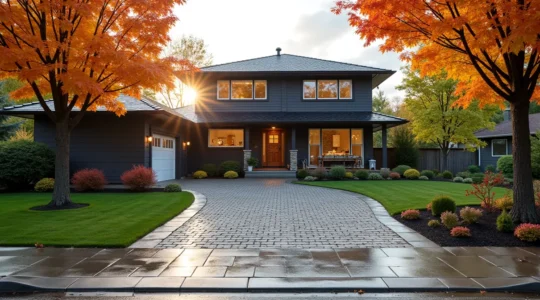
How Permeable Driveways Prevent Basement Floods and Unlock Property Value in Canada
A permeable driveway is a strategic infrastructure investment that protects your home from flooding and increases its value by navigating Canadian municipal regulations. It actively manages stormwater on-site, drastically reducing the hydraulic load on your foundation and municipal sewers. Engineered…
Read more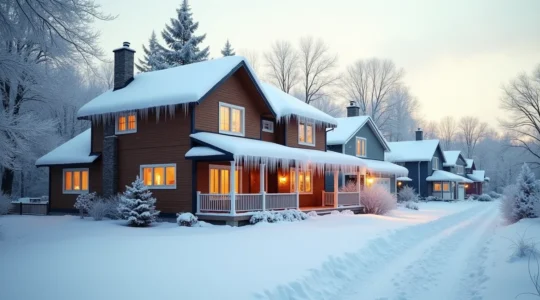
Why are massive icicles on your eaves a symptom of heat loss, not just weather?
The giant icicles on your roof are not a sign of a harsh winter; they’re a clear signal that your house is suffering from a building system failure. Quick fixes like heating cables or aggressive ice removal only address the…
Read more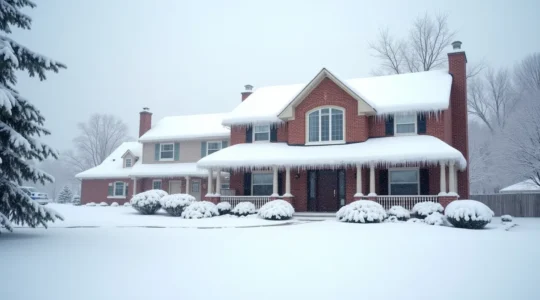
Is Your Roof Safe? How to Assess Snow Load Risks Before the “1-in-50-Year” Storm
The real threat to your roof isn’t the depth of the snow, but its weight, composition, and where it’s located. Wet, heavy spring snow can be over three times heavier than dry, fluffy powder, creating extreme stress. Clearing only one…
Read more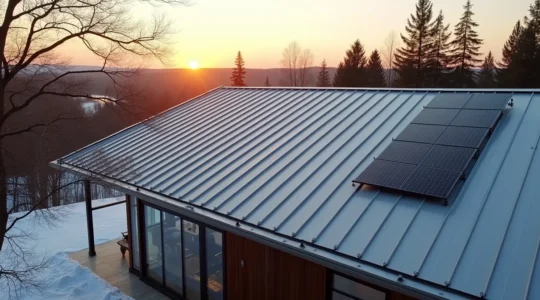
Why standing-seam metal roofing costs 3x more than asphalt but saves money over 50 years?
The high price of a standing-seam metal roof isn’t for the metal itself; it’s for an engineered system that guarantees a 50-year lifespan in Canada’s harsh climate. Hidden fasteners and proper underlayment prevent leaks caused by ice damming and thermal…
Read more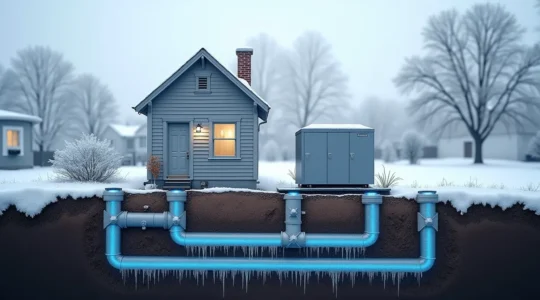
Geothermal vs. Air Source Heat Pumps: A Definitive ROI Analysis for Ontario Homeowners
In Ontario, geothermal’s true return on investment transcends simple energy savings; it’s a strategic financial decision that builds long-term property value and resilience against inevitable carbon-cost increases. Geothermal leverages stable ground temperatures for unmatched efficiency, cutting summer cooling energy use…
Read more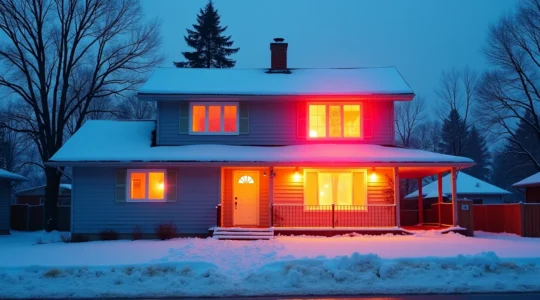
Why Simply Adding Insulation Isn’t Enough to Fix a Cold Canadian House
The comfort of your home depends less on the R-value printed on insulation packaging and more on how the entire building envelope functions as a single, airtight system. Hidden thermal bridges in your walls and attic can negate up to…
Read more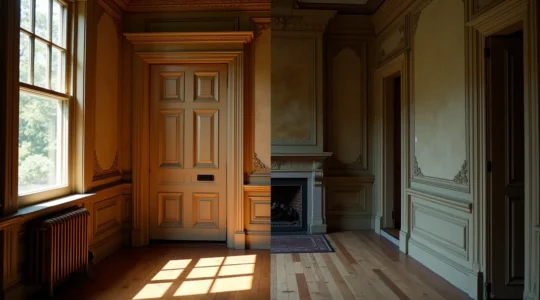
How to Upgrade the Systems of a Victorian Home Without Destroying Its Soul
In summary: Prioritize replacing “uninsurable” systems like knob and tube wiring and lead water lines first. Understand the original performance of materials like horsehair plaster before tearing them out. Use modern technology like CNC milling to replicate, not replace, historic…
Read more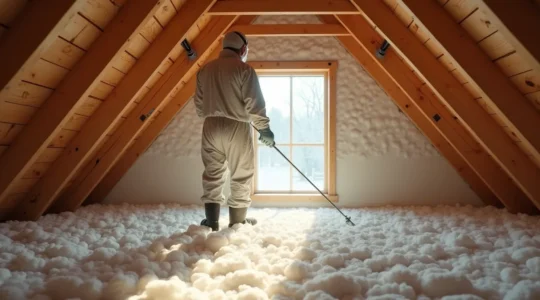
How to Upgrade Your Attic to R-60 and Permanently Stop Ice Dams in Canada
Massive icicles aren’t a winter feature; they’re a clear sign your house is haemorrhaging heat and money through a failing building envelope. Ice dams are caused by a “hot roof,” a symptom of systemic failure in your home’s entire thermal…
Read more