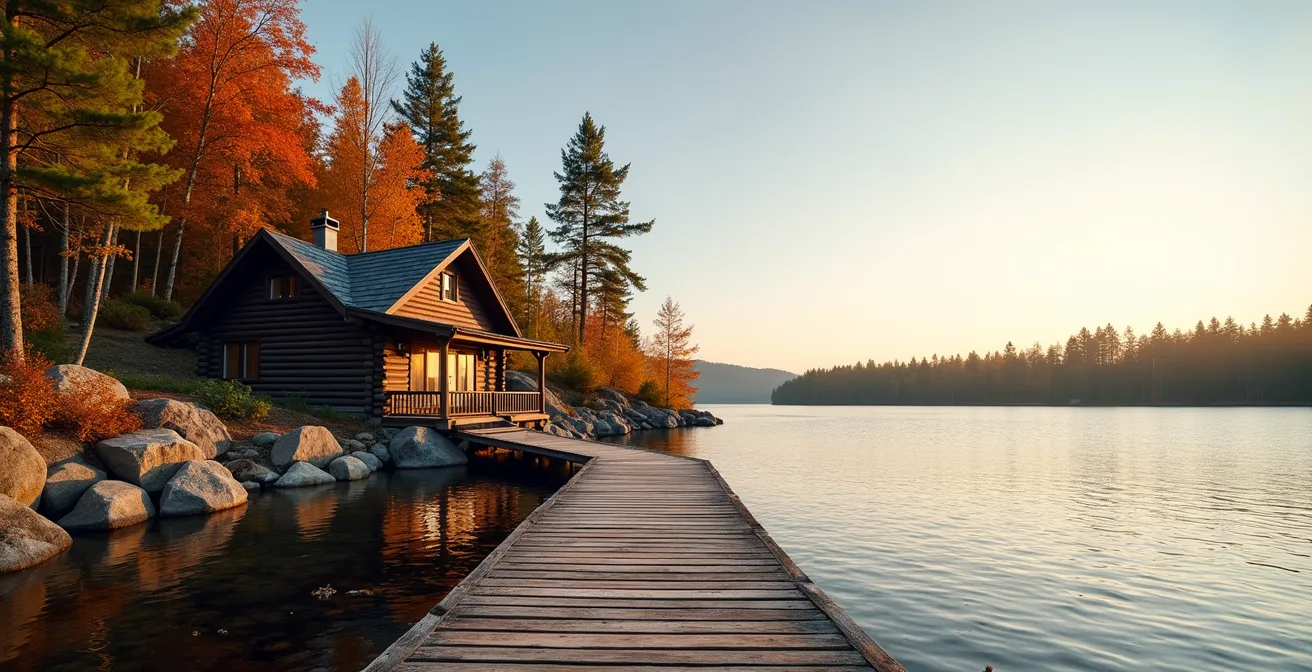
The dream of a Canadian cottage getaway often clashes with the reality of constant, stressful maintenance. The key to reclaiming your peace of mind is not working harder, but building resilient systems that proactively manage the property for you.
- Shift from reactive repairs to proactive systems for plumbing, security, and shared infrastructure.
- Understand the critical failure points of a vacant property in a Canadian winter to prevent costly disasters.
Recommendation: Start by auditing your property against the three silent destroyers: extreme cold, prolonged vacancy, and unresolved shared responsibilities.
Owning a cottage in Canada is supposed to be about escaping the city, hearing the loons call across the lake, and enjoying a bonfire under the stars. Yet for many, that dream quickly becomes a second job. You spend more time worrying about burst pipes, a leaking roof, or security than you do relaxing. You arrive on a Friday night not to a peaceful retreat, but to a checklist of urgent repairs and lingering anxieties. What if the power was out all week? Is that a new water stain on the ceiling? Did the neighbours grade the road like they said they would?
The common advice is to create seasonal checklists or simply hire a property manager. While helpful, these solutions often miss the core issue. The problem isn’t the work itself; it’s the constant state of reactivity and the fear of a catastrophic failure happening while you’re hundreds of kilometres away. A simple checklist can’t prevent a pipe from freezing solid at -30°C if the underlying system is flawed, and not everyone has the budget for full-time management.
But what if the solution wasn’t about working harder, but smarter? What if you could transform your property from a source of stress into a resilient, self-sufficient retreat? This guide is built on a single principle: shifting from reactive maintenance to creating proactive peace of mind. We will explore how to build robust systems that anticipate and neutralize the biggest threats to a remote Canadian cottage: the devastating power of the cold, the vulnerability of a long vacancy, and the complexities of shared property. It’s time to stop being a caretaker and start being a cottage owner again.
This article provides a detailed roadmap for managing the most critical aspects of your remote property. From safeguarding your plumbing against the deep freeze to navigating shared responsibilities and securing your investment, each section offers practical, system-based solutions.
Summary: A Systematic Approach to Remote Cottage Management
- The step-by-step guide to draining pipes so they don’t burst at -30°C
- Who pays for the gravel road grading and what if neighbors refuse?
- Can you realistically visit a 3-season cottage at Christmas with space heaters?
- The monitoring mistake that leaves your cottage vulnerable to theft for months
- How to designate your cottage as your “Principal Residence” to save on taxes?
- How to extend your septic field’s life by 10 years with simple daily habits?
- The step-by-step guide to draining pipes if you turn off the heat completely
- How to safeguard your plumbing when leaving your home for 2 weeks in January?
The step-by-step guide to draining pipes so they don’t burst at -30°C
The single greatest fear for a Canadian cottage owner is a burst pipe. A small amount of water freezing in a copper pipe can expand with enough force to cause thousands of dollars in damage, often going unnoticed for weeks. A proper winterization of your plumbing isn’t just a task; it’s your primary defence against a winter catastrophe. The goal is to remove every drop of water from the supply lines, creating a system that is inert and immune to the cold.
This process must be methodical. Rushing or skipping a step can leave a low point in a line with just enough water to freeze and split a pipe or fitting. It begins with shutting off the main water supply and the power to your water heater and pump. Then, you must work from the highest point of the cottage downwards, opening every single faucet and valve to let gravity do its work. This includes showers, outdoor taps, and washing machine connections.
For a more robust and resilient system, many owners are now installing heat line technology inside their pipes. This advanced cable uses a thermostat to apply heat only to sections of the pipe that are at risk of freezing, providing an automated layer of protection. This is a prime example of building in systemic resilience rather than relying solely on a manual draining process each year.
Action Plan: The No-Fail Plumbing Winterization Checklist
- Turn Off the Source: Locate and turn off the main water supply valve to the cottage. Shut off the breaker for the water heater and well pump.
- Drain the System: Starting at the highest floor, open every single faucet. Don’t forget showers, tubs, and exterior hose bibs. Work your way down to the lowest point.
- Purge the Lines: Use an air compressor with an adapter on an outdoor tap or laundry hookup to blow any remaining water out of the supply lines until only air sputters from the open faucets.
- Protect the Traps: Pour a small amount of non-toxic RV/marine antifreeze into every P-trap (under sinks), toilet bowl, and toilet tank to prevent residual water from freezing and cracking the porcelain or PVC.
- Empty the Tanks: Completely drain the hot water tank and any pressure tanks according to the manufacturer’s instructions. Leave all faucets in the open position for the winter to prevent any surprise pressure buildup.
Who pays for the gravel road grading and what if neighbors refuse?
Beyond your property line lies one of the most common sources of conflict in cottage country: the shared private road. A well-maintained gravel road is essential for access, especially during the spring melt or after a heavy storm, but responsibility for its upkeep can be a murky issue. Without a formal agreement, you risk impassable roads, disputes with neighbours, and even issues with emergency service access.
The solution is to move from informal handshakes to infrastructure diplomacy. A formal Road Maintenance Agreement is a legal document that outlines cost-sharing, standards of maintenance (e.g., grading frequency, snow removal), and a process for decision-making. This transforms a potential conflict into a predictable, shared expense. Some cottage associations handle this centrally, but for independent roads, it’s up to the property owners to organize. The key is to frame it as a mutual benefit that protects everyone’s property value and access.
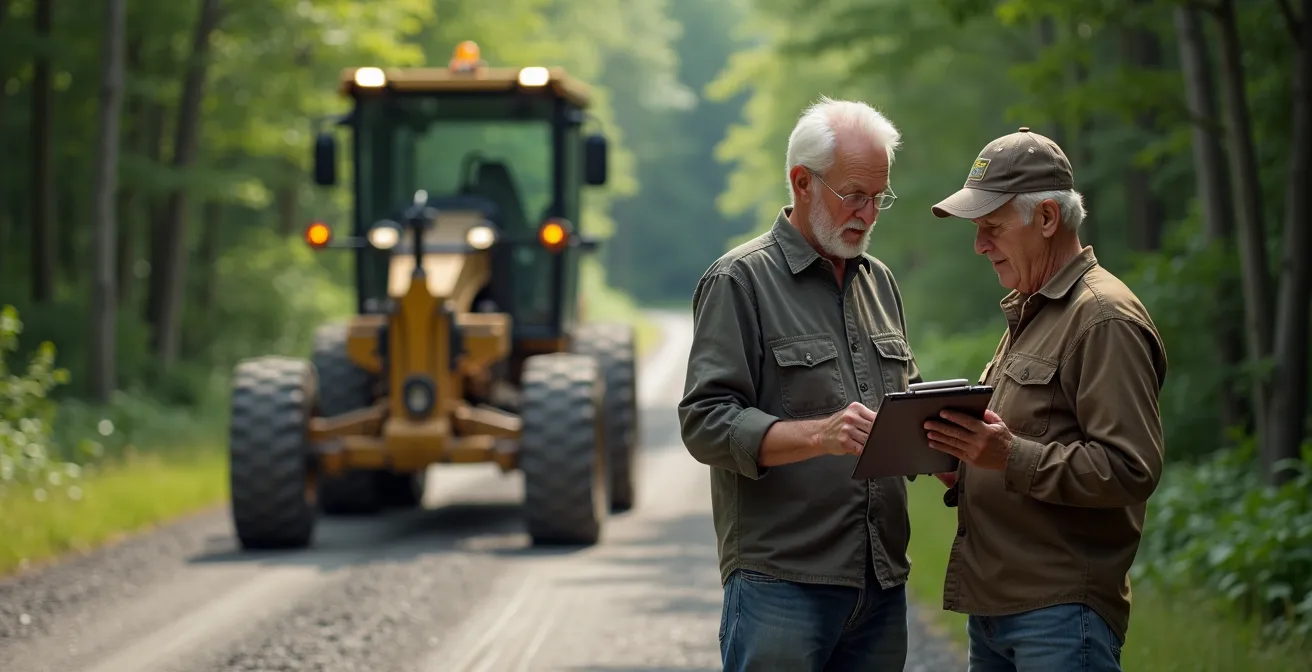
If a neighbour refuses to contribute, the situation becomes difficult. A formal agreement signed by the majority of owners can create social and sometimes legal pressure to comply. In some jurisdictions, you may have legal recourse, but this is a costly and relationship-damaging last resort. The best approach is proactive: establish the agreement when goodwill is high, not after the road has become a washed-out mess. This is particularly crucial for areas with challenging terrain, a lesson learned from the past; historical cottage construction challenges show that many postwar structures in places like Muskoka failed because they weren’t designed for the realities of the Canadian environment, like heavy snow loads. The same principle applies to your access road.
Can you realistically visit a 3-season cottage at Christmas with space heaters?
The romantic image of a snowy Christmas at the cottage often meets the harsh reality of a three-season build. Attempting to heat an uninsulated or under-insulated space with portable space heaters is often an exercise in futility and a significant fire hazard. It’s a battle against the physics of heat loss, where you’re effectively trying to heat the great Canadian outdoors.
As Fiona McGlynn vividly described in Cottage Life, the experience can be a constant struggle against the cold. The anxiety over whether you’ll have running water in the morning can overshadow any holiday cheer.
In our first winter, plummeting temperatures and frozen pipes regularly set us scrambling for every space heater, hair dryer, and heating blanket we could get our hands on. On -30°C mornings, I opened the kitchen faucet with trepidation. Would there be water? Showers? Coffee? The rest of the day hung in the balance.
– Fiona McGlynn, Cottage Life
The primary challenge is not just comfort but plumbing. Without proper insulation and a reliable, thermostatically controlled heat source, your pipes are extremely vulnerable. A brief power outage is all it takes for a catastrophe. Before considering a winter visit, you must decide on your heating strategy: leaving “maintenance heat” on or performing a complete shutdown and drain. Using only space heaters for a visit falls into a dangerous grey area.
| Heating Option | Temperature Setting | Benefits | Risks |
|---|---|---|---|
| Maintenance Heat | 10°C to 13°C (55°F) | Safety margin against freezing, protects plumbing imperfections, reduces interior frost | Higher energy costs |
| Complete Shutdown | 0°C (Heat off) | Saves money on energy bills | Zero room for error, requires perfect draining/antifreeze treatment |
The monitoring mistake that leaves your cottage vulnerable to theft for months
One of the biggest anxieties of remote ownership is the vacancy blindspot: the long periods when your cottage is empty and unmonitored. A simple “No Trespassing” sign is not a security strategy. The most common mistake owners make is relying on passive security, only discovering a break-in or wildlife damage months later, long after the trail has gone cold. Proactive monitoring is essential for peace of mind.
Modern security for cottages has moved beyond hoping a neighbour will spot something amiss. The gold standard is a system of cellular trail cameras. These devices are weatherproof, operate on batteries for months, and use the cellular network to send an image to your phone the moment they detect motion. This transforms your security from reactive to real-time. You’ll know instantly if a person, vehicle, or even a large animal like a bear is on your property, allowing you to notify neighbours or the local OPP detachment immediately.
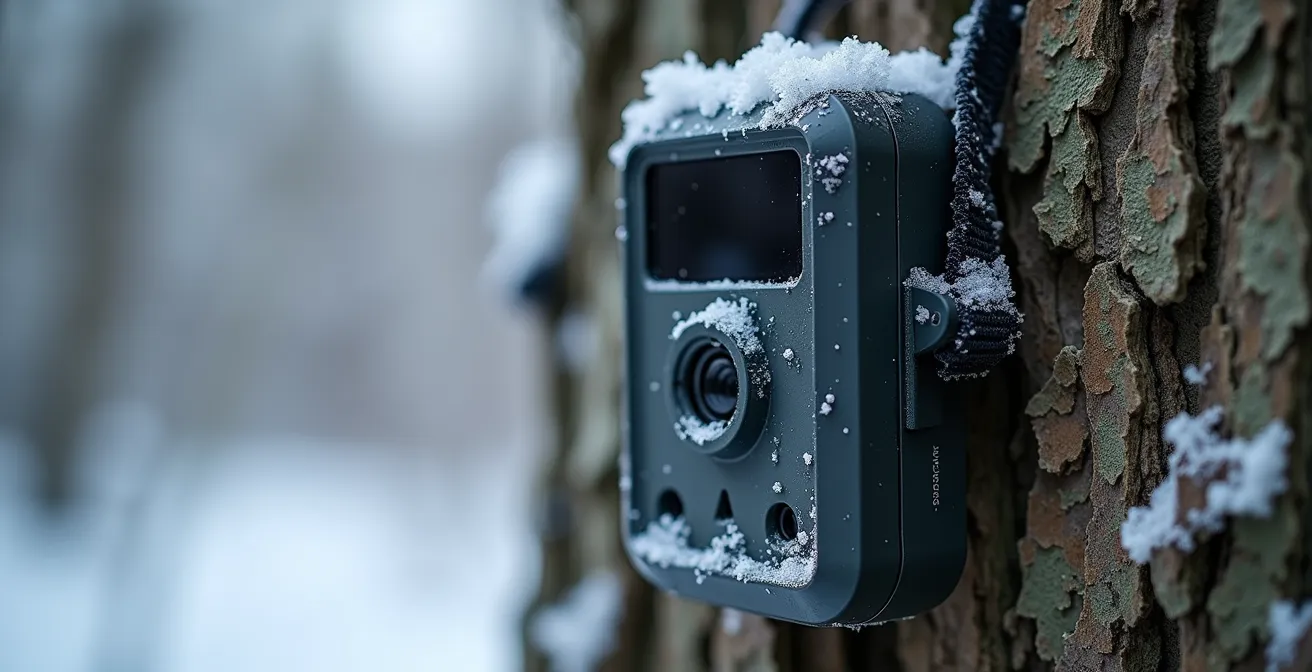
However, technology is only one part of the solution. Your security system must also include analogue and administrative layers. This includes everything from physical deterrents and managing food waste that attracts animals, to establishing a formal relationship with a trusted keyholder and local law enforcement. A comprehensive security plan addresses threats from theft, vandalism, and even four-legged intruders who can cause significant damage.
How to designate your cottage as your ‘Principal Residence’ to save on taxes?
In Canada, the “Principal Residence Exemption” (PRE) is one of the most significant tax benefits available to homeowners, allowing you to sell your designated principal residence without paying capital gains tax on the appreciation. For cottage owners who also own a city home, this presents a strategic choice: which property do you designate? Making the right choice can save you tens or even hundreds of thousands of dollars.
A family unit (you, your spouse, and minor children) can only designate one property as a principal residence for any given year. You don’t have to make the designation until you sell one of the properties. The best financial strategy is typically to use the exemption on the property that has appreciated the most in value per year of ownership. If your cottage has skyrocketed in value while your city home has seen modest gains, designating the cottage could be the smarter move.
However, this decision has ripple effects, particularly on insurance. Designating your cottage as a principal residence may change how insurers view the property, especially if it’s left vacant for long periods. As an expert from one insurer points out, many policies have strict requirements for vacant properties. Failing to have a designated person perform regular check-ins or maintain a monitored alarm system could void your coverage. This is a critical failure point; insurance claims data reveals that burst pipes are among the most frequent and costly issues, and being denied a claim due to a policy violation is a devastating financial blow.
How to extend your septic field’s life by 10 years with simple daily habits?
The septic system is the unsung hero of cottage country, a silent, underground ecosystem that handles waste. It’s also one of the most expensive components to replace, especially in the challenging terrain of the Canadian Shield where bedrock is shallow. Extending its life is not about a single major action, but about a collection of simple, consistent habits that protect the delicate bacterial balance within the tank and the drainage capacity of the septic field.
Your daily habits have the biggest impact. The first rule is to treat your septic system like a sensitive stomach: only feed it what it can digest. This means avoiding pouring grease, coffee grounds, and harsh chemical cleaners down the drain. These substances can kill the beneficial bacteria needed to break down solid waste or clog the porous pipes of the weeping bed. Using “septic-safe” toilet paper and laundry detergents is a simple, powerful change.
Water conservation is equally critical. Every litre of water that goes down the drain must be processed by the system. Overloading it with excessive laundry, long showers, or leaky faucets can flood the septic field, preventing it from draining and filtering effluent effectively. This can lead to system failure and costly remediation. Winterization also requires care; never add antifreeze directly to the septic tank, as it can be catastrophic for the bacterial ecosystem. Instead, a dose of approved septic bacteria can help maintain the system during the dormant winter months.
Key takeaways
- Systemic Resilience: Prioritize upgrading core components (like pipes to PEX) and installing automated systems (like heat lines) to create a cottage that can withstand winter’s challenges with less manual intervention.
- Proactive Monitoring: Shift from a passive “hope for the best” security model to an active one using cellular cameras and formal agreements with neighbours and local authorities.
- Financial Fortification: Understand that decisions about taxes (Principal Residence Exemption) and insurance are deeply intertwined with how you maintain and occupy the property. Non-compliance can lead to catastrophic financial loss.
The step-by-step guide to draining pipes if you turn off the heat completely
Deciding to turn the heat off completely for the winter is a significant financial decision that can save you a substantial amount on hydro bills. However, it raises the stakes considerably. This strategy operates on a principle of zero tolerance; there is absolutely no room for error. A single pocket of water left in a pipe or valve guarantees a burst when temperatures plummet. This approach requires a more robust system and a potentially more involved process than a standard winterization.
The first step is a systemic one: evaluating your plumbing materials. If your cottage has older copper pipes, a complete shutdown is a high-risk gamble. Modern PEX (cross-linked polyethylene) piping is far more forgiving, as its flexibility allows it to expand if water inside it freezes, making it less likely to burst. This is a fundamental element of systemic resilience for a cold-climate cottage.
| Pipe Type | Freeze Resistance | Installation | Maintenance Notes |
|---|---|---|---|
| PEX (polyethylene) | Less likely to burst if frozen, more flexible | Modern standard for backwoods plumbing | Recommended for cottage replacements |
| Copper | Prone to bursting when frozen | Traditional, more rigid | Requires complete draining or antifreeze |
| PVC (drainage) | Good freeze resistance | White PVC for modern drainage | Standard for drain lines |
Even with a perfect manual drain-down, tiny amounts of water can remain. To achieve 100% certainty, many owners invest in specialized winterization systems. For example, some products use a portable pump to force non-toxic plumbing antifreeze through the entire water supply system, displacing any residual water from every line, fixture, and appliance. This automates the final, most critical step, ensuring a truly inert system and providing the ultimate peace of mind for a no-heat winter.
How to safeguard your plumbing when leaving your home for 2 weeks in January?
A full winterization is overkill for a short two-week absence, but simply locking the door and hoping for the best is a recipe for disaster. Safeguarding your plumbing during a short winter departure is a balancing act: you need enough protection to prevent freezing without the hassle of a complete drain-down. The key is to maintain a stable, above-freezing interior environment and have a monitoring plan in place.
The most crucial action is to set your thermostat to a “maintenance temperature.” While you might be tempted to turn it way down to save money, this is a critical mistake. As insurance experts recommend maintaining a temperature between 5°C and 10°C to provide a safe buffer against pipes freezing during a cold snap. This small investment in hydro is your best insurance policy against a major flood. Installing a smart thermostat elevates this strategy, allowing you to monitor the cottage’s temperature remotely from your phone and receive an alert if it drops unexpectedly, signaling a power outage or furnace failure.
However, even with the heat on, you are not entirely out of the woods. One of the most overlooked critical failure points is condensation. As plumbing expert Brian Feeney notes, this can happen even after a drain-down, and the principle applies to a heated cottage as well.
Even when you do drain the pipes, condensation can occur in the pipes afterwards as fall weather cools off. Condensed water can settle into low spots in the pipes, freezing and bursting when deep cold comes.
– Brian Feeney, Bailey Line Road
This highlights the need for a backup plan. Always have a trusted neighbour or local service with a key who can check on the property, especially if you receive a low-temperature alert or after a major winter storm. This combination of automated monitoring and human oversight provides a robust safety net for short-term absences.
By implementing these resilient systems—from automated plumbing protection and real-time security monitoring to formalizing shared responsibilities—you can fundamentally change your relationship with your cottage. It ceases to be a source of constant worry and becomes, once again, the peaceful retreat it was always meant to be. The next logical step is to perform a simple audit of your own property to identify and prioritize your most critical failure points.