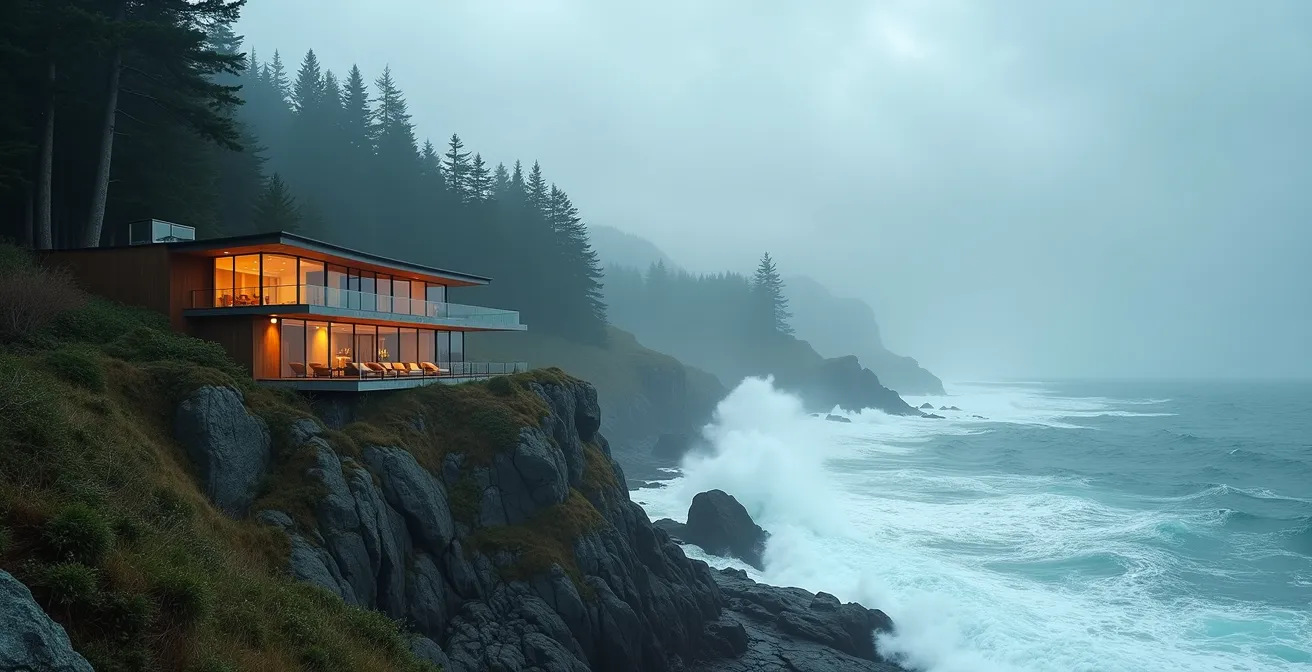
True luxury on Vancouver Island’s west coast is not about amenities, but about adopting an ‘expedition mindset’ to safely access its raw beauty.
- Strategic planning, from booking campsites months in advance to understanding weather patterns, is paramount.
- Safety is non-negotiable; respecting ocean dangers and choosing the right gear is part of the high-end experience.
Recommendation: Shift your focus from what to book to *how* to prepare. The most memorable trip comes from insider knowledge, not just a credit card.
The vision is intoxicating: a mist-shrouded coastline, ancient rainforests teeming with life, and the raw power of the Pacific Ocean at your doorstep. Tofino and Ucluelet, perched on the wild edge of Vancouver Island, promise an escape that is both rugged and refined. For the discerning adventure traveler, the challenge is clear: how do you immerse yourself in this untamed wilderness without sacrificing the comfort and sophistication that define a luxury experience? Many guides will point you toward the most popular trails, tours, and high-end lodges. They’ll tell you to book a bear-watching tour and pack a raincoat.
While this advice is not wrong, it misses the fundamental truth of the West Coast. Simply booking the best doesn’t guarantee the best experience. The real secret lies in shifting your perspective. Instead of viewing the trip as a series of consumer choices, you must approach it with an expedition mindset. This is about acquiring local intelligence—understanding the rhythms of the tides, the nuances of the weather, and the strategies required to find solitude amidst the crowds. It’s about calculated ruggedness, where the luxury is not just in your oceanfront suite, but in being warm, dry, and safe while a Pacific storm rages outside.
But what if the true key to unlocking a transcendent West Coast adventure wasn’t just about where you stay, but about how you prepare? This guide is built on that premise. We will move beyond the surface-level tips to equip you with the strategic knowledge of a seasoned expedition leader. We’ll explore why booking a campsite is a tactical game, how to choose gear like a local fisherman, and why the most dramatic—and luxurious—time to visit might just be in the heart of storm season. Welcome to your briefing for the ultimate Tofino and Ucluelet expedition.
To give you a visual taste of the adventure that awaits, the following video captures the stunning landscapes and high-energy spirit of the Pacific Rim. It’s the perfect prelude to the detailed planning and insider knowledge we’re about to explore.
This guide is structured to build your expedition mindset from the ground up. From the initial strategic planning months in advance to understanding the raw power of the coast, each section provides a piece of the local intelligence you need for a successful journey. Explore the topics below to master the art of West Coast travel.
Summary: Your Expedition Plan for Tofino and Ucluelet
- Why you need to book Tofino campsites 6 months in advance?
- How to watch bears from a zodiac without disturbing their feeding?
- The Wild Pacific Trail vs West Coast Trail: which matches your fitness level?
- Why walking on wet rocks can be fatal on the Pacific coast
- Where to stop on Highway 4 to break up the winding drive to the coast?
- Living on the Gulf Islands: reality vs fantasy of ferry-dependent commuting
- Gore-Tex vs Rubber: what to wear to stay dry in horizontal rain?
- Why November is the best month to visit the Pacific coast for dramatic weather?
Why You Need to Book Tofino Campsites 6 Months in Advance?
Your expedition to the West Coast begins not on a hiking trail, but in front of a computer screen, months before you pack your bags. Securing a campsite in Pacific Rim National Park Reserve, particularly at the coveted Green Point Campground, is the first test of your strategic planning abilities. Established in 1962, its 94 drive-in sites and 20 walk-in spots are perched on bluffs above Long Beach, offering a multi-million-dollar view for a fraction of the price of a hotel. Consequently, it fills every single night during high season. This isn’t a matter of simple supply and demand; it’s a high-stakes digital race.
Thinking you can find a last-minute spot is a rookie mistake. The process requires a quasi-military precision. For instance, Parks Canada has announced that reservations for the 2026 season open on January 16, 2026, at 8 a.m. PT. On that morning, thousands of hopeful campers will log in simultaneously, and the entire summer season will be booked within minutes. Viewing this not as an obstacle but as the first strategic challenge of your trip is key to the expedition mindset. Success means you’ve earned your place on the coast through foresight and planning.
To win this reservation game, you need a clear plan of attack. Being prepared with an account, backup dates, and a quick trigger finger is the only way to secure a piece of this coastal paradise. It’s the digital equivalent of staking your claim.
Your Action Plan: Securing a Green Point Campground Reservation
- Account Setup: Create your Parks Canada Reservation Service account well before the January launch date to avoid technical delays on the day.
- Notification Alerts: Sign up for availability notifications for your desired dates; this is your best chance to snag a spot if a cancellation occurs.
- Punctuality is Key: Log in at exactly 8 a.m. PT on the designated launch day. A few minutes’ delay can mean the difference between success and failure.
- Have Backups Ready: The most popular weeks fill instantly. Go into the process with several alternative date ranges to increase your odds.
- Consider the oTENTik: If standard sites are gone, the single oTENTik structure, which accommodates up to six people, can be an excellent alternative.
How to Watch Bears from a Zodiac Without Disturbing Their Feeding?
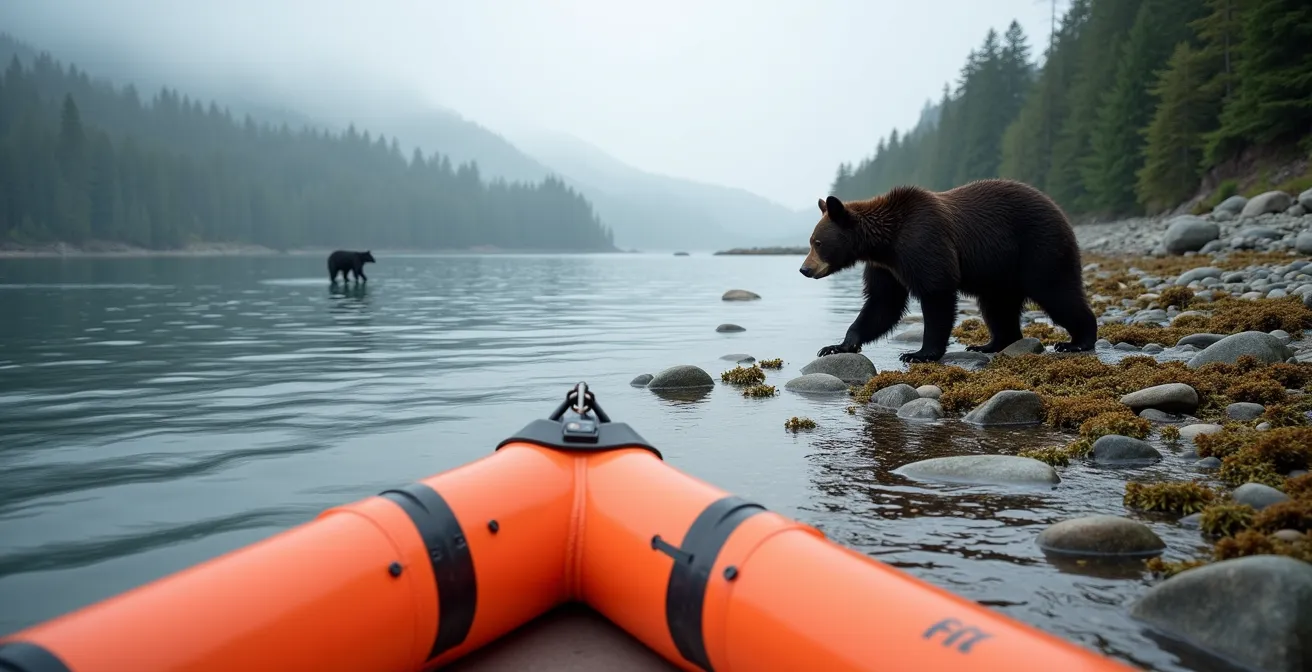
One of the most profound experiences on the West Coast is watching a black bear forage along the shoreline, turning over heavy rocks with surprising dexterity to find crabs and other invertebrates. The luxury here is not just in seeing the animal, but in the quality and ethics of the encounter. The expedition mindset demands that we act as respectful guests in their territory, not as intrusive consumers of a wildlife spectacle. This means choosing an operator who prioritizes the well-being of the bears over getting a close-up photo.
The gold standard for ethical viewing is maintaining a significant distance—often 100 meters or more—and using a quiet vessel like a Zodiac, which allows the guide to cut the engine and drift silently. The goal is to become part of the scenery, allowing the bears to continue their crucial feeding behaviour undisturbed. A responsible guide will never bait wildlife or position the boat in a way that blocks a bear’s path. This patient, respectful approach is what separates a fleeting tourist sighting from a truly memorable and sustainable wildlife encounter. With a 96% success rate reported by operators like The Whale Centre, you don’t need to compromise on sightings to be ethical.
The choice of operator is everything, as Off Track Travel notes in their guide, highlighting the importance of third-party certification:
Long Beach Nature Tours is the only local operator that is a member of the Commercial Bear Viewing Association of British Columbia (CBVA). This reflects their high ethical standards and the equal care they take for both bears and their guests.
– Off Track Travel, Bear Watching in Tofino Guide
This commitment to ethical standards is the hallmark of a true luxury wilderness experience. It ensures that these magnificent animals will continue to thrive for generations to come.
The Wild Pacific Trail vs West Coast Trail: Which Matches Your Fitness Level?
The trails of the Pacific Rim offer two vastly different definitions of a “walk in the park.” Choosing the right one is a critical exercise in self-assessment—a cornerstone of the expedition mindset. Overestimating your ability can lead to a miserable, or even dangerous, experience, while underestimating it might leave you wanting more. The two most famous trails, Ucluelet’s Wild Pacific Trail (WPT) and the legendary West Coast Trail (WCT), represent the opposite ends of this spectrum.
The Wild Pacific Trail is a masterpiece of accessible wilderness. Its gravel paths and boardwalks trace the dramatic coastline, offering breathtaking views of crashing waves, windswept trees, and distant islands. With easy sections like the 2.6 km Lighthouse Loop, it’s perfect for families, casual walkers, and anyone seeking maximum scenic reward for minimal physical effort. It’s a place to stroll, reflect, and storm-watch in relative comfort. In contrast, the West Coast Trail is a 75-km beast, a world-renowned trek that is as punishing as it is beautiful. It’s a multi-day ordeal of slogging through deep mud, climbing giant ladders, navigating treacherous terrain, and relying entirely on what you can carry on your back. It is exclusively for highly experienced, physically prepared, and well-equipped backpackers.
Fortunately, the choice isn’t purely binary. Pacific Rim National Park Reserve itself offers excellent intermediate options. Hikes like the Rainforest Trail or the Nuu-chah-nulth Trail provide a 1-2 hour immersion into the old-growth temperate rainforest, complete with boardwalks over the muddiest sections. They offer a taste of the deep-woods wilderness without the extreme commitment of the WCT. The following comparison breaks down the core differences to help you make an informed, honest choice.
This table, based on information from regional travel guides, clarifies the vast differences in commitment required.
| Feature | Wild Pacific Trail | West Coast Trail |
|---|---|---|
| Distance | 2.6 km (Lighthouse Loop) to 8 km sections | 75 km total |
| Duration | 30 minutes to 3 hours | 5-7 days |
| Difficulty | Easy to moderate | Very challenging |
| Cost | Free | Hundreds in permits and fees |
| Reservation Required | No – show up anytime | Yes – lottery system |
| Terrain | Gravel paths, boardwalks | Mud, roots, ladders, cable cars |
| Best For | Families, all fitness levels | Experienced hikers only |
Why Walking on Wet Rocks Can Be Fatal on the Pacific Coast
Nowhere is the expedition mindset more critical than on the shoreline. The rocky headlands and tidal pools of Tofino and Ucluelet are mesmerizing, but they are also profoundly dangerous. The local mantra is “Never turn your back on the ocean,” and it must be taken with absolute seriousness. The primary danger comes from a triple threat: sneaker waves, powerful currents, and hypothermia-inducing cold water. A sneaker wave is a disproportionately large wave that can surge up the shore without warning, even on a seemingly calm day, easily knocking a person off the rocks.
Once in the water, the danger multiplies. With water temperatures in the Pacific near Tofino rarely exceeding 10°C, cold water shock can cause involuntary gasping and rapid loss of muscle control within minutes. This is compounded by powerful rip currents that can pull a person away from shore and into the path of more waves, which can crush them against the very rocks they fell from. Exploring tidal areas requires vigilance; a rising tide can quickly submerge your exit route, trapping you against a cliff face. The safest time to explore is always on a falling tide, when the water is receding.
The slick, dark algae covering the rocks makes them as slippery as ice when wet. A simple misstep can lead to a fall, and a fall at the water’s edge can be the last one you ever take. The raw beauty of the coast demands your unwavering respect and attention. True luxury is having the knowledge to enjoy this dramatic interface between land and sea safely.
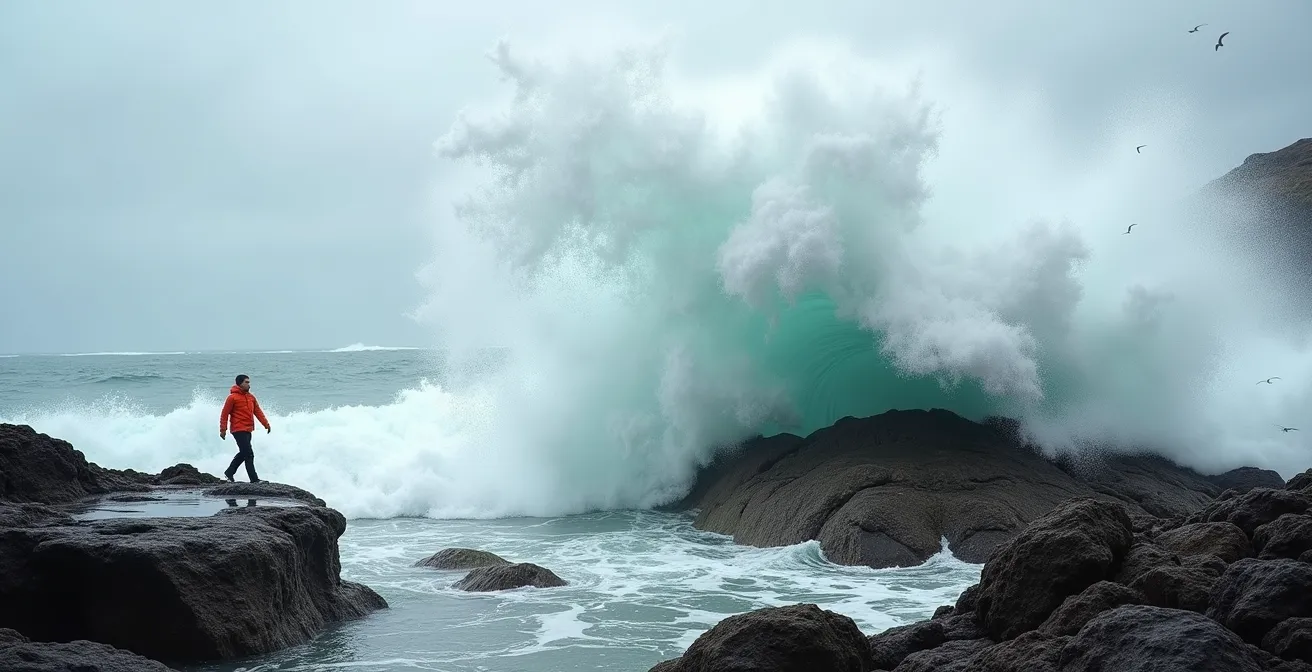
Internalizing these non-negotiable safety rules is the most important preparation you can do. The power of the ocean is not to be tested.
Where to Stop on Highway 4 to Break Up the Winding Drive to the Coast?
The journey to Tofino and Ucluelet is an adventure in itself. Highway 4, the only road in and out, is a winding, two-hour-plus drive from the east side of Vancouver Island that carves through mountain passes and skirts the edge of pristine lakes. Approaching this drive with an expedition mindset means turning it from a necessary slog into a scenic and enjoyable part of your trip. Rushing is a fool’s errand, especially given the potential for delays.
As one traveler noted, planning your arrival time is critical to avoid frustration:
There is one road in and out of Ucluelet/Tofino and part of it is currently under construction through 2022. The road is closed 5am-7am & 11am-3pm Monday-Friday with no traffic allowed through. Plan your arrival accordingly to avoid waiting for hours – the drive normally takes 2 hours from Nanaimo but allow an extra hour for construction delays.
– Women and the Wilderness
While specific construction schedules change, the principle remains: always check DriveBC before you go and build buffer time into your schedule. Instead of white-knuckling it, plan for strategic stops that allow you to stretch your legs, enjoy the scenery, and break up the drive. This transforms the transit from a chore into a curated experience. Consider these insider stops:
- Little Qualicum Cheeseworks: A delightful stop for artisan cheese tasting, offering a less crowded alternative to the famous Coombs Old Country Market.
- Port Alberni Breweries: The valley town of Port Alberni is a perfect halfway point. Grabbing a craft beer at a local brewery like Twin City Brewing is a great way to refresh before tackling the steep Sutton Pass.
- Cathedral Grove: If the crowds aren’t overwhelming, a walk among the ancient, 800-year-old Douglas firs is a humbling and essential leg-stretcher.
- Kennedy Lake Viewpoint: This is one of the best pull-outs for stunning photos. On a warm day, the freshwater lake is a fantastic spot for a quick, bracing swim before you hit the coast.
- Final Fuel Stop: Be sure to top up your tank at the last gas station before the Tofino-Ucluelet junction (7581 Pacific Rim Hwy), as services become more expensive and limited once you arrive.
Living on the Gulf Islands: Reality vs Fantasy of Ferry-Dependent Commuting
To truly appreciate the unique character of Tofino and Ucluelet, it’s useful to contrast their “end-of-the-road” resilience with another iconic British Columbia lifestyle: the ferry-dependent world of the Gulf Islands. While both offer an escape from the mainland, their connection to civilization—and their definition of luxury—is fundamentally different. The Gulf Islands (like Salt Spring, Galiano, or Pender) are defined by the rhythm of BC Ferries. Life revolves around sailing schedules, and a missed ferry can mean waiting hours, or even a full day.
This reliance on marine transport shapes everything. Emergencies often require a helicopter or water taxi. The cost of goods is inflated by ferry fees for every delivery truck. For an islander, as noted by Tourism Vancouver Island, “‘luxury’ might mean a trip to Victoria/Vancouver for shopping.” It’s about access to the amenities they lack. Tofino and Ucluelet, by contrast, are connected by a single, vulnerable ribbon of asphalt. While this road can close due to accidents or construction, it offers a degree of autonomy that ferry life lacks. Here, luxury is less about escaping the island and more about what arrives on it.
The “end-of-the-road” mentality fosters a powerful sense of self-sufficiency and a community built on weathering storms together. Understanding this distinction highlights the unique spirit of the West Coast. It’s not an island, but it often feels like one—a remote outpost connected by a fragile lifeline. This table breaks down the practical realities of these two distinct forms of remote living.
| Factor | Gulf Islands (Ferry) | Tofino/Ucluelet (Highway 4) |
|---|---|---|
| Access Cost | $215 USD roundtrip with vehicle | Gas only, but 5+ hour drive |
| Reliability | Weather cancellations, overloads | Construction delays, accident closures |
| Booking Required | Reservations essential in summer | No reservation, but check DriveBC |
| Emergency Access | Helicopter or water taxi only | Single road vulnerable to closures |
| Supply Costs | Ferry fees add to all goods | Long trucking distance inflates prices |
| Community Feel | Island time mentality | End-of-road resilience |
Gore-Tex vs Rubber: What to Wear to Stay Dry in Horizontal Rain?
On the West Coast, rain is not just a weather condition; it’s an atmospheric event. When a Pacific storm rolls in, you’re not dealing with a gentle drizzle but with horizontal rain driven by winds that can gust over 100 km/h. In these conditions, your high-tech breathable hiking jacket might fail you. This is where local intelligence regarding gear becomes the ultimate luxury. The choice between a modern Gore-Tex shell and traditional rubber rain gear is not just about style; it’s a tactical decision based on your planned activity.
Gore-Tex and other breathable fabrics are excellent for active pursuits like hiking. They are designed to let sweat vapour escape while blocking water droplets, keeping you comfortable while you’re generating body heat. However, in a relentless, wind-driven downpour, these fabrics can “wet out,” meaning the outer layer becomes saturated, compromising breathability and eventually leading to a clammy, cold feeling. For stationary activities like standing on a headland to storm watch or sitting in a Zodiac on a wildlife tour, there is a better option.
Enter the “Tofino Tuxedo”: a full set of commercial-grade rubber rain gear from brands like Grundéns or Helly Hansen. This is what local fishermen, guides, and seasoned residents wear. It is 100% waterproof and windproof. Its downside is zero breathability—if you hike in it, you’ll be soaked in your own sweat. But for staying completely dry while being blasted by the elements, it is unbeatable. Local outfitters like METHOD Marine and Pio Tofino stock this professional-grade gear for a reason. Choosing the right gear for the right mission is the essence of calculated ruggedness.
The following table, inspired by advice from sources like local travel experts, summarizes when to choose each type of gear.
| Feature | Gore-Tex/Breathable | Rubber (Grundéns/Helly Hansen) |
|---|---|---|
| Best Use | Active hiking, moving activities | Stationary activities, boat tours |
| Waterproofness | Very good but can wet out | 100% waterproof always |
| Breathability | Allows sweat to escape | No breathability – you’ll sweat |
| Durability | Good but membrane can fail | Bombproof, lasts decades |
| Local Choice | Tourists and hikers | Fishermen and guides (‘Tofino Tuxedo’) |
| Footwear Match | Waterproof hiking boots | Rubber ‘gumboots’ |
Key Takeaways
- The Expedition Mindset: True luxury is found in preparation, safety knowledge, and strategic planning, not just expensive bookings.
- Respect the Elements: The Pacific Ocean’s power is absolute. Understanding tides, waves, and cold water is non-negotiable for a safe trip.
- Gear for the Mission: Choosing the right clothing, from rain gear to footwear, based on your activity is the key to comfort in a wild environment.
Why November is the Best Month to Visit the Pacific Coast for Dramatic Weather?
Here is the ultimate piece of counter-intuitive local intelligence: the best time to experience the soul of Tofino and Ucluelet is not during the sunny, crowded summer months, but in the heart of storm season. November, in particular, offers a unique blend of raw, dramatic nature and what is perhaps the greatest luxury of all: solitude. This is when the North Pacific awakens, sending colossal storms marching across the ocean to unleash their fury on the coast. For the prepared traveler, this is not something to be feared, but to be celebrated.
The experience of storm watching from a place of comfort—whether it’s an oceanfront room at the Wickaninnish Inn with a fireplace crackling or a cozy cabin overlooking the surf—is deeply humbling and exhilarating. The beaches, packed shoulder-to-shoulder in July, are now gloriously empty. You can walk for miles along Long Beach with only the seabirds and the roaring surf for company. This is the “luxury of solitude” in its purest form. Furthermore, the off-season provides tangible financial benefits, as luxury oceanfront rooms in November can be 30-50% less than their peak-season rates.
An expedition mindset allows you to see November not as the “off-season” but as the “prime season” for a different kind of adventure. It’s a time for cultural immersion, like attending the Tofino Oyster Festival, and for experiencing the raw power that has shaped this landscape and its people for millennia. To make the most of it, you should:
- Book an ocean-view room with a fireplace for the ultimate storm-watching comfort.
- Visit designated lookouts on the Wild Pacific Trail during a peak storm surge for unforgettable views.
- Time your visit to coincide with local events like the oyster festival.
- Monitor weather forecasts for approaching Pacific storms to time your experience for maximum drama.
- Pack proper rubber rain gear and embrace the wild weather, knowing you can retreat to warmth and comfort.
Embracing the expedition mindset is your key to unlocking a Tofino and Ucluelet experience that goes far beyond the ordinary. By prioritizing preparation, safety, and a deep respect for nature, you can craft a journey that is both profoundly wild and exquisitely luxurious. Start planning your expedition today and discover the raw beauty of the coast on your own terms.