
The depth of an Indigenous tourism experience lies not in what you see, but in how you participate.
- Authentic encounters are about co-created experiences and reciprocal connection, moving beyond passive observation.
- True engagement means supporting businesses that exercise narrative sovereignty, telling their own stories in their own way.
Recommendation: Shift your travel mindset from a consumer to a guest. Seek out opportunities to learn a skill, share a story, and contribute to the community you are visiting.
Many travellers arrive in Canada with a checklist: see the Rockies, marvel at Niagara Falls, maybe spot a moose. They collect photos and souvenirs, ticking boxes on a well-trodden tourist path. But often, they leave with a lingering feeling that they’ve only seen the surface, a beautiful but silent landscape. The common advice is to “go off the beaten path” or “talk to locals,” but these suggestions rarely explain how to forge a genuine connection with a place as vast and complex as Canada.
The search for authenticity can feel like navigating a hall of mirrors, where cultural displays can sometimes feel more like performance than genuine exchange. We’re told to be respectful, but what does that truly mean in practice? It involves more than just quiet observation. It means understanding the difference between consuming a culture and being welcomed into it. This is where the profound value of Indigenous-led tourism emerges, offering a fundamentally different way to experience the country.
But what if the key to a deeper connection wasn’t about finding a more remote location, but about changing your own role from spectator to participant? The true shift occurs when a trip ceases to be a transaction and becomes an exchange. Indigenous tourism is built on this principle. It’s an invitation to step into a living history, to understand the land as a teacher, and to see Canada through the eyes of its original stewards.
This guide will explore how to find these transformative experiences. We will delve into distinguishing authentic encounters from tourist traps, understanding the importance of off-season travel, and recognizing the significance of sacred sites beyond their photographic appeal. By the end, you will have a new framework for travel—one based on participation, respect, and reciprocal connection.
To guide you through this journey of understanding, this article is structured to help you identify and engage with meaningful cultural experiences across Canada. The following sections will provide practical advice and deeper insights into this transformative way of travel.
Summary: A guide to transformative travel through authentic Indigenous experiences in Canada
- How to distinguish between authentic indigenous experiences and tourist traps?
- Mapping a road trip through Quebec’s cheese producers or Niagara’s fruit belt
- Why visiting cultural hubs in November offers better interactions with locals?
- The mistake of treating sacred sites as mere photo opportunities
- How to retrace the steps of the Gold Rush in the Yukon effectively?
- English speakers in rural Quebec: how to integrate beyond the “Bonjour”?
- Which small maritime museums are actually worth the $5 entry fee?
- Why participating in local traditions is the key to understanding maritime resilience?
How to distinguish between authentic indigenous experiences and tourist traps?
The first step towards a meaningful journey is learning to recognize genuine invitations for cultural exchange. An authentic experience is rooted in narrative sovereignty—the right of Indigenous communities to share their own stories, on their own terms. This is a stark contrast to tourist traps, which often present a generic, stereotyped version of Indigenous cultures for commercial consumption. The difference isn’t just about ethics; it’s about the quality of your experience. One offers a deep, personal connection, while the other provides a hollow spectacle.
Authenticity is defined by ownership and voice. Look for businesses that are majority Indigenous-owned and operated, as this ensures that the benefits—both economic and cultural—flow back to the community. The Indigenous Tourism Association of Canada’s “The Original Original” mark is a reliable indicator. These experiences are characterized by personal storytelling, where guides share their own family histories and connections to the land. As Erkloo, an Inuk guide, stated to National Geographic, “Visitors aren’t just watching from the outside—they’re part of the community for that moment. That’s very different from traditional tourism. It’s shared, and it’s real.” This concept of a co-created experience is the hallmark of authenticity.
The economic impact of choosing wisely is significant. The Indigenous tourism sector in Canada is a powerful engine for self-determination, generating an estimated $1.2 billion in revenue in 2023, a figure that has nearly doubled since 2017. When you invest in these businesses, you are not just buying a tour; you are supporting cultural revitalization and economic independence. It’s a clear demonstration of a reciprocal connection in action.
Your Checklist for Authentic Indigenous Tourism
- Ownership & Branding: Look for “The Original Original” mark or businesses that are transparent about being at least 51% Indigenous owned and operated.
- Content of the Story: Are the stories personal and specific to the local Nation, or are they based on generic, pan-Indian symbols and stereotypes?
- Level of Interaction: Is it a genuine exchange with opportunities for questions and conversation, or a performative show with no real interaction?
- Economic Transparency: Is it clear how your tourism dollars directly support the local Indigenous community, artists, and families?
- Partnerships vs. Appropriation: If the business is non-Indigenous, do they have clear, respectful, and long-standing partnerships with the local Indigenous community, or are they simply using Indigenous themes?
Ultimately, distinguishing the real from the artificial is about looking for humanity. Seek the personal story, the genuine interaction, and the clear line of benefit back to the community. That is where the deepest connections are found.
Mapping a road trip through Quebec’s cheese producers or Niagara’s fruit belt
At first glance, a road trip through Quebec’s *Route des Fromages* or Niagara’s fruit belt seems like a classic Canadian agritourism experience, focused on settler agriculture. However, approaching these landscapes with a different lens reveals a much deeper story. The land itself is a teacher, holding layers of history that predate the farms and orchards you see today. The key is to look beyond the curated tasting rooms and understand the Indigenous agricultural heritage that shaped these fertile regions long before colonization.
These areas were not empty wilderness; they were, and still are, the homelands of nations like the Haudenosaunee and Anishinaabe. The very soil that produces award-winning cheese and tender peaches was cultivated for centuries with sophisticated agricultural practices, such as the companion planting of the Three Sisters: corn, beans, and squash. Planning a road trip here becomes a more profound exercise when you actively seek out the Indigenous context. This means researching the traditional territories you are driving through and identifying Indigenous-owned businesses or cultural centres along your route.
The journey can be transformed from a simple culinary tour into an exploration of intersecting histories. Imagine complementing a visit to a fromagerie with a guided walk that explains the traditional medicinal plants growing in the same fields. Or pairing a winery tour in Niagara with a visit to a Haudenosaunee cultural centre to learn about their deep connection to the land and its harvests. This approach doesn’t diminish the enjoyment of the local produce; it enriches it, adding a layer of meaning and context that a standard road trip could never offer.
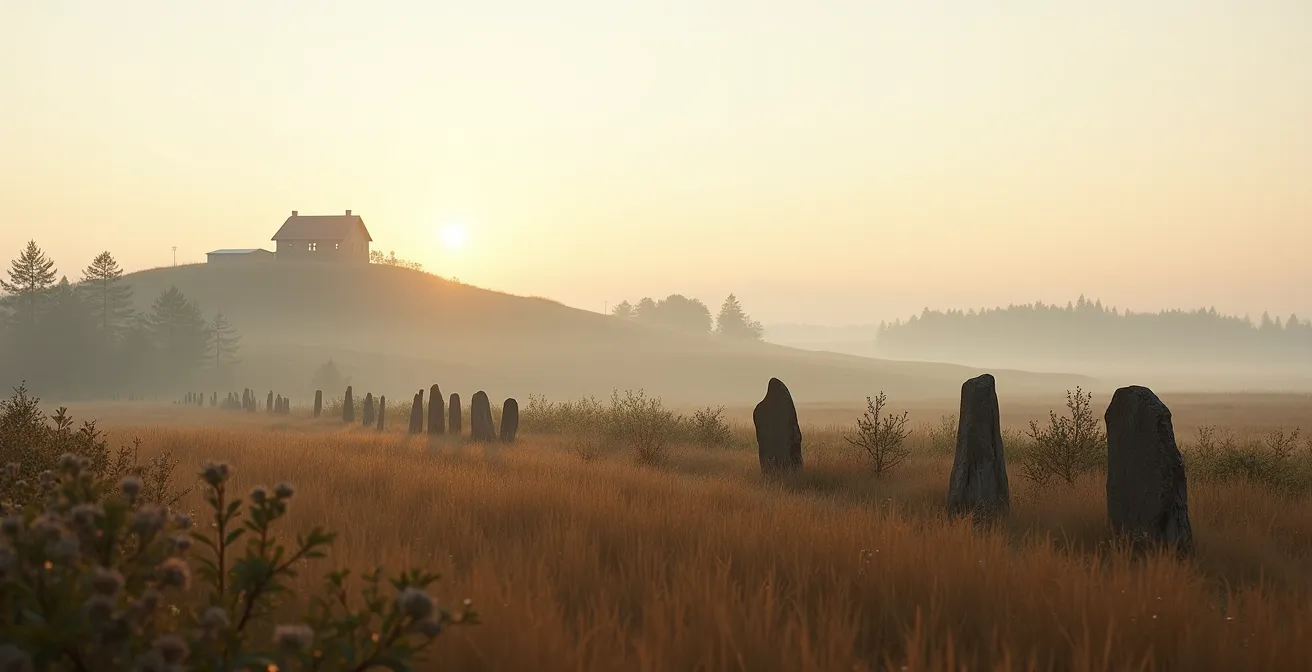
This landscape, seemingly dedicated to modern agriculture, holds the quiet markers of a much older story. The rolling hills and cultivated fields are superimposed on a blueprint of ancestral lands, where every feature had a name and a purpose. True exploration involves learning to see both layers at once—the vibrant present and the resilient, enduring past.
By reframing your map, you are no longer just a tourist tasting cheese; you are a respectful guest reading the deep, complex, and living story of the land.
Why visiting cultural hubs in November offers better interactions with locals?
The common travel wisdom is to visit Canada in the summer, when the weather is warm and the days are long. However, for travellers seeking genuine cultural connection, the “shoulder season”—particularly a month like November—offers an unparalleled opportunity. When the peak-season crowds disperse, the entire dynamic of a place shifts. The frantic pace of summer tourism gives way to a quieter, more intimate atmosphere, creating space for the kind of meaningful interactions that are impossible when guides are managing large groups.
In many Indigenous communities, especially in the north, winter is traditionally a time for storytelling and introspection. Visiting during this period aligns your travel with the natural rhythm of the culture. As Joe Bailey of North Star Adventures notes, this connection is fundamental: “As Indigenous people, we excel out there because we have this connection with the land.” When you visit in the off-season, you are more likely to be a guest sharing in this quiet-season connection rather than a customer in a high-season rush.
This shift from a transactional relationship to a personal one allows for a deeper, more reciprocal connection. Guides have more time and energy to share personal stories, answer questions in depth, and tailor the experience to your interests. You’re not just another face in the crowd; you’re an individual who has shown a genuine interest by visiting at a time when few others do. This effort is often recognized and rewarded with a more profound level of engagement.
Case Study: Aurora Village’s Off-Season Cultural Immersion
Aurora Village, located outside Yellowknife, is famous for its teepee village where visitors watch the Northern Lights. While peak season is bustling, November offers a different kind of magic. As the tourist numbers drop, the experience transforms into an intimate cultural exchange. The focus shifts to the storytelling season, where smaller groups can engage in deeper conversations with Dene guides about their traditions, the significance of the winter months in their culture, and their personal connection to the land under the dancing aurora. It becomes less about the spectacle of the lights and more about the shared human experience beneath them.
Choosing to travel in November is a deliberate act. It signals a desire for something more than just sightseeing. It is an investment in time and presence, and it often yields the greatest return: a true, unhurried connection with the people and their stories.
The mistake of treating sacred sites as mere photo opportunities
In the age of social media, it’s easy to reduce a place to its most “Instagrammable” feature. We see this happen all over the world, but it takes on a particularly damaging form when it comes to Indigenous sacred sites. Places like petroglyph sites, medicine wheels, or ancestral gathering spots are not backdrops for a travel selfie; they are living, breathing parts of a cultural and spiritual ecosystem. To treat them as mere photo opportunities is to fundamentally misunderstand their purpose and to perpetuate a colonial mindset of extraction—taking an image without offering respect in return.
A sacred site is a place of reverence, prayer, and connection to the ancestors and the spirit world. For many Indigenous cultures, these places are as holy as any cathedral, mosque, or temple. The proper way to approach them is with humility and respect. This often means putting the camera away entirely. The goal is not to capture the site, but to be present within it. Listen to the silence, observe the way the light falls, and feel the history under your feet. The experience is internal and personal, not something that can be validated by a “like” count.
Before visiting any site that may be sacred, it is crucial to do your research. Are you allowed to be there? Are there Indigenous-led tours available to provide context and protocol? Often, the most respectful action is to view a site from a distance or to not visit at all unless explicitly invited. The stories and significance of these places are not public property; they are held in trust by their communities. A true connection comes from respecting these boundaries and understanding that some things are not meant to be consumed or even photographed.

The real value of these ancient carvings lies not in their complete form, but in their texture—the story of time, weather, and spirit etched into stone. Focusing on the detail rather than the whole picture encourages a more meditative and respectful form of observation, appreciating the essence without attempting to possess the sacred imagery.
The most powerful memories from these places will not be the photos you took, but the feeling you had when you chose to put the camera down and simply be present.
How to retrace the steps of the Gold Rush in the Yukon effectively?
The Klondike Gold Rush is one of the most mythologized chapters in Canadian history, typically told as a story of rugged, determined stampeders seeking their fortune. However, this narrative is radically incomplete. To retrace these steps effectively, one must actively seek out the story that is almost always left out: the perspective of the Indigenous peoples whose lands were invaded, whose resources were depleted, and whose lives were irrevocably changed. A truly effective journey through the Yukon means moving beyond the settler-focused tales of Dawson City and looking for the Indigenous side of the story.
This requires a conscious shift in itinerary. Instead of just visiting historic saloons and gold-dredging sites, prioritize a visit to cultural centres like the Kwanlin Dün First Nation Cultural Centre in Whitehorse. These institutions are at the forefront of reclaiming the historical narrative. They present the Gold Rush not as a romantic adventure, but as a massive and disruptive event, highlighting the resilience and adaptation of their communities. This is narrative sovereignty in action, offering a powerful and necessary counterbalance to the standard tourist-trail history.
Engaging with Indigenous-led tour operators provides an even deeper level of understanding. A guided hike with a Tr’ondëk Hwëch’in guide, for example, can transform a simple walk along the Yukon River into a lesson in living history. You learn not just about the gold-seekers, but about the traditional fishing camps they displaced, the trade networks they disrupted, and the enduring spiritual connection to the land that sustained the First Nations through the upheaval. Recent government investment programs show that supporting these initiatives is a priority, with projects expected to bring 187,000 additional tourists and create hundreds of new jobs, empowering communities to tell their own histories.
Case Study: Kwanlin Dün First Nation Reframes Gold Rush History
With a recent investment of $755,000, the Kwanlin Dün First Nation in the Yukon is developing cultural tourism that presents the Gold Rush from an Indigenous point of view. This initiative moves beyond the traditional settler-focused narrative. Through Indigenous-led storytelling, land-based experiences, and exhibits at their cultural centre, visitors gain a complete and more accurate understanding of the period. This project transforms the historical narrative by focusing on the profound impact on local First Nations and showcasing their incredible resilience, offering a much-needed correction to the historical record.
An effective trip to the Yukon, therefore, is not about finding flecks of gold in a pan. It’s about discovering the richer, deeper, and more truthful story that lies just beneath the surface of the popular myth.
English speakers in rural Quebec: how to integrate beyond the “Bonjour”?
For an English speaker travelling in rural Quebec, the language barrier can sometimes feel like a wall. A polite “Bonjour-Hi” might get you through a transaction at a bakery, but it does little to foster genuine connection. The key to moving beyond these surface-level interactions is to understand that true integration is not solely about linguistic fluency. It is about demonstrating respect, curiosity, and a willingness to engage on a non-verbal, experiential level. This is especially true when interacting with Indigenous communities in Quebec, where culture and connection to the land often communicate more than words.
Many Indigenous-led experiences are designed to be sensory and immersive, intentionally transcending language. As Rebecca Godfrey of CBRE Tourism Consulting points out, visitors want to learn about Indigenous knowledge “in a genuine and mutually respectful manner.” This respect is shown not by perfect French, but by your presence and participation. Engaging in a craft workshop, a guided nature walk, or a traditional culinary experience allows for a shared understanding built on action and observation, not just dialogue. The focus shifts from what is said to what is done and felt together.
The hands-on nature of these activities creates a space for a different kind of communication. When you are learning to bead, paddle a canoe, or identify medicinal plants, you are connecting with a knowledge that has been passed down through generations. Your guide’s gestures, the rhythm of the work, and the shared environment become the language. It is a powerful reminder that some of the most profound human connections are forged without a single word being exchanged.

Case Study: Hébergement aux Cinq Sens Bridges Cultures
Located on ancestral Abenaki and Wendat lands near Lac Mégantic, Hébergement aux Cinq Sens offers a perfect example of this principle. Their immersive audio experience, ‘Encounter with the Spirit of the Forest,’ is designed to unite visitors with nature and ancestral wisdom through sound and sensory engagement. This experience intentionally bypasses language barriers, allowing English-speaking visitors to connect deeply with Indigenous culture through feeling and listening. It demonstrates that cultural integration is not just about vocabulary; it’s about a shared journey and a willingness to connect through the senses, creating a bridge between cultures.
By seeking out these immersive opportunities, English speakers can move far beyond a simple “Bonjour,” participating in a much richer and more meaningful cultural exchange.
Which small maritime museums are actually worth the $5 entry fee?
Canada’s Maritime provinces are dotted with small local museums, each promising a glimpse into the region’s seafaring past for a modest entry fee. While many are charming, the ones that offer the most profound value are those that have begun the crucial work of decolonizing their exhibits and centering Indigenous perspectives. A museum that only tells the story of European settlers and their fishing industries is presenting, at best, half of the region’s history. The truly worthwhile institutions are those that acknowledge the 13,000+ years of Mi’kmaq maritime history that came first.
The value proposition of these museums is not in the size of their collection, but in the honesty of their narrative. When a museum actively partners with the local Mi’kmaq community, allowing them to tell their own stories and interpret their own artifacts, it transforms from a static display into a dynamic centre for cultural truth. These are the places where a $5 fee becomes an investment in reconciliation and education. They challenge the visitor to reconsider everything they thought they knew about Maritime history.
The Atlantic provinces represent a significant portion of Canada’s Indigenous tourism landscape, accounting for 11 percent of its Indigenous tourism activity. This is reflected in the growing number of cultural centres and museums dedicated to a self-determined narrative. These spaces offer a unique opportunity to learn about the deep, enduring relationship the Mi’kmaq have with the land and sea—a relationship based on respect and sustainability that stands in stark contrast to the often-extractive history of colonial fisheries.
The following table highlights a few centres that are leading the way, offering a value far beyond their entry fee by providing an authentic, Indigenous-led perspective on Maritime heritage.
| Museum/Centre | Indigenous Focus | Value Proposition | Unique Features |
|---|---|---|---|
| Millbrook Cultural & Heritage Centre | Mi’kmaq perspective on maritime history | 13,000+ years of maritime history | Community-led interpretation |
| Metepenagiag Heritage Park | Mi’kmaq community storytelling | Self-determined narrative | Active decolonization of exhibits |
| Red Bank Lodge | Metepenagiag cultural heritage | Combined lodge and cultural experience | Traditional fishing and food preparation |
When you choose to visit these museums, you are not just a tourist. You are actively participating in the vital process of acknowledging a more complete and truthful history of the Maritimes.
Key takeaways
- True authenticity in Indigenous tourism is defined by Indigenous ownership and narrative sovereignty, ensuring stories are shared by the community itself.
- A deeper connection is forged through active participation—learning a skill, sharing a story, or engaging in a tradition—rather than passive observation.
- Travel during the off-season, like November, often leads to more intimate and meaningful interactions, aligning your visit with the cultural rhythm of the community.
- Choosing Indigenous-led experiences is an act of economic reconciliation, directly supporting community self-determination and cultural revitalization.
Why participating in local traditions is the key to understanding maritime resilience?
The story of Canada’s Maritime provinces is one of resilience. It’s a tale of communities weathering fierce storms, economic collapses, and the harsh realities of life by the sea. While history books often focus on the resilience of European settlers, the deepest and longest story of adaptation belongs to the Mi’kmaq people. To truly understand this enduring strength, you cannot simply read about it in a museum. You must experience it. Participating in a living tradition is the key that unlocks a visceral understanding of centuries of ingenuity and survival.
Food, in particular, serves as a powerful conduit for this understanding. As Rebecca Godfrey of CBRE Tourism Consulting notes, ” Indigenous teachings show us that traditional culinary experiences are based on a profound respect for the land.” When you participate in preparing a traditional food, you are connecting to this philosophy. It’s not just a cooking class; it’s a lesson in history, ecology, and cultural perseverance. You learn how every ingredient has a purpose and how traditional methods were developed out of a deep knowledge of the local environment.
This hands-on engagement transforms abstract history into a tangible, memorable experience. It builds a bridge of empathy and respect that passive observation cannot. Holding the ingredients, feeling the texture of the dough, and smelling the food as it cooks connects you to generations of people who performed these same actions for their survival and to maintain their culture. It is the most direct way to appreciate the resourcefulness and resilience that defines the Maritime spirit.
Case Study: Lennox Island’s “Bannock and Clams in the Sand”
On Lennox Island, Prince Edward Island, the Mi’kmaq community offers an experience that perfectly encapsulates this principle. The “Bannock and Clams in the Sand” tour combines storytelling with the traditional method of baking bannock. Community elders share powerful stories of how this technique—baking bread surreptitiously in the hot sand—was used to avoid persecution from colonizers. What was once a covert act of survival is now shared openly as a proud narrative of resistance and resilience. By participating, visitors don’t just learn a recipe; they connect emotionally to a deep history of adaptation, turning a simple meal into a profound lesson in cultural strength.
Ultimately, to understand Maritime resilience, you must feel it in your hands and taste it in the food. It’s through this active, respectful participation that a simple trip becomes a journey into the very heart of the region’s enduring spirit.