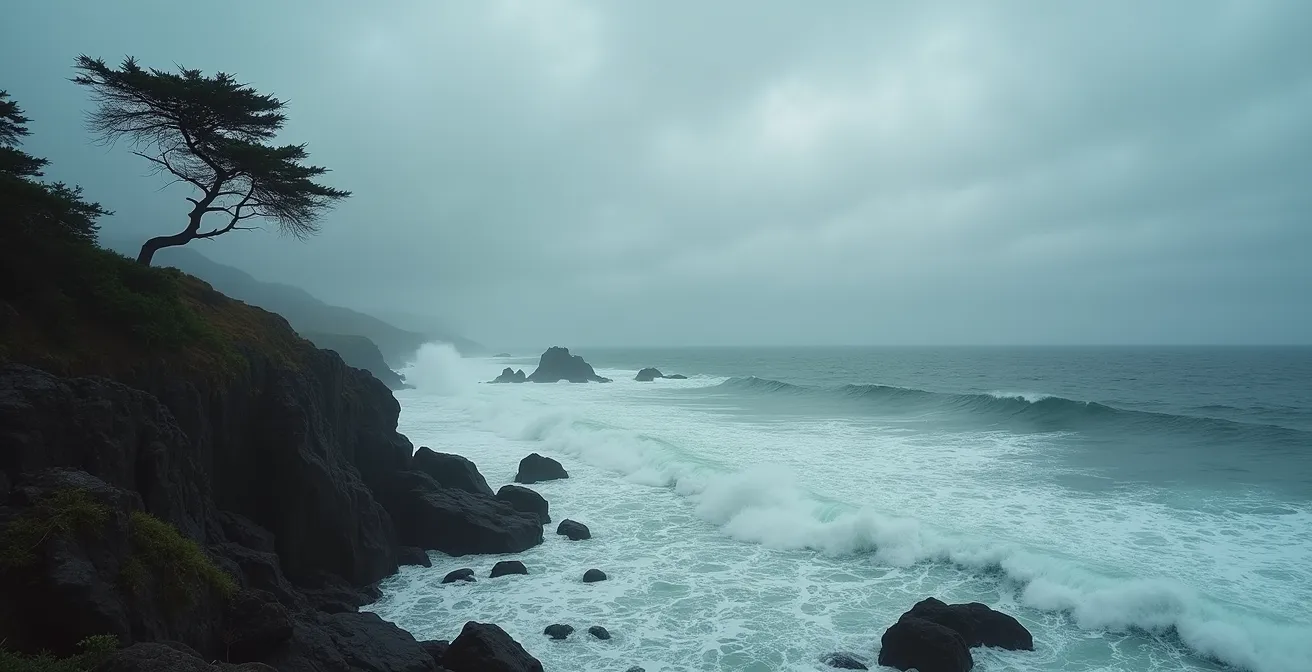
The secret to a perfect winter trip to Canada’s Pacific Coast isn’t avoiding the storms—it’s mastering the art of watching them.
- True storm-proof comfort comes not from expensive breathable gear, but from professional-grade waterproof layers.
- The most dramatic wave displays are predictable, combining specific storm swells with the power of King Tides.
Recommendation: Embrace the “power/cozy paradox” by choosing accommodations and activities specifically designed for a luxurious front-row seat to nature’s greatest show.
Most travellers plan their escapes around sunshine and calm seas. They chase an endless summer, believing a good vacation is defined by the absence of weather. But on the wild, rugged coast of Vancouver Island, British Columbia, a different kind of traveller emerges in November. This is the storm connoisseur, one who understands that the true magic of the Pacific Northwest isn’t found in spite of the rain and wind, but because of it. They seek the profound beauty of 20-foot waves crashing against ancient cedars and the deep comfort of watching it all unfold from a place of warmth and safety.
The common advice is simple: pack a raincoat, book a cabin with a fireplace, and hope for a good show. This approach, however, leaves the experience to chance. It treats the storm as a passive spectacle rather than an interactive event. But what if the key wasn’t just to endure the weather, but to engage with it intelligently? What if you could learn to read the ocean’s forecast like a program, choose your gear like a seasoned professional, and position yourself for the most dramatic moments with the precision of a landscape photographer?
This guide reframes storm watching from a passive holiday into a skillful art. We will move beyond the basics to explore the nuanced strategies of the seasoned visitor. You’ll learn the critical difference between types of rain gear that determines true dryness, how to predict the arrival of monster waves, and how to balance rugged outdoor adventure with unparalleled luxury. This is your manual for becoming a storm connoisseur, transforming a trip to Tofino and Ucluelet into an unforgettable immersion in nature’s raw power, experienced in absolute comfort.
text
This article provides a complete roadmap for your journey. From essential gear and safety protocols to planning the perfect balance of adventure and relaxation, the following sections will equip you with everything you need to know.
Summary: A Connoisseur’s Guide to Pacific Coast Storms
- Gore-Tex vs Rubber: what to wear to stay dry in horizontal rain?
- How to predict which days will have the biggest waves using surf reports?
- How to protect your camera gear while shooting 20-foot waves?
- What to expect when the storm knocks out power to your luxury lodge?
- Best books and activities for when the storm is too intense to go out?
- When is a $50k retaining wall a good investment for property value?
- The Wild Pacific Trail vs West Coast Trail: which matches your fitness level?
- How to plan a trip to Tofino and Ucluelet that balances luxury with rugged nature?
Gore-Tex vs Rubber: what to wear to stay dry in horizontal rain?
When facing the relentless, wind-driven downpour of a Pacific Coast storm—often described as horizontal rain—the first mistake a novice makes is trusting their expensive ski jacket. While materials like Gore-Tex are marketed as the pinnacle of “waterproof-breathable” technology, they have a critical weakness in this environment. In the sustained, high-humidity conditions of the British Columbia coast, even the best breathable fabrics will eventually fail. Marine weather gear experts confirm that virtually 100% of this type of gear will ‘wet out’, meaning the outer fabric becomes saturated, compromising both its waterproof and breathable properties.
The storm connoisseur learns from the professionals who make their living on these waters: commercial fishermen. Their choice isn’t high-tech membrane fabric but robust, non-breathable PVC or rubberized gear, like the workwear lines from Helly Hansen. The genius of this gear lies in its absolute impermeability. By sacrificing breathability, it guarantees that external water stays out, period. For the storm watcher, who alternates between intense outdoor exposure and warm, dry indoor retreats, this is the ideal solution. You remain completely dry during your beach explorations and can easily remove the gear once back inside.
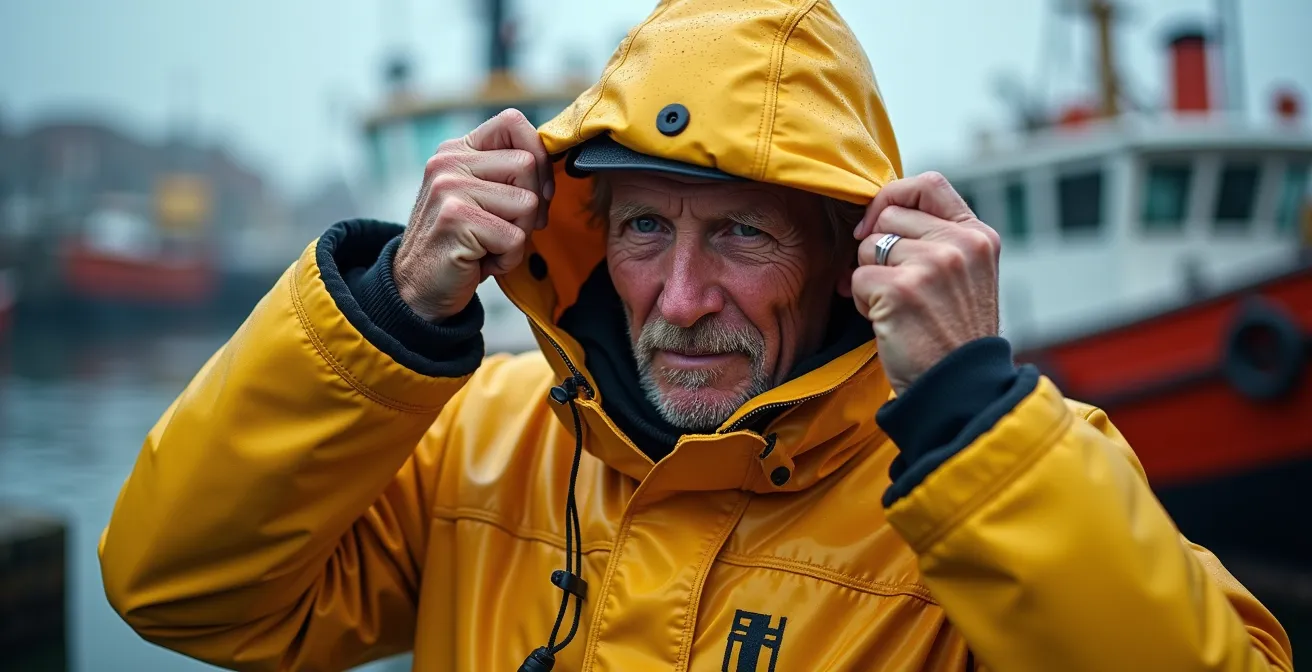
This “pro gear” approach is the first step in mastering the power/cozy paradox. It allows for a deeper, more committed engagement with the storm, knowing you have a shield that will not fail. Forget the mountaineering shell; think like a mariner. This choice is about purpose-built functionality over marketing promises, ensuring your comfort is never compromised by a gear failure when the storm is at its peak.
How to predict which days will have the biggest waves using surf reports?
Arriving in Tofino and hoping for big waves is leaving your experience to chance. The true storm connoisseur knows how to “read the ocean” by interpreting forecasts to be in the right place at the right time. The season is reliable, as the region experiences 10 to 15 storms per month during peak winter, but targeting the most spectacular “monster wave” days requires a bit more finesse. It’s a three-part formula that combines storm systems, swell characteristics, and tidal forces.
First, it’s essential to monitor the marine forecasts from a reliable source like Environment Canada. Look for alerts predicting “seas” or significant wave heights reaching 9 to 12 meters (30-40 feet) far offshore. These powerful low-pressure systems are the engine that generates the energy needed for dramatic coastal displays. However, not all large waves are created equal. This leads to the second, more nuanced step: analyzing the swell period.
A surf report will show “swell period,” measured in seconds. A short period (e.g., 8 seconds) results in choppy, chaotic water. What you’re looking for is a long-period swell of 15 seconds or more. This indicates that the wave energy has traveled a vast distance across the open Pacific, organizing itself into powerful, clean lines that will rise majestically and crash with force when they hit the shallow coastline. The final ingredient is timing your visit with the King Tides, the highest astronomical tides of the year, which typically occur in November and December. When a powerful, long-period swell coincides with a King Tide, the effect is explosive. The elevated water level allows these massive waves to break closer to shore and with maximum impact, creating the awe-inspiring 20-foot walls of water that make for legendary storm watching.
How to protect your camera gear while shooting 20-foot waves?
Capturing the raw power of a Pacific storm is a rewarding challenge, but it poses a significant risk to your expensive camera equipment. Salt spray, driving rain, and gale-force winds are a photographer’s nightmare. While many modern cameras boast “weather-sealing,” this is more of a resistance to light showers than a defense against the firehose-like conditions of a Tofino gale. To shoot with confidence, you must adopt a multi-layered defense strategy, starting with a dedicated rain cover for your camera and lens. This can range from a simple plastic sleeve to a more robust, form-fitting cover with access to controls.
Just as important as protecting your gear is protecting yourself and choosing a safe vantage point. The temptation to get close to the action on tidal rocks is immense, but this is where the risk of rogue waves is highest and should be avoided at all costs. Strategic positioning is key. Fortunately, the area is designed for safe storm spectating. A study of local spots reveals a clear hierarchy of safety and photographic potential.
This table, based on recommendations from the official Tofino tourism board, highlights designated safe zones that still offer incredible views.
| Location | Safety Level | Photo Opportunities |
|---|---|---|
| Kwisitis Visitor Centre Deck | High – Covered platform with ramp | Excellent – Waves breaking on rocks |
| Florencia Bay Viewing Deck | High – 200m from parking, elevated | Good – Wide bay views |
| Cox Bay Beach | Medium – Requires tide awareness | Excellent – 40-foot waves possible |
| Tidal Rocks | Low – Risk of rogue waves | Not recommended |
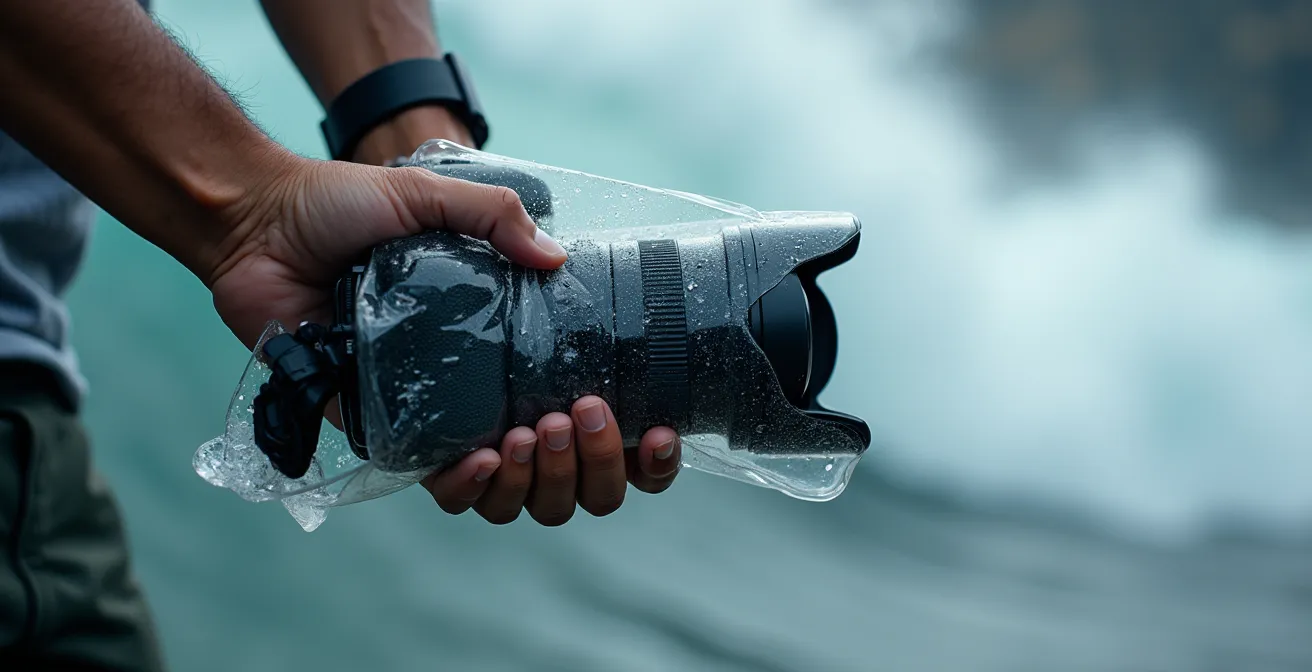
Finally, always carry a lens cloth in a dry bag and wipe down your gear immediately after returning indoors. A little bit of fresh water on a cloth can help remove corrosive salt residue. By combining physical protection with smart, safe positioning, you can focus on capturing the drama without sacrificing your equipment or your well-being.
What to expect when the storm knocks out power to your luxury lodge?
A power outage during a city storm is an inconvenience. A power outage at a luxury lodge on the edge of the Pacific Ocean during a winter gale is a core part of the experience. This is where the “power/cozy paradox” reaches its zenith. The very force that is shaking the windows and roaring outside can sever the connection to the grid, plunging you into a more elemental, intimate version of comfort. The best lodges in Tofino and Ucluelet are not just prepared for this; they have woven it into the fabric of their hospitality.
Instead of panic, you’ll find a well-orchestrated pivot. Staff will appear with flashlights, lanterns, and candles, transforming the space into a warm, flickering haven. The roar of the storm becomes more present without the hum of electricity. This moment is deliberately curated. As the team at a premier local accommodation explains, it’s an anticipated feature of the stay. In their guide to the season, they note their preparation for this inevitability.
We’ll even make sure there’s a supply of candles nearby as the power is frequently knocked out during these storms
– Chesterman Beach B&B, Tofino Storm Watching Accommodation Guide
Pioneering resorts like the Wickaninnish Inn have built their entire operational philosophy around this concept of “engineered comfort.” They don’t just provide candles; they anticipate every need. Guests find full Helly Hansen rain gear and rubber boots waiting in their rooms, ready for exploration. Upon returning, soaked and exhilarated, they can warm up by a grand fireplace in the café, sipping hot cocoa while their gear dries in a purpose-built closet. The experience is seamless: the wildness of the storm is fully accessible, but the return to absolute comfort is effortless and immediate. A power outage, in this context, isn’t a failure of service but an enhancement of the atmosphere—a truly memorable highlight of any storm watching trip.
Best books and activities for when the storm is too intense to go out?
There will be moments, or even entire afternoons, when the storm reaches a fever pitch that makes venturing outside unwise, even for the well-equipped. This is not a disappointment; it is an opportunity to embrace the other half of the storm watching equation: profound, uninterrupted coziness. The storm connoisseur has a plan for these moments, trading the drama of the waves for the rich cultural and culinary tapestry of the coast, often enjoyed from behind a large picture window.
Tofino and Ucluelet are home to a thriving arts scene deeply inspired by the surrounding landscape. A visit to the Roy Henry Vickers Gallery offers a chance to see how the power and spirit of the coast are translated into stunning First Nations art. Browsing the town’s independent bookshops is another perfect storm-day activity, where you can discover works by British Columbia authors or find literature that deepens your understanding of the region’s natural and cultural history. This is the time to find a book, retreat to your room’s window seat, and read with the storm as your soundtrack.
For a more sensory indulgence, a trip to Chocolate Tofino to sample artisan chocolates while the rain streams down the windows is a local ritual. The ultimate indoor experience, however, might be found at one of the area’s oceanfront restaurants. The Pointe Restaurant at the Wickaninnish Inn, for example, offers spectacular 240-degree ocean views, allowing you to dine in luxury while the surf pounds just feet away. They even pipe the sound of the waves into the dining room, ensuring the storm’s presence is felt even in the most refined setting. Pairing a flight of fine whiskies with the unfolding drama outside is the perfect culmination of a day spent in cozy reverence of the storm.
When is a $50k retaining wall a good investment for property value?
Watching the awesome power of the ocean in November, with storms that can generate seas of 10 to 12 metres, often leads to a specific question for those who fall in love with the coast: how is it possible to live here? This thought, bridging the gap between traveler and potential resident, brings us to the unseen hero of coastal properties: the shoreline protection structure. For a waterfront property on Vancouver Island’s west coast, a professionally engineered retaining wall isn’t just landscaping; it’s a critical asset, and a $50,000 investment can be the difference between a secure property and one at the mercy of coastal erosion.
The investment becomes essential when a property faces direct exposure to high-energy waves, particularly during the winter King Tides. These tides can rise so high that they inundate beach access points, leading the District of Tofino to issue safety closures. For a home, this same water level means the base of its cliff or bank is under direct attack. A retaining wall provides the necessary armor to prevent the land from being slowly carved away, protecting the property’s foundation and preserving its value. Without it, a property’s usable land—and its market price—can literally shrink over time.
However, building on the coast is a complex matter. Provincial and municipal bylaws in British Columbia strictly govern any modifications to the shoreline. The regulations dictate the type, size, and materials of any structure to ensure it doesn’t negatively impact the natural coastal processes or public access. Increasingly, there’s a move away from hard concrete walls towards “living shoreline” solutions. These use natural materials like anchored logs, root wads, and native plantings to create a resilient barrier that absorbs wave energy and adapts to the environment. For a property owner, this can be a more sustainable and aesthetically pleasing investment that aligns with the ecological ethos of the region, while still providing the essential protection that underpins the property’s long-term value.
The Wild Pacific Trail vs West Coast Trail: which matches your fitness level?
For the active storm watcher eager to experience the tempest on foot, Vancouver Island offers two legendary trails, but only one is a viable option in November. The world-famous West Coast Trail is an icon of extreme backcountry hiking, a grueling multi-day trek through true wilderness. However, its challenge is so immense that Parks Canada officially closes it for the entire winter season. In November, it is considered impassable and dangerously unpredictable due to extreme weather, flash floods, and trail damage.
The clear and superior choice for the winter visitor is the Wild Pacific Trail in Ucluelet. This trail is not just open; it was specifically designed with storm watching in mind. It offers a range of easily accessible, well-maintained loops that trace the dramatic coastline, leading hikers through windswept forests to stunning, purpose-built viewing platforms perched safely above the crashing surf. This trail system perfectly embodies the principle of experiencing rugged nature from a position of engineered safety.
The following comparison makes the choice clear for any visitor during storm season.
| Trail Feature | Wild Pacific Trail | West Coast Trail |
|---|---|---|
| November Accessibility | Open year-round | Officially CLOSED |
| Storm Watching Suitability | Designed with safe viewpoints | Too dangerous in winter |
| Difficulty Level | Easy to moderate boardwalks | Extreme backcountry when open |
| Infrastructure | Well-maintained platforms | Wilderness trail |
Choosing the Wild Pacific Trail is a decision based on both safety and suitability. It allows for an immersive hiking experience—feeling the spray on your face and hearing the thunder of the waves—without the backcountry risks associated with the West Coast Trail in winter. As guidelines from Parks Canada and local experts emphasize, the trail offers all the reward with none of the prohibitive danger, making it the perfect fit for a trip that balances luxury with managed adventure.
Key Takeaways
- True storm-proof dryness on the coast requires professional-grade, non-breathable rubber rain gear, not just standard hiking shells.
- The most spectacular waves occur when long-period swells (15+ seconds) coincide with winter King Tides; use marine forecasts to target these days.
- Prioritize safety by using designated, elevated viewing platforms like those on the Wild Pacific Trail, and always protect your camera with a dedicated rain cover.
How to plan a trip to Tofino and Ucluelet that balances luxury with rugged nature?
The art of planning the perfect storm watching trip lies in mastering the balance between raw nature and refined comfort. This is not a happy accident; it is the very foundation upon which the entire industry was built. The concept was pioneered in the 1990s by Charles McDiarmid, the managing director of the Wickaninnish Inn. Inspired by his childhood spent joyfully playing in winter storms, he envisioned a place where others could experience that same exhilarating power, but from a sanctuary of luxury. When his inn opened in 1996, it was the first of its kind, purpose-built with giant windows, fireplaces, and five-star amenities, single-handedly inventing the “storm watching” tourism category.
To follow in this spirit, your itinerary should be a deliberate blend of the wild and the warm. It’s about scheduling intense, immersive outdoor activities and then pairing them with restorative, luxurious indoor experiences. A day might start with a brisk walk on a deserted beach at low tide, followed by a guided walk through the ancient trees of the Pacific Rim National Park Reserve. The afternoon is then reserved for the “cozy” part of the equation: a deep-tissue massage at a world-class spa, or a quiet hour spent reading by a fireplace, before culminating in a gourmet dinner overlooking the tumultuous ocean.
This rhythm of ‘out and in’ is the key. It ensures you fully engage with the elements but never become worn down by them. It’s about embracing the wind and rain on your own terms, knowing that a hot bath, a fine meal, and a comfortable bed are waiting. The following checklist provides a template for a perfectly balanced itinerary.
Your Storm Connoisseur’s Itinerary Checklist
- Arrival & Immersion: Check into your oceanfront resort and spend the first evening watching the storm from the comfort of a Great Room with a locally inspired craft cocktail.
- Nature & Nurture: Dedicate the morning to a guided rainforest walk in the Pacific Rim Reserve, then book an afternoon spa treatment to recover and relax.
- Senses & Culture: Take a dawn beach walk at low tide, followed by a visit to an Indigenous cultural gallery to connect with the region’s artistic heritage.
- Culinary Finale: Reserve a table for dinner at a premier oceanview restaurant, like The Pointe, to experience a gourmet meal paired with the storm’s final act.
- Departure & Mementos: Enjoy one last beach walk, browse the local artisan shops for a unique keepsake, and depart with a deeper appreciation for the coast.
By thoughtfully planning your days, you are not just a visitor; you are actively participating in the art of storm watching. Start planning your balanced getaway today to experience the perfect synthesis of nature’s power and human comfort.