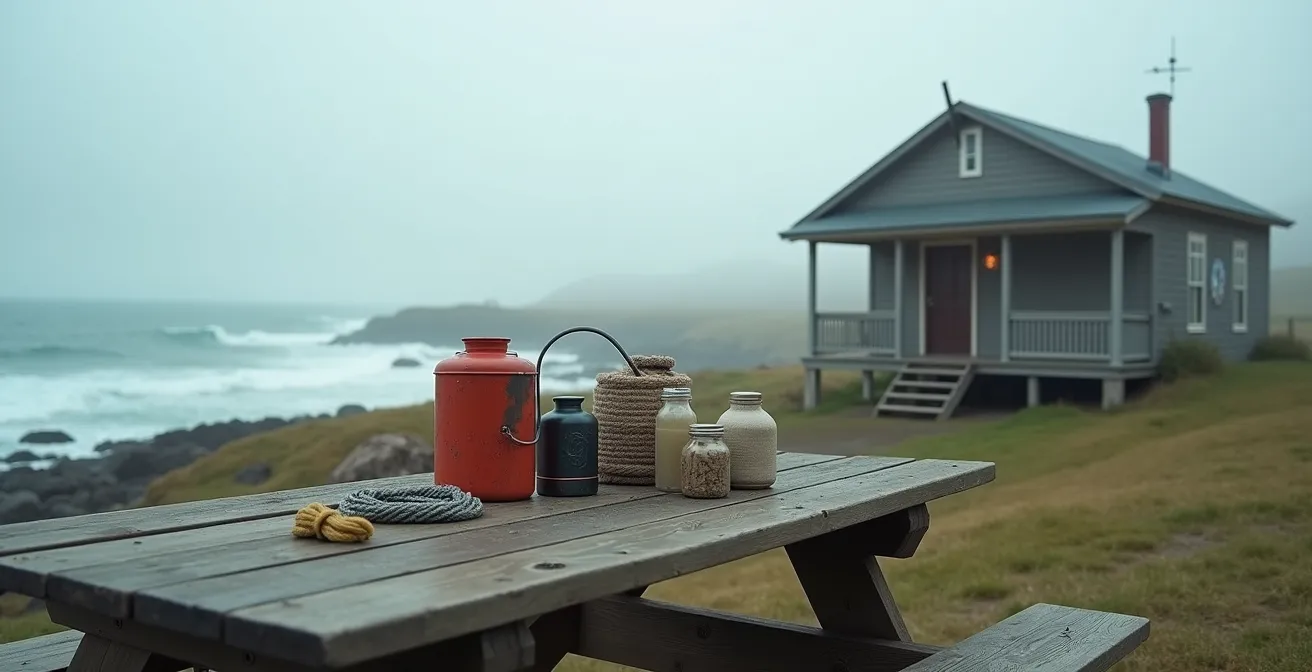
The affordable house price in the Maritimes is a down payment on a series of non-financial ‘lifestyle taxes’ that require a shift from urban convenience to rural resilience.
- Daily expenses like groceries, gas, and heating oil are significantly higher, offsetting housing savings.
- Accessing essential services like healthcare involves long waits and proactive navigation.
- Your home requires investment in ‘resilience infrastructure’ like generators and weather-proofing to function.
Recommendation: Before moving, budget for these hidden costs and actively plan for community integration, which is the key to a successful transition.
The story is tempting and, on the surface, entirely true. You see the sale price of a four-bedroom home in Halifax or a charming farmhouse in rural New Brunswick and compare it to your cramped condo in Toronto or Vancouver. The math seems undeniable: moving to the Maritimes is the solution to Canada’s housing crisis. For many, it has been. A recent report even highlighted that for the first time in decades, more people moved to the Maritimes from other parts of Canada than moved away.
But here’s the reality that doesn’t always make it into the glossy real estate brochures. The sticker price on that house is just the beginning of the story. The real cost of living here isn’t just about your mortgage. It’s a complex equation where lower housing costs are balanced by a series of what can best be described as a ‘lifestyle tax.’ This isn’t a government levy, but a collection of practical, financial, and social challenges you pay to enjoy the undeniable benefits of space, scenery, and a different pace of life. This isn’t a warning against moving; it’s a realistic briefing from a neighbour.
This guide unpacks that lifestyle tax. We will explore the financial shocks of daily expenses, the critical challenge of navigating healthcare, the necessary investments in making your home resilient, the realities of the job market, and, most importantly, how to truly become part of the community. Understanding these trade-offs is the first step toward making a move that is not just affordable, but sustainable and fulfilling.
To help you navigate this decision, this article breaks down the essential realities of moving to the East Coast. We will cover the hidden costs, the practical necessities, and the cultural shifts required for a successful transition from a major urban centre to Maritime life.
Summary: Why the low cost of housing in the Maritimes comes with higher lifestyle taxes?
- Why cheaper houses don’t mean cheaper groceries or heating oil bills?
- How to navigate the family doctor shortage in Atlantic provinces as a newcomer?
- Generators and roof straps: essential upgrades for Atlantic homeowners
- The “trailing spouse” problem: finding two professional jobs in a smaller economy
- How to move from “Come From Away” to community member through volunteering?
- Starlink or Fixed Wireless: which supports two people working from home in rural zones?
- Salt spray vs Metal: why your stainless steel BBQ rusts in 6 months on the coast
- Why participating in local traditions is the key to understanding maritime resilience?
Why cheaper houses don’t mean cheaper groceries or heating oil bills?
The first and most immediate lifestyle tax you’ll encounter is at the cash register. While you celebrate your lower mortgage payment, you’ll quickly notice that almost everything else costs more. The Harmonized Sales Tax (HST) sits at 15% in the Atlantic provinces, a noticeable jump from the 5% in Alberta or 13% in Ontario. This applies to nearly every purchase, from a coffee to a new car, and it adds up significantly over a year.
Food costs are a particularly stark reality. Due to smaller markets and higher transportation expenses, groceries are notably more expensive. For instance, a detailed comparison of grocery baskets showed that in Newfoundland and Labrador, a region with similar logistical challenges, the price of eggs surged from $3.44 to $5.04 between 2017 and 2024. Furthermore, projections indicate that both Nova Scotia and New Brunswick will face above-national-average food price increases in the coming years.
Then there’s the cost of staying warm. Many newcomers from cities with extensive natural gas infrastructure are shocked by the reliance on heating oil. A single fill-up of an oil tank can easily exceed $1,000 in the winter months, a recurring cost that can quickly eat into the savings from your mortgage. These daily and seasonal expenses are a critical part of the financial puzzle and must be factored into any budget before making the move.
How to navigate the family doctor shortage in Atlantic provinces as a newcomer?
One of the most significant challenges facing newcomers to the Maritimes is accessing primary healthcare. The widely reported family doctor shortage is not an exaggeration; it is a systemic issue that can take years to navigate. Upon arrival, it is not uncommon to be placed on a provincial waitlist with tens of thousands of other residents, with no clear timeline for being assigned a family physician. This is a critical part of the ‘lifestyle tax’ that directly impacts your well-being and peace of mind.
This situation requires a proactive and resourceful mindset. Your first step upon arrival, even before you feel you need it, should be to register with your provincial health program and immediately get your name on the official registry, such as Nova Scotia’s ‘Need a Family Practice Registry’ or ‘Patient Connect NB’ in New Brunswick. However, waiting is not a passive activity. You must actively build your own network of care in the interim. This means locating the nearest walk-in clinics for non-emergency issues and knowing the route to the closest emergency department for urgent situations.
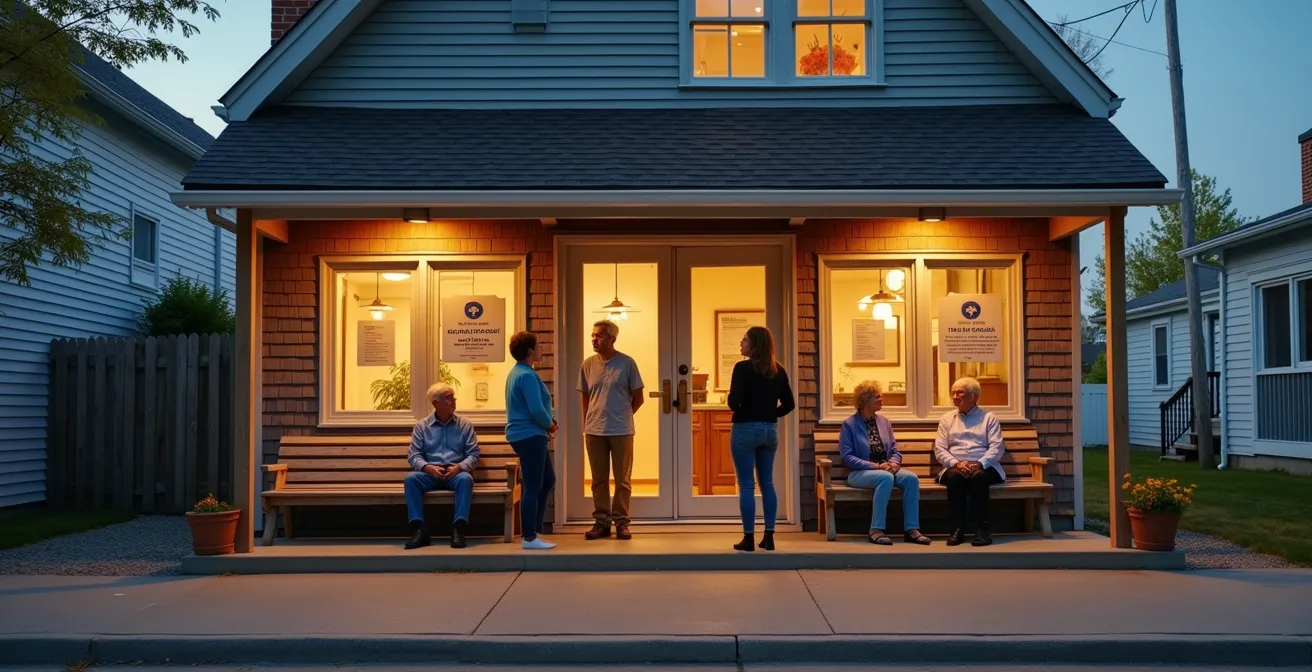
An increasingly vital part of this patchwork of care is Nurse Practitioner (NP) clinics. These clinics, run by highly qualified NPs, can provide a wide range of primary care services and are often more accessible than traditional doctor’s offices. For the initial three-month waiting period before provincial health coverage kicks in for some newcomers, securing private health insurance is also a non-negotiable safety net. Navigating this landscape is a test of patience and planning, a far cry from the healthcare access many are used to in larger urban centres.
Generators and roof straps: essential upgrades for Atlantic homeowners
In the Maritimes, the power grid is vulnerable to the whims of the North Atlantic. Hurricanes, ice storms, and Nor’easters are not rare events; they are a predictable part of the annual cycle. Consequently, preparing for power outages isn’t a hobby for the paranoid; it’s a fundamental responsibility of homeownership. While you may save significantly on your purchase price, with some analyses showing that Maritime provinces offer 30-40% lower housing costs, a portion of those savings must be reinvested into what can be called ‘resilience infrastructure’.
A generator is not a luxury; it’s arguably the most critical piece of equipment you can own, especially if you work from home. Power outages can last for days, and a generator ensures you can maintain heat, keep your food from spoiling, and stay connected. Similarly, after major storms like Hurricane Fiona, hurricane straps—metal connectors that secure your roof to the walls of your house—have become an essential upgrade to prevent catastrophic wind damage. Insurance companies are increasingly looking for these features.
This investment in resilience extends beyond just storms. A good quality dehumidifier is essential to combat the pervasive dampness and prevent moisture damage and mould in your home. Regular tree management to remove dangerous limbs over your house is another recurring cost. These are not optional upgrades but necessary investments to protect your property and maintain your quality of life. The following table outlines the typical costs associated with building this essential resilience.
| Equipment | Cost Range (CAD) | Priority Level | ROI/Benefit |
|---|---|---|---|
| Portable Generator | $1,000-$5,000 | Essential | Work continuity during outages |
| Standby Generator | $5,000-$15,000 | Recommended | Automatic power, home value increase |
| Hurricane Straps | $500-$2,000 | Essential | Insurance premium reduction |
| Wood Stove/Propane Fireplace | $2,000-$5,000 | Highly Recommended | Non-electric heat backup |
| Quality Dehumidifier | $300-$800 | Essential | Prevent moisture damage |
| Tree Management | $500-$2,000/year | Essential | Property protection |
The “trailing spouse” problem: finding two professional jobs in a smaller economy
For dual-income professional couples, the move to the Maritimes presents a unique economic challenge: the “trailing spouse” problem. While one partner might secure a job or be able to work remotely, finding a second, equivalent professional role in a smaller, less diverse economy can be difficult. This is a significant ‘lifestyle tax’ that can strain finances and careers. The job market is not the same as in Toronto or Vancouver; opportunities are fewer and more concentrated in specific sectors.
However, this doesn’t mean opportunities don’t exist. It simply requires a strategic, and often creative, approach to employment. The region has burgeoning and innovative sectors. A case study of Prince Edward Island highlights career growth in aerospace, bioscience, and information technology, well beyond the traditional industries. The key is to research these niche economic clusters, such as Halifax’s ocean tech hub (COVE) or Fredericton’s cybersecurity sector, and network proactively.

The rise of remote work has been a game-changer, creating the “bring your own job” model. Many newcomers successfully maintain their big-city salaries while enjoying the Maritime lifestyle. For the partner seeking local work, building a ‘portfolio career’—combining part-time work, consulting, and entrepreneurship—is a common and viable strategy. Organizations like ISANS in Nova Scotia are also invaluable resources for connecting newcomers with employment services. The old model of simply applying for a posted job is often less effective than building connections and creating your own opportunities.
Your Action Plan: Dual-Career Strategy for Maritime Newcomers
- Research region-specific growth sectors like Halifax’s ocean tech cluster (COVE) or Fredericton’s cybersecurity industry (CyberNB).
- Leverage remote work possibilities to maintain at least one existing income stream, effectively “bringing your job” with you.
- Connect with newcomer employment services like ISANS (Immigrant Services Association of Nova Scotia) immediately upon arrival for tailored support.
- Explore building a ‘portfolio career’ that combines part-time employment, freelance consulting, and local entrepreneurial ventures.
- Actively network within emerging industries, such as Charlottetown’s biotech and gaming scenes, to uncover opportunities not publicly posted.
How to move from “Come From Away” to community member through volunteering?
In the Maritimes, community is not something you passively consume; it’s something you actively build. The friendly waves and small-town chatter are genuine, but moving from a “Come From Away” (a local term for a newcomer) to a true community member requires participation. This is where you pay one of the most rewarding ‘lifestyle taxes’: the investment of your time. The currency of small Maritime towns is often not who you are or what you own, but what you contribute. Volunteering is the fastest way to build this ‘community currency’.
This isn’t about simply showing up to a festival once a year. It’s about embedding yourself in the functional fabric of the town. Joining the local volunteer fire department, for example, is one of the most respected and immediate ways to connect with your neighbours and earn trust. These are the people who will have your back in a storm, literally and figuratively. Similarly, attending events at the local Royal Canadian Legion—often the social hub for all ages with darts, dinners, and live music—is a direct line into the community’s social life.
The pathways to integration are numerous and deeply practical. Joining the board of a local co-op, helping with trail maintenance, or participating in a search and rescue team moves you from a passive resident to an active steward of the community. Even something as simple as attending the $15 community suppers at a church hall does more than just feed you; it funds local projects and forges social bonds that are the bedrock of Maritime life. It’s in these shared activities, not just casual conversations, that you truly become a neighbour.
Starlink or Fixed Wireless: which supports two people working from home in rural zones?
For many who move to the Maritimes, the dream is powered by the internet. The ability to work remotely is what makes the entire lifestyle possible. However, the ‘Connectivity Gamble’ is a major lifestyle tax that newcomers from urban areas, accustomed to ubiquitous high-speed fibre, often underestimate. In many rural and even some semi-rural areas, reliable, fast internet is not a given. Your property’s value and your ability to earn a living are directly tied to the quality of your connection.
The options are often a trade-off between speed, reliability, and cost. As a case study on post-pandemic migration to the Maritimes notes, successful remote workers now treat internet availability as a condition of property purchase, often checking the Universal Broadband Fund maps for scheduled fibre upgrades before even making an offer. For areas without fibre, the main contenders are satellite services like Starlink and Fixed Wireless from providers like Bell and Eastlink.
Starlink offers impressive speeds, often between 50-200 Mbps, making it more than capable of handling two people on video calls. However, it comes with a higher monthly cost, a significant initial hardware investment, and can be susceptible to interruptions during heavy rain or snow. It also requires a clear view of the sky and, crucially, needs a generator to function during a power outage. Fixed Wireless is often more stable in terms of latency, which is important for real-time communication, but speeds are typically lower and you need a clear line of sight to a provider’s tower. The following table provides a comparison of the main rural options.
| Service Type | Speed Range | Monthly Cost (CAD) | Key Considerations |
|---|---|---|---|
| Starlink | 50-200 Mbps | $140-200 | High speed but weather-dependent, requires clear sky view, needs generator backup |
| Fixed Wireless (Bell) | 25-50 Mbps | $80-120 | Stable latency for video calls, requires line of sight to tower |
| Fixed Wireless (Eastlink) | 20-100 Mbps | $75-130 | Good regional coverage, tower-dependent reliability |
| Xplornet | 25-50 Mbps | $70-100 | Wide rural coverage, variable peak hour performance |
Salt spray vs Metal: why your stainless steel BBQ rusts in 6 months on the coast
A subtle but relentless ‘lifestyle tax’ of coastal Maritime living is the constant war against corrosion. If you’re moving from an inland city, you may not realize that the air itself is working against your belongings. The salt spray carried on the wind is highly corrosive and will find and destroy any vulnerable metal. That shiny “stainless steel” barbecue you brought from Ontario? Don’t be surprised to see “tea stains” or rust spots appearing within a single season. This is the reality of Coastal Corrosion.
This isn’t just about aesthetics; it’s a significant, ongoing maintenance and replacement cost. The standard 304-grade stainless steel used in many consumer products simply can’t withstand the coastal environment. To win this battle, you need to adopt the strategies of boaters and mariners. This means proactively choosing materials and applying treatments designed for a marine environment. For outdoor equipment, this means seeking out the more expensive but far more durable marine-grade 316 stainless steel.
The fight extends to all parts of your home and property. Your car will need an annual undercoating treatment (like Krown) to prevent the chassis from rusting out. Your home’s water heater may need a sacrificial anode to prevent the tank from corroding. Even your metal door hardware will last longer if rinsed with fresh water periodically. For outdoor furniture, you’ll be better served by powder-coated aluminum, teak, or high-density plastics rather than standard metal. A trip to a local marine supply store, or chandlery, will reveal a world of specialized anti-corrosion products that are essential tools for any coastal homeowner.
Key takeaways
- The financial benefit of lower housing costs in the Maritimes is often offset by higher daily expenses (15% HST, groceries, heating oil).
- Essential services like healthcare and high-speed internet require proactive planning and are not guaranteed, representing a significant non-financial cost.
- True integration into Maritime life is an active process built on community participation and volunteering, which serves as a form of social currency.
Why participating in local traditions is the key to understanding maritime resilience?
After calculating the financial costs, navigating the practical challenges, and investing in your home’s resilience, you might wonder what the ultimate return on investment is. The answer lies in the very fabric of the community, expressed through its local traditions. These are not just quaint customs for tourists; they are the living mechanisms that build the social resilience needed to thrive here. Paying the ‘lifestyle tax’ makes you a resident; participating in traditions makes you a Maritimer.
Take the classic kitchen party. As one observer notes, these gatherings represent the core of Maritime social life, where participation is the key. Whether you share a story, play a song, or are just an engaged listener, you are actively contributing to the bonds that hold the community together. Similarly, community suppers are not just about a cheap meal; they are grassroots fundraisers that support local projects and, more importantly, reinforce social connections through the long winter months. These events demonstrate how tradition serves a deeply practical, community-building purpose.
Understanding and embracing this is the final, and most important, step. It’s about recognizing that the resilience required to deal with a power outage or a long wait for a doctor is forged in these very social interactions. The self-sufficiency of the individual is supported by the collective strength of the community. As one local photographer and author beautifully puts it:
Having the raw North Atlantic surf on my doorstep and never-ending inspiration for photography — I’m happy to call Nova Scotia home
– Adam Cornick, Coastal Nova Scotia
This captures the essence of the trade-off. The challenges are real—the surf is “raw”—but the rewards are profound. By participating, you don’t just observe the culture; you become part of the resilient web that makes the Maritime lifestyle not just possible, but deeply rewarding.
By understanding these ‘lifestyle taxes’ before you move, you’re not just buying a house; you’re making a conscious and prepared investment in a new way of life. The next logical step is to start building your own detailed budget that accounts for these realities.