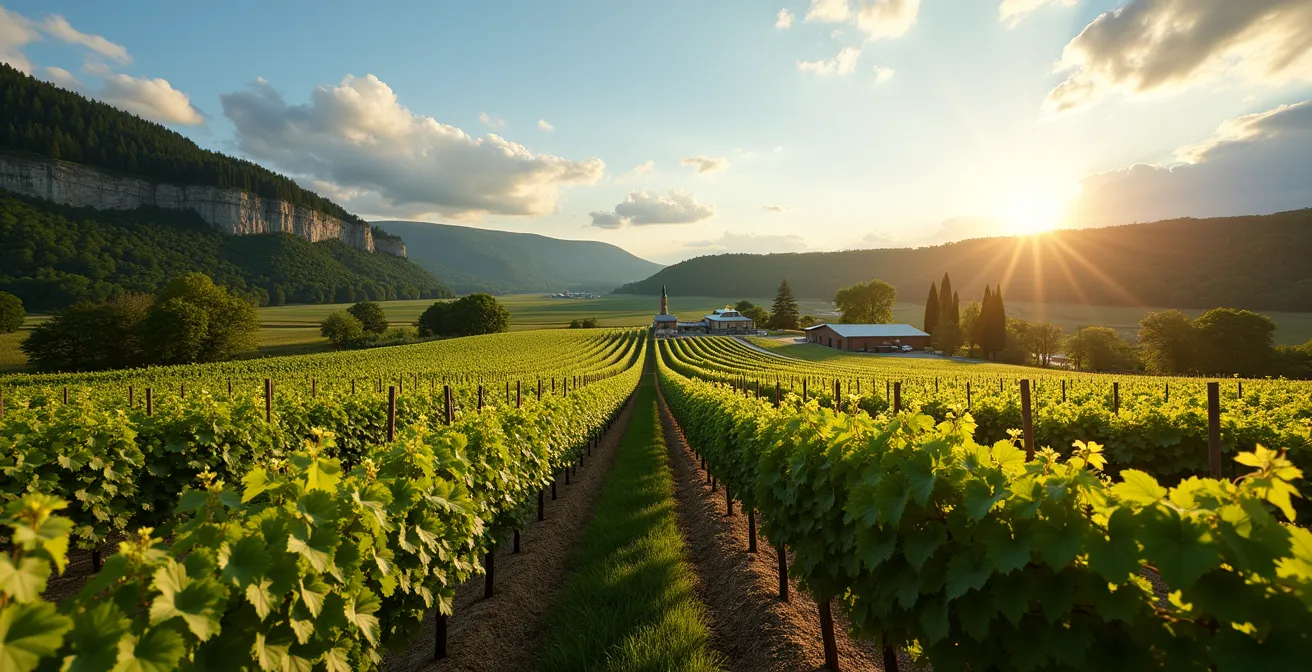
True Niagara authenticity isn’t about avoiding crowds; it’s about embracing the region’s “slow terroir” through intentional food, wine, and travel choices.
- The Benchlands offer genuine farm-to-table dining and walkable villages like Jordan, providing a tranquil alternative to commercial hubs.
- Strategic planning using bikes, trains, and backroads transforms travel from a chore into a journey of discovery.
Recommendation: Base your trip in a quieter town like Jordan and plan your itinerary around peak fruit harvests for a truly unique and delicious experience.
There’s a familiar Niagara story: the mesmerizing roar of the Falls, the neon glow of Clifton Hill, the predictable circuit of sprawling, tour bus-friendly wineries. For many, this is the beginning and end of the experience. It’s a trip that can leave a discerning traveler—especially a food-focused couple—feeling like they’ve seen the spectacle but missed the soul. You followed the signs, saw the sights, and yet a sense of having skimmed the surface lingers. What if the most memorable part of Niagara isn’t found by looking at the water, but by turning your back to it and heading for the hills?
The real story, the one whispered among chefs and vintners, unfolds along the Niagara Escarpment in the area known as the Benchlands. This isn’t just an alternative to the tourist corridor; it’s an entirely different philosophy of travel. We’re not just talking about finding “hidden gems.” We’re proposing a shift in mindset from passive sightseeing to active tasting, from generic tourism to what can only be described as “slow terroir.” It’s a way of travel where your itinerary is dictated by the harvest, your transportation becomes part of the adventure, and your accommodations are a gateway to the local community, not an escape from it.
This guide abandons the well-trodden path. Instead of a checklist of attractions, it offers a framework for crafting a personal, authentic journey. We’ll explore how to identify truly local cuisine, navigate the region without the gridlock, and choose a home base that prizes tranquility over turnover. This is your invitation to experience the garden of Ontario, not as a spectator, but as a welcome guest.
To help you craft this perfect escape, this article breaks down the essential strategies for experiencing the authentic Niagara Benchlands. From finding genuine farm-to-table restaurants to planning a traffic-free journey, each section provides the insights you need to go beyond the postcard and discover the region’s true flavour.
Summary: Discovering Niagara’s Authentic Benchlands Experience
- Which winery restaurants actually grow their own produce on site?
- How to take the GO Train with your bike to explore Niagara vineyards?
- Peaches vs Cherries: knowing exactly when to visit for the best harvest
- How to navigate Niagara-on-the-Lake without getting stuck in traffic for hours?
- Jordan vs NOTL: which town is the better base for a quiet retreat?
- Guédille or Club Sandwich: where to find the best lobster rolls on the road?
- The “15-minute city” test: can you buy milk without starting a car?
- How to plan a self-guided winery tour that focuses on small-batch producers?
Which winery restaurants actually grow their own produce on site?
The term “farm-to-table” is one of the most overused phrases in the culinary world. In a fertile region like Niagara, nearly every menu can claim a local ingredient. But for the traveler seeking true authenticity, the question is more specific: how much of this meal came from the very soil I’m standing on? The distinction lies between sourcing from a nearby farm and sourcing from a kitchen garden just steps away. This hyper-local approach is the hallmark of a genuine Benchlands culinary experience.
The gold standard for this philosophy can be found at restaurants that are, first and foremost, farms. These establishments operate on a principle of “what’s ready is what’s for dinner,” with menus that can change daily based on the morning’s harvest. The ultimate validation of this commitment in the region is the fact that Pearl Morissette has achieved Two MICHELIN Stars and one MICHELIN Green Star, a testament to its profound connection between land and plate. These are not just restaurants with a garden; they are agricultural projects with a dining room.
So how do you, as a diner, distinguish marketing from reality? It comes down to asking the right questions. A truly integrated farm-restaurant will welcome inquiries about their produce. They are proud of their gardens and eager to share the story of their ingredients. Before you book, or even as you’re seated, use a simple checklist to gauge their commitment to micro-localism.
Your Verification Checklist: Uncovering True Farm-to-Table Sourcing
- Ask directly: “Can you show me which items on today’s menu come directly from your on-site garden?”
- Inquire about specifics: “What specific vegetables or herbs are currently being harvested from your property this week?”
- Probe for seasonality: “Do you preserve, can, or pickle your own produce for use in the off-season?”
- Request a viewing: “Is it possible for us to see your kitchen garden before or after our meal?”
- Understand the menu’s fluidity: “Which of your signature dishes change most frequently based on what’s ready in your garden?”
A hesitant or vague answer is a red flag. A passionate, detailed response is your green light for an authentically delicious experience. This simple act of inquiry transforms you from a passive consumer into an engaged participant in the region’s culinary geography.
How to take the GO Train with your bike to explore Niagara vineyards?
One of the biggest hurdles to enjoying a relaxing wine tour is the question of who has to be the designated driver. The car, so often a symbol of freedom, becomes a limitation. The solution is a strategy of intentional navigation that combines regional transit with two-wheeled exploration. The weekend GO Train service from Toronto to Niagara Falls is a game-changer for car-free travel, especially since GO allows you to bring your bicycle on board.
The plan is simple yet brilliant: take the train to St. Catharines, the station perfectly positioned at the northern edge of the Benchlands. From here, you are minutes away from the vineyard-lined roads of the Twenty Valley. This approach completely bypasses the notorious QEW traffic and the parking headaches in busier towns. If you don’t want to bring your own bike, the journey is still seamless. Local outfitters have built their business model around this exact need; for example, ebike The Bench Wine Tours offers full-day or half-day e-bike rentals, often delivering directly to your accommodation or a convenient meeting point near the station.
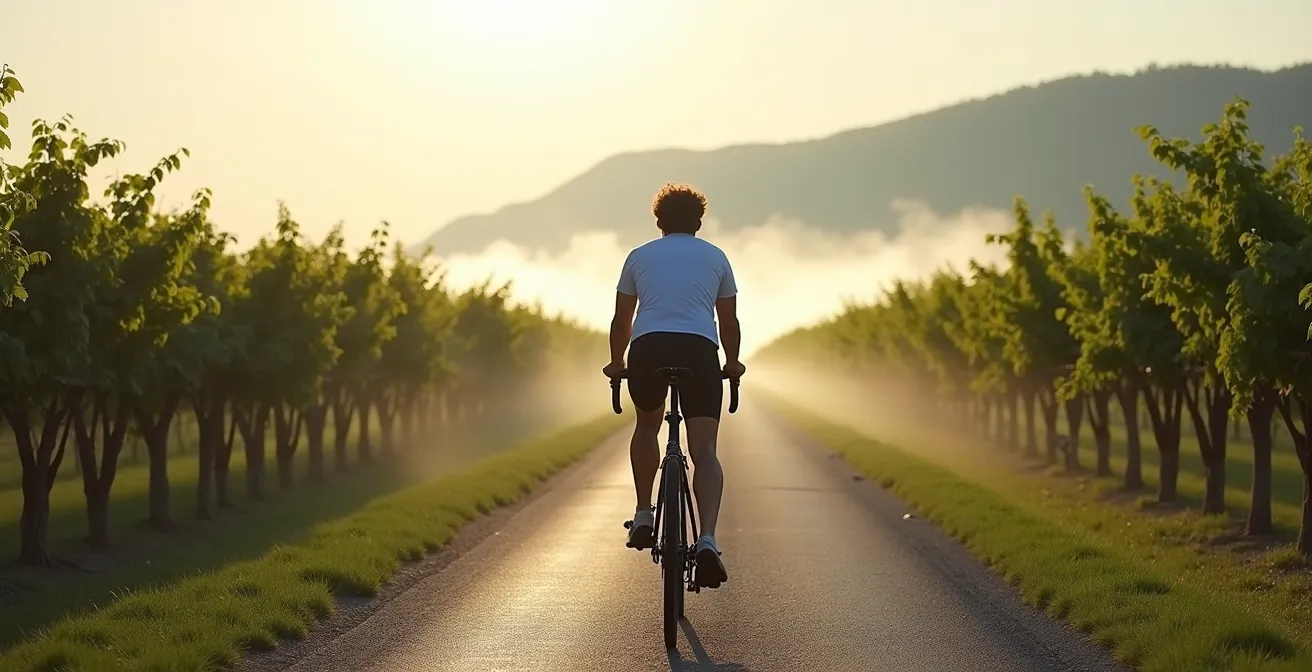
This transforms your day. An e-bike flattens the escarpment’s gentle inclines, making a 30-kilometre tour feel effortless. The pace slows, senses heighten, and the journey becomes the destination. You can smell the ripening fruit and hear the birds in the vines. To make it even easier, many local companies have perfected the self-guided model.
Case Study: The Tour de Vine Self-Guided Model
Tour de Vine in Niagara-on-the-Lake has become the region’s #1 rated bike wine tour operator by eliminating the logistical stress for cyclists. Their self-guided tours provide everything you need after arriving by train: a comfortable Euro-styled bike with a basket, a pre-planned and mapped route, and pre-booked tasting appointments at 3-4 wineries. Critically, they also offer a free wine pick-up service, so you can purchase bottles without having to carry them. This “all-but-the-pedaling” approach allows you to focus entirely on the experience.
By combining the train and a bike, you are not just solving a transportation problem; you are choosing a more intimate, sustainable, and altogether more enjoyable way to immerse yourself in the landscape.
Peaches vs Cherries: knowing exactly when to visit for the best harvest
A truly savvy traveler knows that “summer” is too broad a season for Niagara. The region’s character shifts dramatically from week to week, dictated by what’s being pulled from the branch or vine. Planning a harvest-driven itinerary—timing your visit to coincide with the peak of a specific fruit—is the secret to experiencing the Benchlands at its most vibrant and delicious. Forget generic summer travel; think of it as a “Peak Peach” weekend or a “Cherry Quest.”
The unique flavour profile of Niagara’s produce is no accident. It’s a direct result of the region’s specific terroir. As experts from Vintage Hotels note, the local geography plays a crucial role. They explain:
The limestone-rich soil of the region compares to similar soil found in Burgundy and other wine-producing regions of France
– Vintage Hotels, Why Does the Niagara Region Have So Many Vineyards
This celebrated soil, combined with the moderating “lake effect” of Lake Ontario, creates a microclimate that yields exceptional fruit, from cherries and apricots in early summer to the iconic peaches and pears that mark the transition into autumn. Aligning your visit with these peak moments connects you directly to the agricultural soul of the area.
To do this effectively, you need a more granular calendar than just the four seasons. The difference of a week or two can mean the distinction between sampling good fruit and tasting the most perfect sun-ripened peach of your life at a roadside stand. The following table provides a clear guide to help you plan your harvest-centric escape.
| Fruit | Peak Harvest | Best Weeks to Visit | Typical Farm Activities |
|---|---|---|---|
| Cherries | Late June – Early July | June 25 – July 10 | Pick-your-own, cherry festivals |
| Apricots | Mid-July | July 10-20 | Farm stands, limited picking |
| Peaches | August – Early September | August 5-25 | U-pick, Peach Festival |
| Pears | Late August – September | August 25 – Sept 15 | Farm markets, preserving demos |
How to navigate Niagara-on-the-Lake without getting stuck in traffic for hours?
Niagara-on-the-Lake (NOTL) is undeniably charming, but on a sunny summer weekend, its colonial-era streets can feel more like a parking lot. The main arteries leading into town, particularly from the Queen Elizabeth Way (QEW), often become bottlenecks, turning a short drive into a frustrating crawl. For the traveler practicing intentional navigation, the goal is to experience the town’s beauty without the predictable gridlock. This requires a counter-intuitive strategy: to get to NOTL efficiently, you must first drive away from it.
The secret lies in using the Benchlands as a scenic bypass. Instead of joining the throngs on the main highway exits for NOTL, you exit the QEW much earlier, around Beamsville or Grimsby. This route takes you onto the regional roads that hug the base of the escarpment—the very heart of wine country. You’ll trade highway barriers for rolling vineyards and big-box stores for quaint farm stands. This isn’t just a detour; it’s an upgrade to your entire travel experience.
This path allows you to approach NOTL from the south or west, through its agricultural greenbelt, on roads less traveled by the average tourist. It may look longer on a map, but in real-world travel time, it is often faster and infinitely more pleasant. Follow this simple plan to execute the bypass perfectly.
- Early QEW Exit: Take Exit 57 for Casablanca Boulevard instead of continuing toward the main NOTL exits.
- Embrace the Benchlands: Follow Regional Road 81 (King Street) east through the charming towns of Beamsville and Jordan.
- Follow the Signs: Keep an eye out for the official “Wine Route” signs, which will guide you along the most scenic paths.
- Southern Approach: As you near NOTL, use quieter roads like Creek Road or East-West Line to enter the town from its agricultural side.
- Strategic Parking: Park at the spacious Fort George National Historic Site parking lot on the edge of town and enjoy a short, pleasant walk or bike ride into the bustling centre.
By adopting this strategy, you replace stress and traffic with scenery and discovery. You arrive in NOTL relaxed and ready to explore, having made the journey itself a memorable part of your day.
Jordan vs NOTL: which town is the better base for a quiet retreat?
Choosing your home base is the single most important decision when planning an authentic Niagara escape. It sets the tone for your entire trip. The two most popular contenders, Niagara-on-the-Lake and Jordan Village, represent two fundamentally different approaches to a wine country getaway. NOTL is the grand dame: historic, theatrical, and bustling with energy. Jordan Village is its quieter, more rustic cousin: intimate, artisanal, and deeply rooted in its agricultural surroundings.
For the foodie couple seeking a tranquil retreat focused on “slow terroir,” the choice becomes clear upon closer examination. NOTL, with its high volume of tourists, major hotels, and proximity to the Shaw Festival, is a destination for those who want to be in the centre of the action. Its walkability is a plus, but it comes with crowded sidewalks and a dining scene that must cater to a wide, often less adventurous, tourist palate.
Jordan Village, nestled in the heart of the Twenty Valley Bench, offers a different kind of walkability—one of quiet streets connecting a boutique inn, artisanal shops, and top-tier winery restaurants. It serves as a peaceful hub from which to explore the surrounding vineyards. The pace is slower, the atmosphere more relaxed, and the experience feels more integrated with the wine-making community. To help you decide which atmosphere best suits your ideal retreat, the following table breaks down the key differences.
| Criteria | Jordan Village | Niagara-on-the-Lake |
|---|---|---|
| Tourist Volume | Low-moderate, mainly weekends | High year-round, peak summer |
| Accommodation Style | Boutique inn (Inn on the Twenty), B&Bs | Grand hotels, historic inns |
| Main Attractions | Cave Spring Winery, Ball’s Falls, artisan shops | Shaw Festival, Fort George, Queen Street |
| Dining Scene | Farm-to-table, winery restaurants | Fine dining, tourist-oriented cafes |
| Walkability | Compact village core, quiet streets | Historic grid, busier sidewalks |
| Best For | Wine enthusiasts seeking authenticity | Theatre lovers, history buffs |
Ultimately, your choice depends on your goal. If you seek energy, history, and theatre, NOTL is a classic for a reason. But if your definition of a perfect getaway involves waking up to the quiet hum of the countryside and being a short walk from both a cellar door and a world-class meal, Jordan Village is the superior base for a truly restorative Benchlands experience.
Guédille or Club Sandwich: where to find the best lobster rolls on the road?
The question itself reveals a common traveler’s impulse: to seek out a familiar, beloved dish in a new place. The lobster roll, or *guédille* in Québec, is a coastal delicacy. While a delicious novelty, asking where to find the best one in Niagara is like going to Burgundy and asking for the best pint of Guinness. It misses the entire point of the region’s unique culinary geography. The authentic foodie doesn’t seek to import a craving; they seek to discover the local one.
The most thoughtful restaurants and wineries in the Benchlands have already pivoted away from this thinking. They understand that true luxury is not about flying in expensive coastal seafood, but about celebrating the exceptional ingredients found within a few kilometers. This has led to a noticeable shift in local menus, where the focus is on creating signature dishes that reflect Niagara’s specific terroir.
Instead of a lobster roll, you are more likely to find a gourmet sandwich featuring local artisan cheese, house-cured charcuterie from area farms, or perhaps even smoked trout or Lake Erie perch, which offers a delicious and geographically honest nod to regional seafood. This movement is about celebrating Niagara flavours rather than transplanting coastal ones. Visitors are increasingly rewarding this approach, demonstrating a desire for authentic local experiences over familiar, out-of-place dishes.
So, the answer to “where is the best lobster roll?” is a respectful redirection: the best sandwich in Niagara is the one that tastes like Niagara. It’s the one filled with seasonal produce you saw growing on your bike ride earlier. It’s the one paired with a wine made from grapes grown just down the road. Instead of hunting for lobster, challenge yourself to find the best local offering. Ask your server, “What sandwich on your menu could I only find here in Niagara?” The answer will be far more memorable and delicious than any lobster roll could ever be in this context.
The “15-minute city” test: can you buy milk without starting a car?
The “15-minute city” is an urban planning concept where residents can access all their basic necessities—groceries, shops, schools, parks—within a 15-minute walk or bike ride. Applying this test to a rural, agricultural area like the Niagara Benchlands might seem absurd. Yet, it serves as a powerful lens for identifying pockets of true, sustainable livability and tranquility. Can you find a corner of wine country that offers both rustic charm and village convenience? The answer is a resounding yes.
While most of the Benchlands is, by nature, car-dependent, certain villages have retained their historic, walkable cores. These places offer the best of both worlds: immediate access to nature and vineyards, combined with the ability to handle daily errands on foot. It’s the antithesis of the isolated resort or highway-side motel. This is where the concept of micro-localism truly comes to life, not just in food, but as a lifestyle.
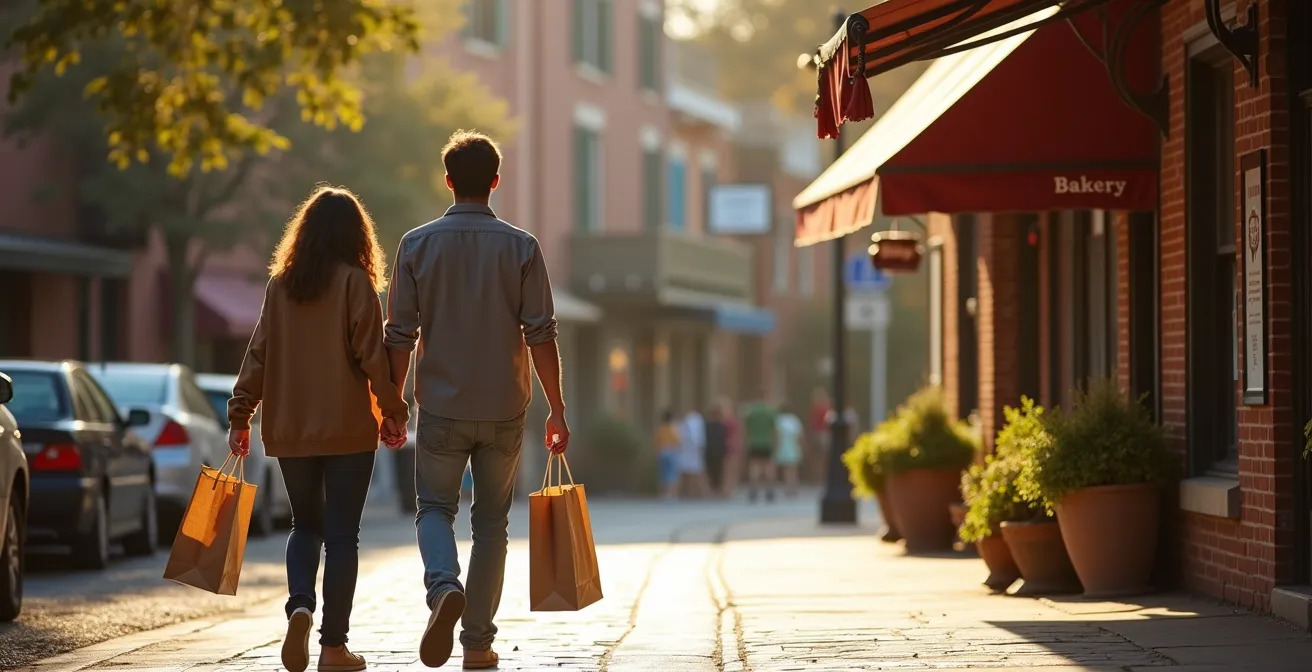
The prime example of this concept in action is Jordan Village. It’s a community that effortlessly passes the 15-minute test, making it an ideal base for a car-free or car-light retreat.
Case Study: Jordan Village as a Walkable Wine Country Hub
Jordan Village perfectly embodies the 15-minute city concept adapted for wine country. The Jordan Village Market provides fresh produce, specialty goods from local farmers, and yes, milk. Within a short, pleasant walk from the central Inn on the Twenty, a visitor can access the cellar door of Cave Spring Vineyard, browse boutique shops and artisanal galleries, and choose from several top-tier restaurants for dinner. The compact, historic core allows for genuine car-free exploration, creating a deeply relaxing and immersive experience that feels a world away from the traffic of more developed areas.
Choosing a base that passes this test fundamentally changes the rhythm of your stay. The morning coffee run becomes a scenic stroll, not a traffic calculation. An evening bottle of wine can be acquired on foot. This walkability is not just a convenience; it’s a form of luxury for the modern traveler seeking to slow down and connect with their surroundings.
Key Takeaways
- True Niagara authenticity is found in the “slow terroir” of the Benchlands, not the tourist corridor of the Falls.
- Prioritize “micro-localism”: seek out wineries and restaurants that have an undeniable, physical connection to the land they occupy.
- Embrace “intentional navigation” by using the GO Train, bikes, and scenic backroads to make the journey part of the discovery.
- Plan a “harvest-driven itinerary” by timing your visit to the peak season of a specific fruit for the most vibrant experience.
- Choose a quiet, walkable base like Jordan Village over bustling hubs to set a tranquil tone for your entire retreat.
How to plan a self-guided winery tour that focuses on small-batch producers?
Now that you’ve chosen your quiet base, embraced alternative transport, and timed your visit with the harvest, the final piece of the puzzle is curating the perfect self-guided tour. The goal is to avoid the big-name, high-volume wineries and instead focus on the small-batch producers that are the true heart of the Benchlands. These are the operations where you’re likely to meet the winemaker, taste wines that express a specific block of soil, and feel the passion behind the product.
First, define your theme. Instead of a random collection of stops, focus your day. Will it be a tour of organic and biodynamic producers? A focus on a specific grape, like Riesling or Gamay? Or a geographical tour of a single sub-appellation, like the Beamsville Bench? A clear theme makes your choices easier and your experience more coherent. Second, do your research. Look for wineries that emphasize “single-vineyard” bottlings, “wild ferments,” or limited production numbers. These terms are clues that you’re in the right place.
An excellent example of this philosophy in practice is Malivoire Wine Company, a producer that has become a benchmark for quality and sustainability in the region.
Case Study: The Malivoire Wine Company’s Organic, Terroir-Driven Approach
As detailed by guides like Niagara Vintage Wine Tours, Malivoire exemplifies the small-batch ethos. As a certified organic producer on the Beamsville Bench, they utilize practices like wild fermentations and minimal intervention to create wines that are a pure expression of their specific location. A visit here isn’t just a tasting; it’s a lesson in the region’s terroir, showcasing how a commitment to biodiversity and hands-off winemaking can produce wines of incredible complexity and character.
Finally, always book ahead. Small producers have small tasting rooms and limited staff. A quick call or online booking is not just courteous; it’s essential to ensure they can give you their full attention. By combining a clear theme, careful research, and advance planning, you can craft a tour that takes you far beyond the mainstream and deep into the authentic soul of Niagara wine.
Now, with these strategies in hand, you are equipped to leave the clichés of Niagara behind. The next step is to begin sketching out your own personal itinerary, transforming these ideas into reservations and routes for a journey that promises not just a vacation, but a genuine connection to the place, its people, and its flavour.